%201.webp)


.svg)
Crossing state lines changes the moving process. An interstate move is not just a longer local move, because federal rules affect estimates, billing, shipment weight, delivery timing, customer rights, and the paperwork your mover must provide.
For homeowners and renters in Northern Virginia, understanding these rules can make it easier to compare interstate moving companies and avoid confusion after loading day. The most important details are not hidden in fine print. They are usually found in the written estimate, bill of lading, weight tickets, valuation choice, and delivery window.
Division 1 Moving and Storage is a family owned and independently operated moving service based in Alexandria, serving Alexandria and Northern Virginia residents who are planning local, long-distance, storage, packing, and related moving services. If you have questions while planning a move across state lines, we are happy to help you understand what details should be clarified before moving day.
Interstate movers must follow federal household-goods moving rules
Interstate household-goods movers are regulated by the U.S. Department of Transportation’s Federal Motor Carrier Safety Administration, often called FMCSA. These rules exist because long-distance household moves involve more than loading, driving, and unloading. They also involve written pricing, shipment documentation, customer protections, and delivery obligations.
FMCSA requires interstate household-goods carriers to use written estimates, follow shipment-specific billing rules, maintain arbitration programs, and advertise truthfully. The agency also provides consumer tools that allow customers to look up interstate movers by state or company name and review complaint history and safety records.
For customers, the practical takeaway is simple: an interstate mover should be able to explain the paperwork. If a company cannot clearly describe its estimate, billing basis, delivery spread, valuation options, or registration status, that is a sign to slow down before signing.
A written estimate is required for an interstate move
A verbal price is not an official estimate for an interstate household-goods move. Federal rules require written estimates for every shipment, and those estimates should address the transportation charges as well as accessorial and advance charges.
This matters because interstate moves often include services beyond basic transportation. Packing, stairs, long carries, storage, shuttle service, and delayed delivery can all affect the scope of work. When those items are not included in the written estimate, the customer may be surprised later by charges that were not part of the original understanding.
FMCSA guidance on avoiding unexpected moving costs explains that the type of estimate affects what a customer may owe and how final charges are determined.
Binding and non-binding estimates affect the final bill differently
A binding estimate is a written agreement that guarantees the total cost for the services and quantities shown in that estimate. If the shipment and services match what was listed, the agreed price controls.
A non-binding estimate is different. It is a forecast, not a guaranteed final price. The final cost can change based on the actual weight of the shipment and the services performed.

Federal rules protect customers even when a move is handled under a non-binding estimate. A mover cannot demand more than 110% of a non-binding estimate at delivery before releasing the shipment. That limit is one reason the written estimate and billing documents matter so much.
Weight tickets show how non-binding interstate moving charges are calculated
Weight tickets are one of the most important documents in an interstate move handled under a non-binding estimate. When pricing is based on actual shipment weight, the mover must determine that weight on a certified scale. The weight ticket is the official record of that process.
In practical terms, the weight ticket connects the shipment to the final charge. It shows how the mover arrived at the billed weight, which then affects the lawful tariff charge for the move.
The federal household-goods regulations in 49 CFR Part 375 describe requirements that apply to interstate household-goods transportation, including shipment documentation and related customer protections.
Certified scale weighing creates the record behind the billed weight
FMCSA rules require separate weight tickets for each weighing unless both weighings are done on the same scale and one ticket records both. The ticket is not just a receipt. It is evidence that supports the shipment weight used for billing.
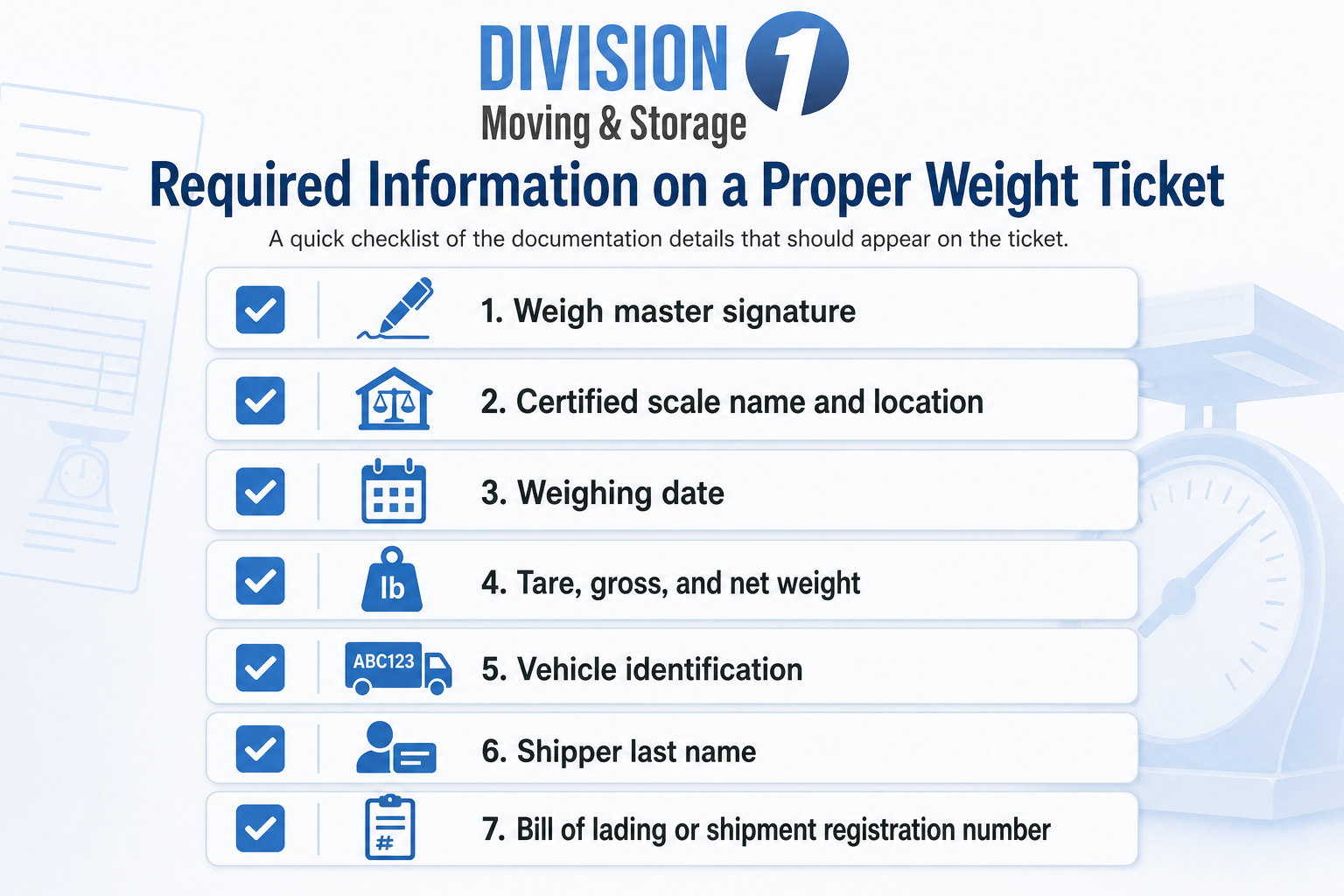
Each ticket must include specific information. These details help connect the weighing to the truck, the customer, the shipment, and the bill of lading. Without these identifiers, it becomes harder for the customer to understand or dispute the final billed weight.
Customers should know what belongs on a proper weight ticket before a dispute happens. That way, the paperwork can be reviewed while the move is still fresh and before assumptions turn into billing frustration.
The weigh master’s signature.
The certified scale’s name and location.
The date of weighing.
Tare, gross, and net weight identifiers.
The vehicle identification.
The shipper’s last name.
The mover’s shipment registration number or bill of lading number.
Weight tickets matter most when a final bill is disputed
Weight tickets become especially important when a customer disputes a final bill or requests a re-weigh. Since a non-binding estimate can change based on actual weight, the certified scale record is the basis for checking whether the final charge was calculated properly.
FMCSA recognizes both origin weighing and destination weighing, but the weighing must be done on a certified scale. For customers, that means the paperwork is not a formality. It is the proof behind a weight-based charge.
If you are comparing interstate movers near me and one company cannot explain how weight tickets work, that is worth noting. A legitimate interstate mover should be able to describe how the shipment will be weighed and how that weight affects the final billing.
Delivery windows for interstate moves should be agreed in writing
Long-distance interstate moves usually do not work like local hourly moves. A local move may involve a crew arriving in the morning and finishing the same day. An interstate shipment may depend on the pickup date, route distance, consolidated scheduling, destination timing, and whether the shipment is combined with others.
For that reason, interstate moves are commonly tied to a pickup date, delivery date, or delivery spread window. The mover must place the agreed timing on the bill of lading. Once the pickup and delivery dates are agreed, they are contractually binding on the mover.
FMCSA states that customers should agree on pickup and delivery dates before the move, and the agency’s consumer materials address the importance of agreed timing in interstate household-goods moves through pickup and delivery date guidance.
A delivery spread is different from a guaranteed single-day delivery
A delivery spread is a window of time during which the shipment may arrive. It gives the mover a defined range rather than one exact day. This is common in long-distance moving because scheduling may involve multiple shipments, route planning, and destination coordination.
Expedited service is different. FMCSA recognizes expedited service as a separate agreement to meet a set date, usually with a different cost structure. If a customer needs delivery by a specific date, that expectation should be discussed and documented before booking.
For Northern Virginia residents moving to another state, the lowest estimate may not be the best fit if the move has a tight delivery timeline. A shipment that requires storage, staging, or multiple crews needs a schedule that reflects those conditions.
Customers have a right to advance delivery notice
Federal rules also address delivery notice. Customers have a right to receive notice at least 24 hours before scheduled delivery, excluding Saturdays, Sundays, and federal holidays.
This notice helps customers prepare for access at the destination. It also helps with elevator reservations, building requirements, parking arrangements, and being available to accept delivery. While those destination details vary by situation, the key rule is that the mover must give advance notice before scheduled delivery.
If the customer cannot accept delivery before the first day of the delivery spread, the mover may place the shipment in storage near the destination. That is why delivery timing and storage expectations should be discussed before loading day.
Experienced interstate movers reduce risk when packing, storage, and logistics overlap
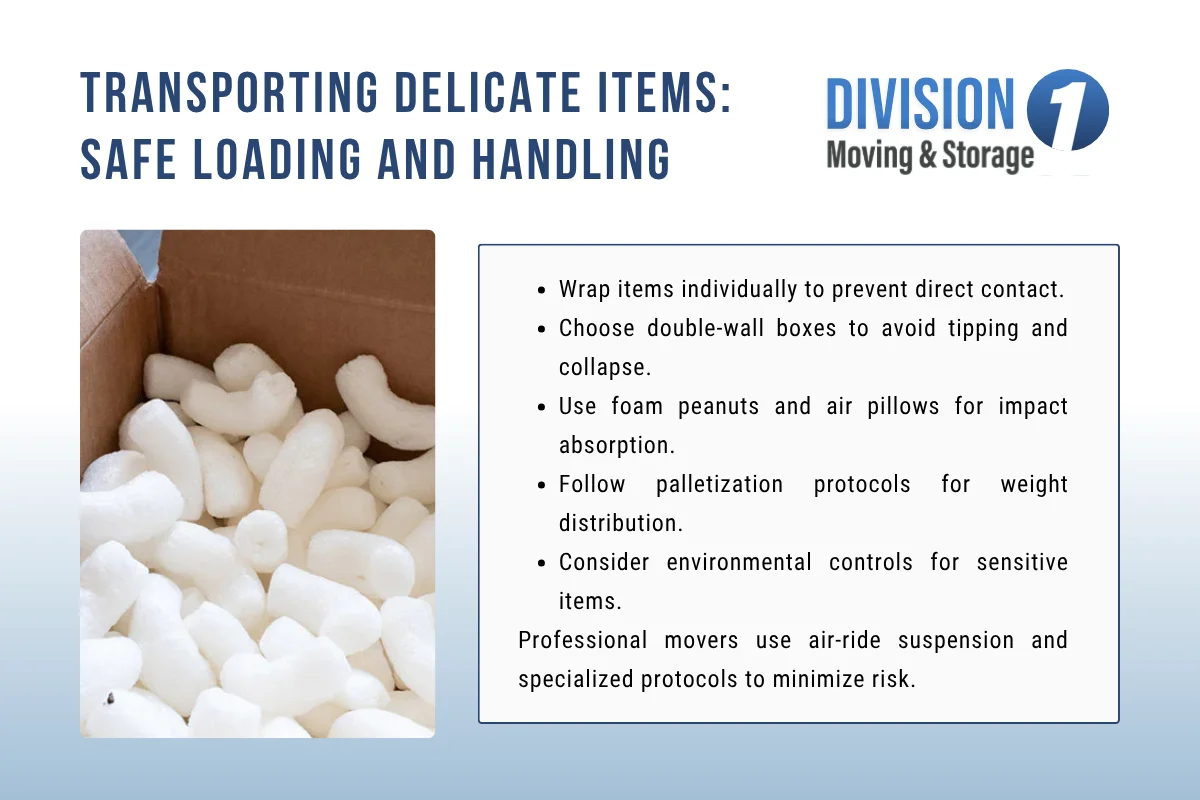
Experience matters most when an interstate move includes more than transportation. Packing, protective wrapping, temporary warehousing, delayed delivery, shuttle service, multiple pickup points, or fragile items can all affect how the move should be estimated and documented.
Professional movers need to understand the full scope before loading day because federal rules require estimates to include transportation, accessorial charges, and advance charges. If the scope is incomplete, the estimate may not reflect what the move actually requires.
This is where Division 1 Moving and Storage’s long-distance moving, packing, warehouse storage, furniture assembly, and related services naturally connect to the planning process. When a move involves crossing state lines, the services surrounding transportation should be clarified in writing so the schedule, shipment handling, and billing expectations match the real job.
Interstate moving paperwork protects both the customer and the shipment
Full-service interstate movers manage several connected documents and decisions. These may include the written estimate, bill of lading, weight documentation, valuation options, and delivery coordination. Each piece has a role in showing what was agreed, how charges are calculated, and what protections apply.
Valuation is one example. If a customer does not choose Full Value Protection, the shipment is automatically moved under Full Value Protection. If the customer chooses Released Value Protection, the mover’s liability is limited to 60 cents per pound per article.
FMCSA’s rules on valuation and interstate moving protections explain that customer choices about protection affect liability if an item is lost or damaged.
Storage and delayed delivery should be planned before loading day
Storage can become part of an interstate move when the delivery date does not line up with the customer’s ability to receive the shipment. It can also matter when a new home is not ready, destination access is limited, or the move requires warehouse staging.
When storage is possible, it should be discussed before the truck is loaded. The estimate and move documents should identify relevant storage or accessorial charges so the customer can compare quotes on the same basis.
Delayed delivery can also create confusion if expectations are not clear. A written delivery spread, documented storage terms, and advance delivery notice help reduce that risk.
How to compare interstate moving companies before requesting a quote
Comparing interstate moving companies is not just about finding the lowest number. Estimates only make sense when they are based on the same shipment details and the same service level. One quote can look less expensive simply because it leaves out packing, storage, accessorial work, or delivery requirements that another quote includes.
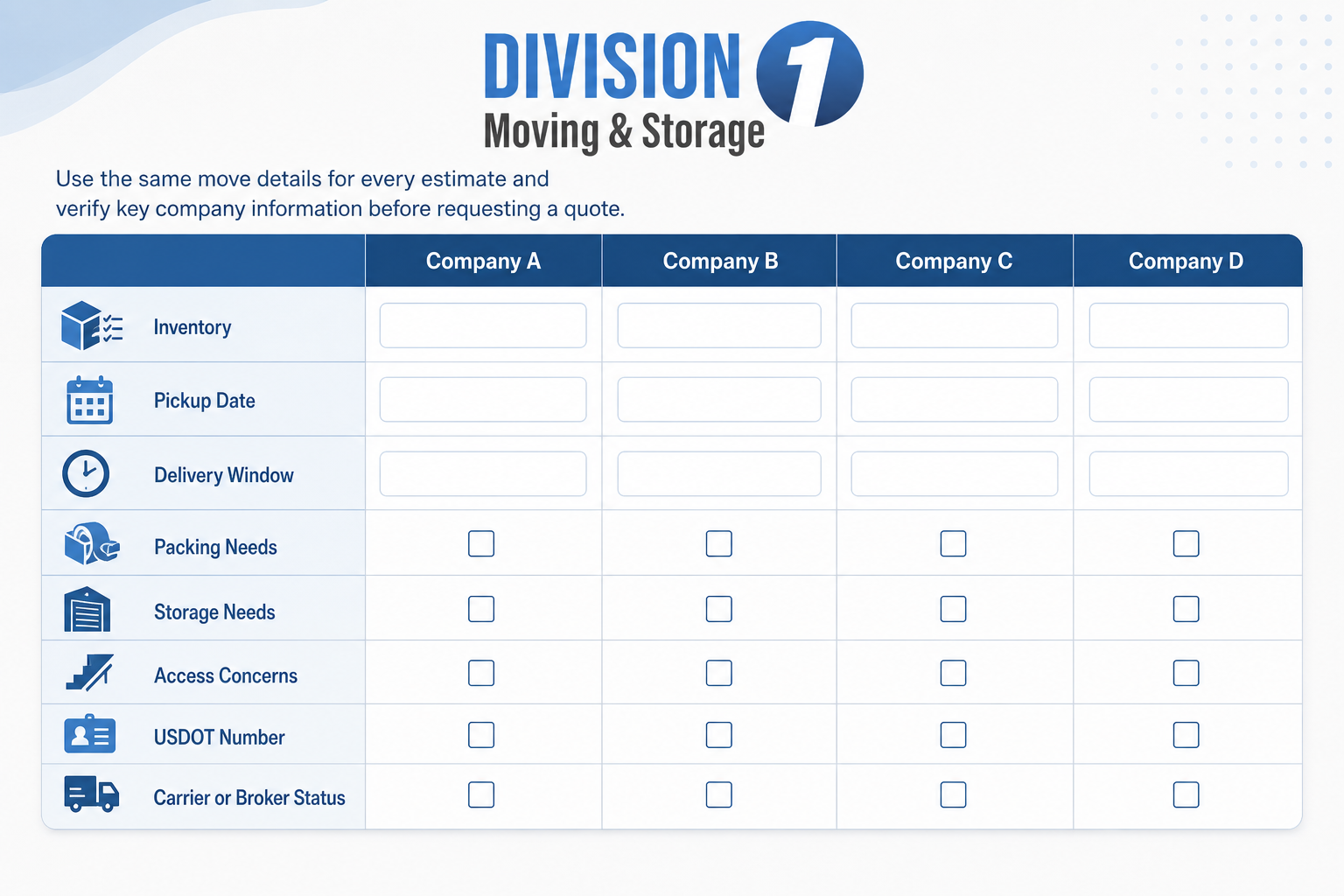
The first step is to define the same scope for every company. That means the same inventory, pickup date, delivery window, and requested services. Once the scope is consistent, the estimate comparison becomes more meaningful.
Customers should also verify the mover’s USDOT number, confirm authorization for household-goods interstate transport, and understand whether the company is acting as a carrier or a broker. FMCSA provides a way for consumers to review mover registration, complaint history, and safety information through its registration and complaint history tools.
Use the same move details for every estimate
A strong comparison starts with consistency. If one mover estimates a shipment with packing included and another does not, the prices are not measuring the same job. If one estimate includes temporary storage and another assumes direct delivery, the comparison is incomplete.
Before requesting quotes, prepare the core details that every mover needs. These details help the company understand the shipment and help you evaluate whether the written estimate reflects the work required.
The goal is to prevent an estimate from looking attractive simply because it is missing a major service. A clearer scope also makes it easier to identify companies that ask careful questions before quoting.
Inventory of household goods to be moved.
Pickup address and destination state.
Preferred pickup date.
Expected delivery date or acceptable delivery spread.
Packing and unpacking needs.
Storage needs before, during, or near delivery.
Stairs, long carries, or building access concerns.
Fragile items or items needing special handling.
Ask whether the company is a carrier or a broker
Customers should ask whether the company will transport the shipment itself or arrange transportation through another company. This distinction matters because the customer needs to know who is responsible for the move and who will handle shipment documentation.
The mover should provide a USDOT number and explain its role clearly. A company that avoids the question or cannot describe its registration status should be treated cautiously.
It is also worth asking how claims are handled, what valuation coverage is included, and whether the estimate is binding or non-binding. Those details directly affect cost, delivery expectations, and recovery options if something is damaged.
Red flags when searching for interstate movers near me
Searching for interstate movers near me can produce many options, but not every option should be treated the same. FMCSA warns consumers to watch for patterns that can indicate an unreliable mover or broker. These warning signs are especially serious for interstate moves because the shipment travels across state lines and must be documented properly.
Some red flags appear during the estimate process. Others show up in the company’s identity, paperwork, or moving-day behavior. A customer does not need to become a moving-law expert to spot the basics, but it helps to know what should prompt a pause.
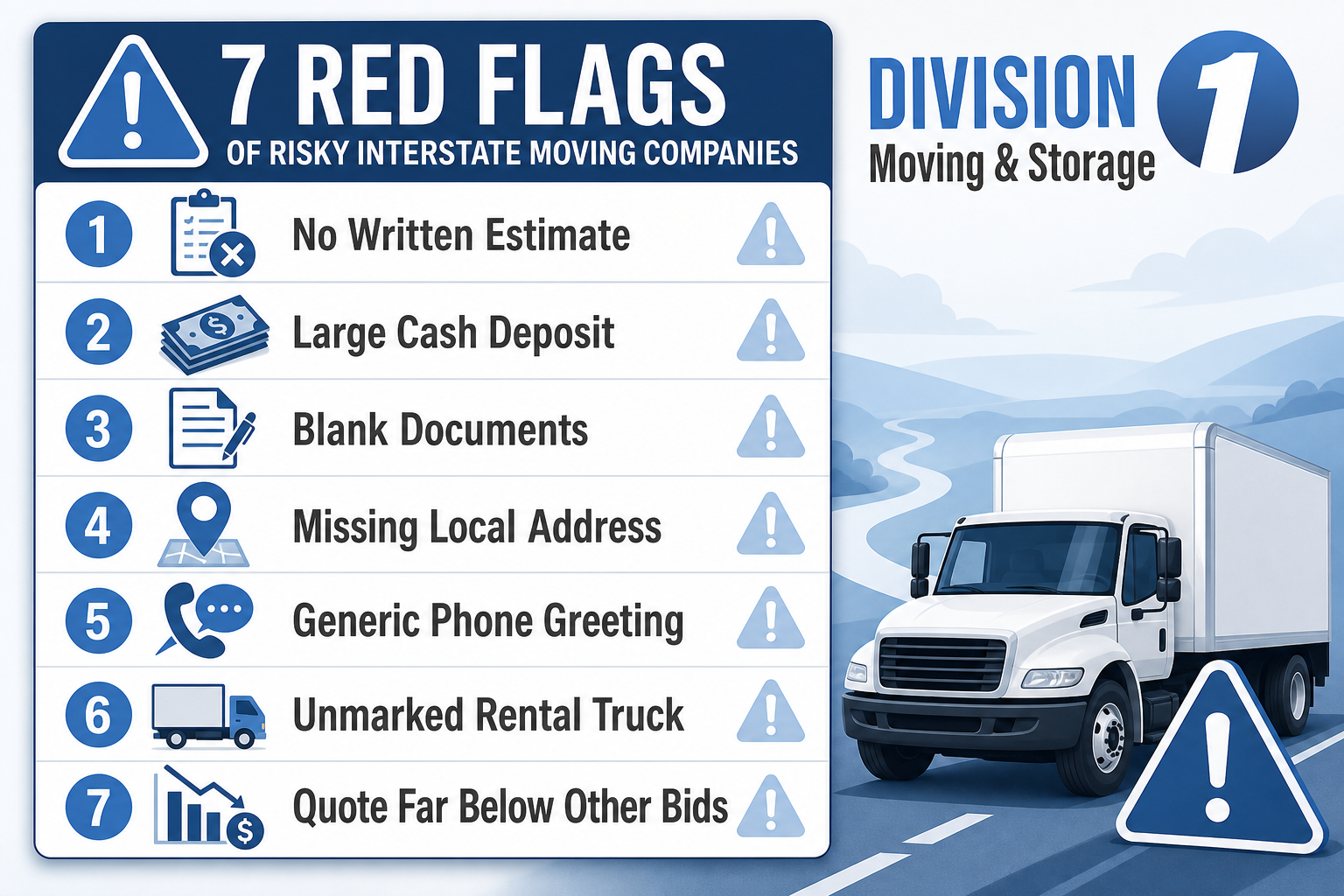
Use these warning signs as a practical filter before signing. If more than one appears, verify the company’s registration and complaint history before going further.
The company gives an estimate without inspecting the household goods.
The mover refuses to provide a written estimate.
The company demands a large cash deposit.
The customer is asked to sign blank documents.
The mover does not provide the required consumer booklet.
The company has no local address or registration information.
The company claims that all goods are covered by its insurance.
The phone is answered with a generic greeting such as “Movers” instead of the company name.
The office or warehouse appears nonexistent or in poor condition.
An unmarked rental truck arrives on moving day.
The quote is dramatically below competing written bids.
Low estimates can hide missing services or later disputes
A very low quote may be tempting, but it should be reviewed carefully. Fraud schemes can use lowball estimates to secure a booking and then raise the price later. Even when fraud is not involved, a low estimate may leave out important services.
The safest practice is to compare written estimates from multiple companies on identical terms. Make sure each estimate addresses the same inventory, packing needs, storage needs, pickup date, delivery window, and accessorial services.
If the company cannot explain why its price is much lower than others, ask for clarification in writing. A trustworthy estimate should make the cost easier to understand, not harder.
Questions to ask interstate movers before booking
The best questions focus on scope, documentation, timing, and protection. These are the areas most likely to affect price and customer experience during an interstate move. A mover that handles interstate shipments should be comfortable answering them before you sign.
Ask the questions before requesting a final quote, not after the truck arrives. The answers will help you determine whether the estimate matches the move and whether the company understands the logistics involved.
These questions also help you compare interstate moving companies more fairly. When every company answers the same questions, differences in process and professionalism become easier to see.
Will you perform a physical survey of the shipment before providing the estimate?
Is the estimate binding or non-binding?
Does the estimate include packing, stairs, long carries, storage, or other accessorial charges?
What is your USDOT number?
Are you the actual carrier, or are you acting as a broker?
What valuation protection is included?
How are claims handled if something is damaged?
What pickup date, delivery date, or delivery spread will appear on the bill of lading?
How is the shipment weighed, and how will weight tickets be provided?
What happens if delivery is delayed or if I cannot accept delivery during the first part of the delivery spread?
Can you explain how storage is handled if it becomes necessary?
Can you provide recent references for a similar interstate route?
A careful interstate moving plan starts with clear paperwork
An interstate move is easier to manage when the rules are understood before moving day. Written estimates, weight tickets, delivery windows, valuation choices, and storage terms are not small details. They are the structure that determines how the move is priced, scheduled, and documented.
For Northern Virginia residents, the most useful approach is to compare movers on the same scope of work, verify registration and company role, ask direct questions, and avoid signing anything unclear or blank. A mover should be able to explain the process in practical terms.
If you are planning a move across state lines from Alexandria or Northern Virginia, Division 1 Moving and Storage can help you review the moving services that may apply, including long-distance moving, packing, storage, and related support. Get a Quote by calling (571) 970-3189 or visiting Division 1 Moving and Storage contact page.

















.webp)
.webp)
.webp)









.webp)










.webp)


