


.svg)
Moving out for the first time is a major step, and it is much easier when every cost, task, and decision is written down before boxes start piling up. A strong first time moving out checklist should help you understand what you can afford, what needs to be scheduled, what belongs in your new apartment, and when it makes sense to get help with the heavy lifting.
For young adults moving out of parents house for the first time, the biggest surprises are often not emotional. They are practical: deposits, utility setup fees, furniture costs, elevator rules, parking restrictions, and the amount of work required to move a bed, couch, or dresser safely.
At Division 1 Moving and Storage, we help homeowners, renters, and first-time movers across Alexandria and Northern Virginia plan local and long-distance moves with the trucks, storage, packing support, and professional movers needed for a smoother relocation. If you have questions while building your moving plan, you can reach us at (571) 970-3189.
A written first-apartment budget should come before apartment shopping
Before you sign a lease, build a written monthly budget. This is one of the most important parts of any moving out of parents house checklist because your first apartment will include more than rent. You will also need to cover utilities, internet, renters insurance, transportation, groceries, phone service, subscriptions, and personal spending.
A good budget compares your take-home pay against your recurring costs. The goal is not just to afford the first month. The goal is to afford the apartment after the excitement wears off, while still leaving room for emergencies and early apartment surprises.
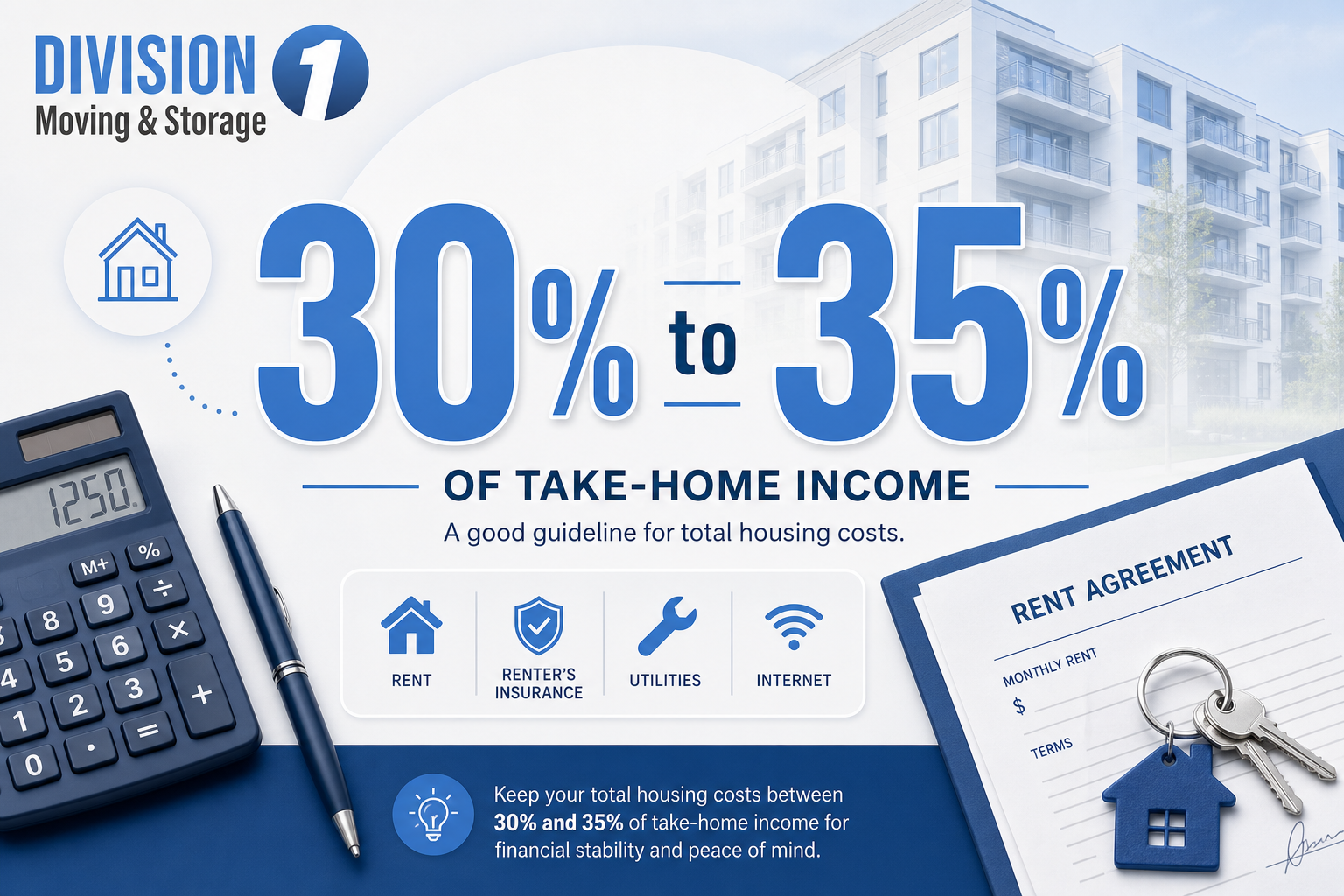
Several first-time moving guides recommend keeping total housing costs, including rent and utilities, to roughly 30% to 35% of take-home income, especially for young adults just starting out. That range gives you a practical ceiling when comparing studio apartments, one-bedroom units, and different neighborhoods.
Your first apartment budget needs monthly costs and move-in costs
Monthly rent is only one line item. Upfront costs can be much larger than first-time renters expect. Application fees, a security deposit, a possible pet deposit, and first month’s rent may all be due before or at lease signing.
Some first-apartment checklists note that move-in costs can add up to two to three times your monthly rent. That means a place that looks affordable month to month can still be difficult if you do not have enough cash ready before move-in day.
Use your budget to separate recurring bills from one-time costs. This makes the real price of moving clearer and helps you avoid putting furniture, fees, and supplies on credit without a plan.
Rent and expected utilities
Application fees and security deposit
First month’s rent due at lease signing
Possible pet deposit
Electric, gas, water, sewer, and trash setup costs if not included
Internet installation or equipment rental fees
Renters insurance
Moving company, truck rental, or packing supply costs
Basic furniture and household essentials
Emergency fund for early apartment surprises
An emergency fund protects the first few months in your apartment
Many first-time moving resources recommend setting aside at least $500 to $1,000 for moving and early-apartment surprises. This money can cover a utility deposit, a forgotten fee, a basic repair supply, or a needed household item you did not think to buy.
After move-in, track your actual spending for the first three months. Your real grocery, commuting, utility, and personal spending costs may be different from your estimate. Adjusting the budget early helps you stay in control instead of guessing.
Utilities, internet, insurance, and address changes need early scheduling
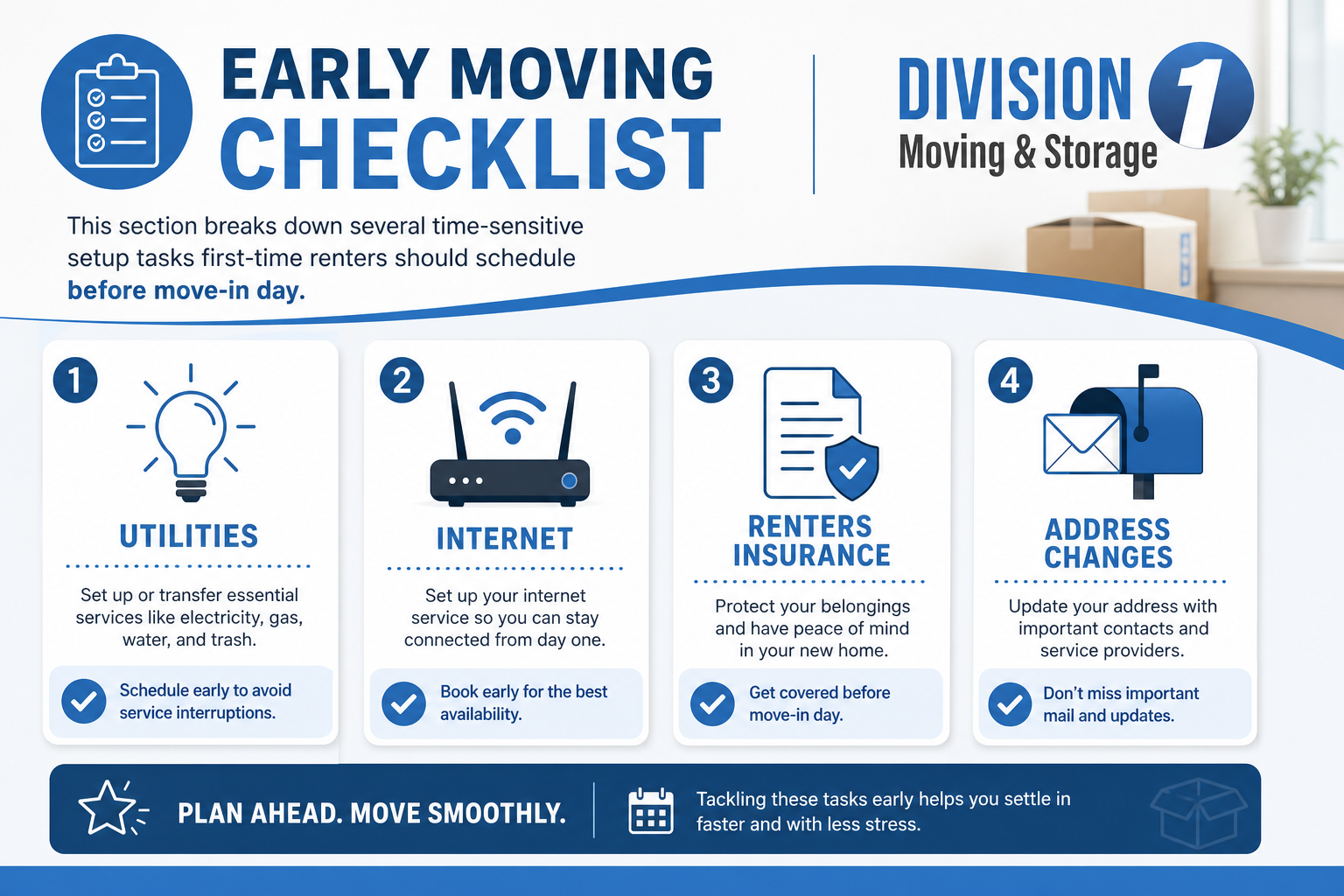
First-time movers often underestimate how far ahead they need to arrange apartment services. Utility and internet setup should not wait until the night before the move. Moving guides recommend contacting providers two to four weeks before your move-in date so service can begin when you arrive.
Start by asking your landlord or property manager which utilities are included in your rent. In some apartments, water, sewer, or trash may be covered. In others, you may need to open accounts yourself. Once you know what you are responsible for, call each provider and ask for both monthly estimates and one-time startup costs.
Electricity and gas providers may charge connection fees or deposits, especially if you have limited credit history. Internet companies may charge installation fees or equipment rental fees. Getting real numbers from providers helps your first time moving out budget stay accurate.
Internet service should match your work, school, and streaming needs
Internet setup matters because many young adults rely on Wi-Fi for work, school, entertainment, and daily communication. Compare at least two providers if your building allows it. Check speed tiers, promotional pricing, activation dates, and whether equipment rental is required.
You may need to be home for a technician appointment. If so, schedule it for move-in day or the day after when possible. In newer buildings, your property manager may tell you that a specific provider or building-wide Wi-Fi system is required, but you should still confirm activation instructions in advance.
Renters insurance should begin when your lease begins
Renters insurance is often required by landlords and is strongly recommended for first-time renters. Hippo Insurance notes that renters insurance protects belongings from theft, fire, and certain types of water damage, and that you should update your address and confirm coverage before moving out.
Apartment moving checklists also recommend aligning the policy start date with the lease start date. Many policies for young renters cost around $15 to $25 per month, and some insurers offer discounts when renters insurance is bundled with auto coverage.
Address changes prevent missed mail, bills, and account problems
Address updates are easy to postpone, but they affect your bank, credit cards, subscriptions, employer records, school accounts, government records, and healthcare providers. The USPS mail-forwarding request can usually be completed online and should be submitted about a week before the move date.
For young adults in Northern Virginia, address updates may also include the DMV, voter registration, and local healthcare providers. Add these tasks to your checklist early so you are not trying to remember every account after move-in.
Decluttering before packing keeps your first apartment from feeling crowded
When you are moving out of parents house, you may be sorting through years of belongings at once. A smaller first apartment usually cannot hold everything from a childhood bedroom, storage closet, family basement, and old furniture collection. Decluttering early keeps your move manageable.
Moving guides aimed at first-time movers recommend starting the decluttering process several weeks before moving day. Wirecutter’s moving checklist suggests tackling one to two rooms per weekend and sorting items into keep, give away, and recycle or trash piles.
This method works because it forces decisions before you are under pressure. It also reduces moving volume, which can lower the time and cost required to move.
Decide what to take, donate, store, or remove before buying boxes
A first apartment should start with useful, space-efficient belongings. Keep items you will use often, such as neutral bedding, basic kitchen tools, towels, cleaning supplies, and furniture that fits the new space. Let go of items that no longer match your lifestyle or will not fit comfortably.
Items in good condition can be donated, especially clothing, furniture, and household goods. Donation-focused decluttering guides recommend working room by room and separating keep items from don’t-keep items so unwanted belongings can support charities instead of going to landfill.
Sentimental items may be better stored than moved into the apartment. If you choose storage, label boxes clearly and keep an inventory. Storage only makes sense for items you truly value or expect to use later.
Hazardous or broken items should be handled before moving day
Broken, nonfunctional, hazardous, or perishable items should not be left for the last minute. Moving companies typically refuse certain items, including flammable products, propane tanks, some cleaning chemicals, and perishable food.
Check local disposal rules for items such as electronics, paint, and batteries because they may require specific drop-off sites. Removing these items before packing keeps moving day focused on belongings that actually need to go to the new apartment.
If you are using professional help, this is also a natural point to separate what should be moved, stored, donated, or removed. Division 1 Moving and Storage offers moving, warehouse storage, packing, and junk removal services in Northern Virginia, which can be useful when a first apartment does not have room for every bulky item from home.
Furniture and first-apartment essentials should be bought in stages
One of the easiest first-time moving mistakes is buying too much too fast. A new apartment can make you want a finished living room, fully stocked kitchen, décor, dining setup, and matching furniture immediately. That can strain your budget during the months when deposits and setup fees are already high.
First-apartment resources recommend starting with core essentials and then adding nonessential items gradually. Focus first on the things that let you sleep, shower, cook simple meals, clean, and function day to day.
Your first purchases should support daily living
A mattress or bed setup, basic kitchen gear, towels, toiletries, cleaning supplies, and a few practical tools will matter more in the first week than décor. You do not need every piece of furniture immediately. You need the apartment to be safe, usable, and comfortable enough to live in while your finances stabilize.
Secondhand options, family hand-me-downs, and marketplace finds can help furnish major pieces while keeping debt low. This is especially helpful for items such as sofas, dining tables, bookshelves, or dressers, as long as they fit the apartment and can be moved safely.
Before accepting a large furniture item, measure the new space and think through stairs, hallways, elevators, and doorways. A free dresser is not helpful if it cannot fit into the unit or takes up most of the bedroom.
An open-first box makes the first night easier
Packing an open-first box or suitcase is one of the most practical first time moving out checklist items. It should contain the things you need during the first 24 to 48 hours, before every box is unpacked.
Extra Space Storage recommends including toiletries, medications, chargers, snacks, a change of clothes, important documents, and basic cleaning supplies. Moving-day lists also mention toilet paper, hand soap, paper plates, simple meals, towels, shower curtain, pet essentials, and basic bathroom supplies.
Keep this box with you rather than loading it somewhere hard to reach. Your first night should not involve searching through ten boxes for toothpaste, phone chargers, or a towel.

Room-by-room packing keeps the move organized and easier to unload
Packing works best when it follows the way you will unpack. Room-by-room packing is recommended by professional moving checklists because it keeps related items together and makes box placement easier at the new apartment.
Start with nonessential items first, such as off-season clothing, décor, rarely used books, and extra gear. Pack daily-use items closer to moving day. This prevents the common problem of sealing up something you need and then tearing open boxes to find it.
Every box should show the room and the contents
Label each box with both the destination room and what is inside. “Kitchen” is helpful, but “Kitchen, pots and pans” is better. “Bedroom” is helpful, but “Bedroom, winter clothes” saves time later.
NerdWallet’s moving checklist notes that taking a video of your home contents before packing and keeping an inventory can help with organization and insurance claims if anything is damaged. A simple written list can also help you confirm that important boxes made it to the new place.
Use sturdy boxes, packing tape, bubble wrap, and cushioning for fragile items. Avoid overstuffing large boxes with heavy books because they can become hard to carry and more likely to break.
Important documents and valuables should travel with you
Keep valuables, important documents, medications, chargers, and your first-night bag separate from the moving truck. Use a backpack, tote, or small suitcase that stays with you throughout the day.
Set up a staging area for completed boxes before move day. Keeping boxes near the front door or along one wall helps movers load efficiently and keeps pathways clear. In apartments with tight hallways, clear walking paths can make the move safer and faster.
Move-in day logistics should be confirmed with the building before the truck arrives
Move-in day is not only about carrying boxes. Apartment buildings often have rules that affect timing, access, parking, elevator use, and where a moving truck can stop. Confirming these details early can prevent delays and extra work.
Apartment Therapy’s checklist recommends confirming move-in arrangements with the apartment manager, including date, time, required paperwork, and building access rules. Many multi-unit buildings require a freight elevator reservation during a specific time window.
If you do not reserve the elevator, movers may be stuck waiting or forced to carry furniture up stairs. That can increase time, cost, and physical strain.
Parking and building access affect the entire move schedule
Parking is especially important in dense areas like Northern Virginia. Check with your building manager or city government to see whether a moving truck needs a permit, whether temporary parking is available, and where the truck is allowed to stop.
Apartment Therapy also notes that movers should find out if permits are needed to park a moving van in the street, helping avoid tickets or towing. Share these details with anyone helping you move before the day begins.
Keep keys, building codes, leasing office information, and landlord contact details easy to access. Confirm when and how you will receive your keys, whether from a leasing office, lockbox, or landlord, and make sure the office hours match your move schedule.
A walkthrough protects your security deposit and your record of the apartment
When you arrive, do a walkthrough of the new apartment. Take photos or videos of pre-existing damage and confirm that utilities are working. If a service should be connected and is not, call the provider right away.
Have basic move-in supplies ready: cleaner, paper towels, trash bags, broom or vacuum, box cutter, light bulbs, extension cord, and a basic toolkit. These items help with quick cleaning, furniture setup, and small tasks that come up as soon as boxes arrive.
Professional movers are worth considering for heavy items and first-time logistics
Hiring professional movers is not required for every first apartment, but it can prevent costly first-time mistakes. This is especially true if you have heavy furniture, stairs, narrow hallways, a long walk from truck to unit, or a building with strict move-in rules.
Moving checklists recommend getting at least three estimates from professional movers or truck rental companies. You should clarify whether pricing is hourly, by weight, or flat rate, and what services are included, such as packing, furniture disassembly, protective materials, or reassembly.
Heavy furniture is where professional help often matters most
Mattresses, bed frames, dressers, couches, desks, and bookshelves can be difficult to move safely without the right equipment. Improper lifting or carrying large pieces through tight spaces increases the risk of injury and damage to walls, doors, railings, and floors.
Professional crews use tools such as dollies, straps, and padding to move large items more safely. Many movers can also disassemble and reassemble bed frames or modular furniture, which is useful when you are trying to fit large pieces through apartment doors or stairwells.
This is especially valuable for first-time movers in walk-up buildings or apartment complexes with limited elevator access. Damage to common areas or the unit can affect your deposit, so preventing damage is part of protecting your budget.
Professional planning helps avoid common first-time moving mistakes
First-time movers often underestimate how long the move will take. They may forget to reserve elevators, overlook parking rules, pack fragile items poorly, mislabel boxes, or fail to plan for items movers will not transport.
Professional movers can help identify these issues before moving day. Reputable moving companies also provide documents such as a bill of lading and final inventory list, which serve as a receipt and record of what was transported. Reviewing those documents before signing allows you to note missing or damaged items right away.
If you hire movers, plan to be available during the move. Request time off work if needed so you can direct furniture placement, answer questions, supervise box placement by room, and handle issues on the spot.
Your first time moving out checklist should follow a clear timeline
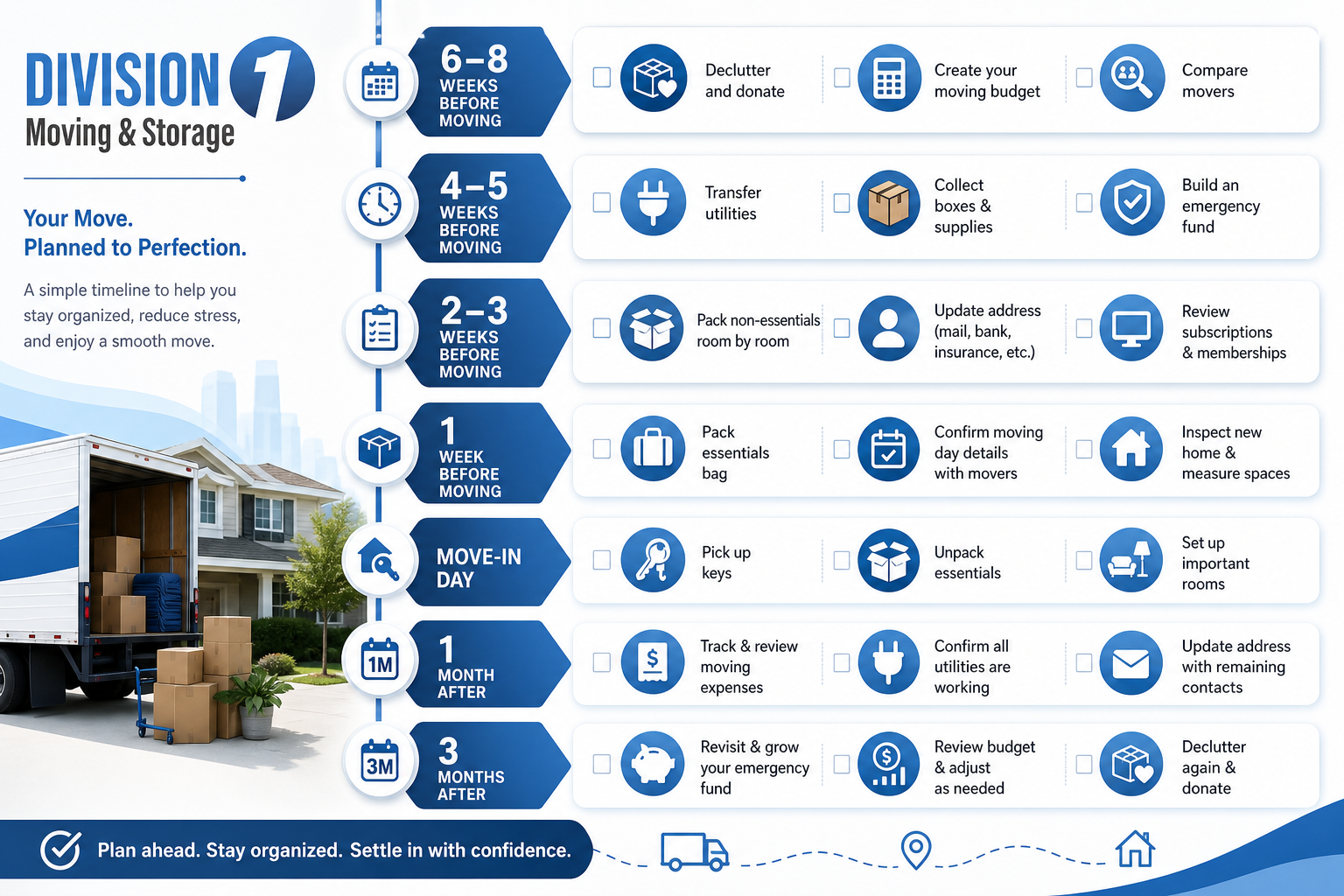
A checklist works best when it is organized by timing, not just topic. Moving tasks build on each other. You need a budget before signing a lease, utility setup before move-in, packing before loading, and building access before the truck arrives.
Use the following timeline as a practical moving out of parents house checklist. Adjust it based on your lease start date, apartment rules, and how much you own. The main takeaway is to start early and keep every task in writing.
Six to eight weeks before moving: Start decluttering, sort items into keep, donate, store, recycle, and trash piles, and begin researching movers or truck rental options.
About two months before moving: If using professional movers, start requesting estimates and compare at least three options.
Four weeks before moving: Build or update your full budget, confirm lease costs, identify utility responsibilities, and list furniture or essentials you still need.
Two to four weeks before moving: Contact utility and internet providers, schedule service start dates, arrange renters insurance, and confirm any building move-in rules.
One to two weeks before moving: Submit mail forwarding, update key accounts, reserve elevators if required, confirm parking rules, and keep packing room by room.
A few days before moving: Pack your open-first box, separate valuables and documents, confirm mover arrival time, and review what cannot go on the truck.
Move-in day: Keep keys and access codes ready, complete a walkthrough, direct box and furniture placement, and verify that utilities are working.
First three months after moving: Track actual spending and adjust your budget based on real grocery, utility, transportation, and personal costs.
A prepared first move is calmer, safer, and easier to afford
First time moving out is a financial, logistical, and personal milestone. The best checklist does more than remind you to pack. It helps you understand your costs, schedule utilities, choose furniture wisely, protect your belongings, and avoid moving-day problems that can affect your budget.
Start with the numbers, then move to the apartment details. Confirm rent, deposits, utilities, insurance, and internet. Declutter before packing. Buy essentials before décor. Label every box. Reserve elevators, confirm parking, and keep important documents with you.
If your first move includes heavy furniture, tight apartment access, storage needs, packing help, or local Northern Virginia logistics, Division 1 Moving and Storage can help you plan the next step. Get a Quote through our contact page at https://www.division1moving.com/contact-us or call (571) 970-3189.