


.svg)
Rightsizing your home is not about giving up space for the sake of having less. It is about choosing a home that fits the way you live now, and the way you want to live over the next several years. For many homeowners, especially in Northern Virginia, that shift can mean less upkeep, easier daily routines, better access to family or amenities, and more financial flexibility.
The idea is closely related to downsizing, but the mindset is different. Downsizing often focuses on moving into less space because a home has become too expensive, too difficult to maintain, or physically impractical. Rightsizing focuses on moving into what fits just right, with comfort, safety, and joy as part of the decision.
At Division 1 Moving and Storage, we help homeowners, renters, and families across Alexandria and Northern Virginia manage the practical side of moving to a right size home. If you have questions as you think through your next move, you can reach out to us for guidance on moving, packing, storage, and related logistics.
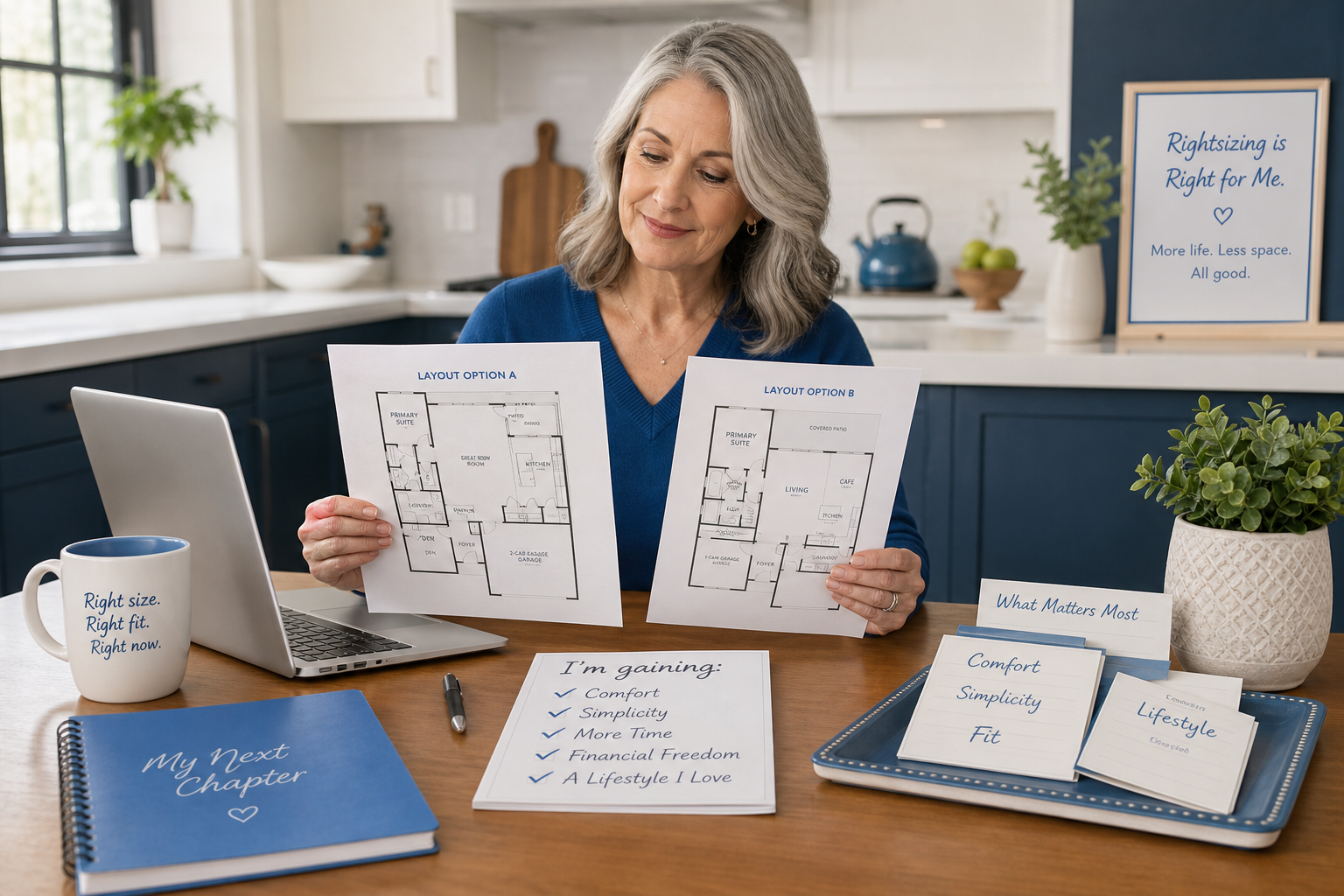
Rightsizing vs Downsizing Starts With What You Want to Gain
The phrase rightsizing vs downsizing matters because it changes how you evaluate the move. Downsizing is usually framed around reduction: fewer rooms, less furniture, fewer possessions, and a smaller footprint. Rightsizing asks a more useful question: what kind of home would support your current life better?
That can still mean a smaller home. A lower-maintenance condo, a townhome with less yard work, or a single-level layout may all reduce space and responsibility. But rightsizing can also mean moving into a different layout, a better location, or a home that is closer to the people and services you rely on.
For Northern Virginia empty nesters, that might look like trading a large single-family home in Fairfax or Loudoun for a townhome or condo with less exterior maintenance and easier access to shops, dining, healthcare, or family. The value is not only in having less to maintain. It is in creating a home that makes daily life feel more manageable.
Rightsizing focuses on fit, not sacrifice
When homeowners feel pressured to downsize because of rising costs, health concerns, or maintenance burdens, the move can feel like a loss. Rooms may be tied to memories. Furniture may represent years of family life. A larger yard or basement may feel connected to an earlier stage of life.
Rightsizing does not ignore those emotions. It simply reframes the decision around what comes next. A home with fewer stairs, more practical storage, a better commute, or a lower-maintenance exterior can give you more time and energy for relationships, hobbies, volunteering, travel, or simply enjoying your home without constant upkeep.
According to rightsizing versus downsizing guidance, rightsizing is about moving into what fits just right, while downsizing is more often about moving into less. That difference is small in wording, but significant in planning.
Northern Virginia’s Housing Market Makes Clear Priorities Essential
Rightsizing your home in Northern Virginia requires clarity because the market is high-cost and competitive. If you are selling a larger property and buying something that better fits your lifestyle, you need to understand what matters most before you begin looking seriously.
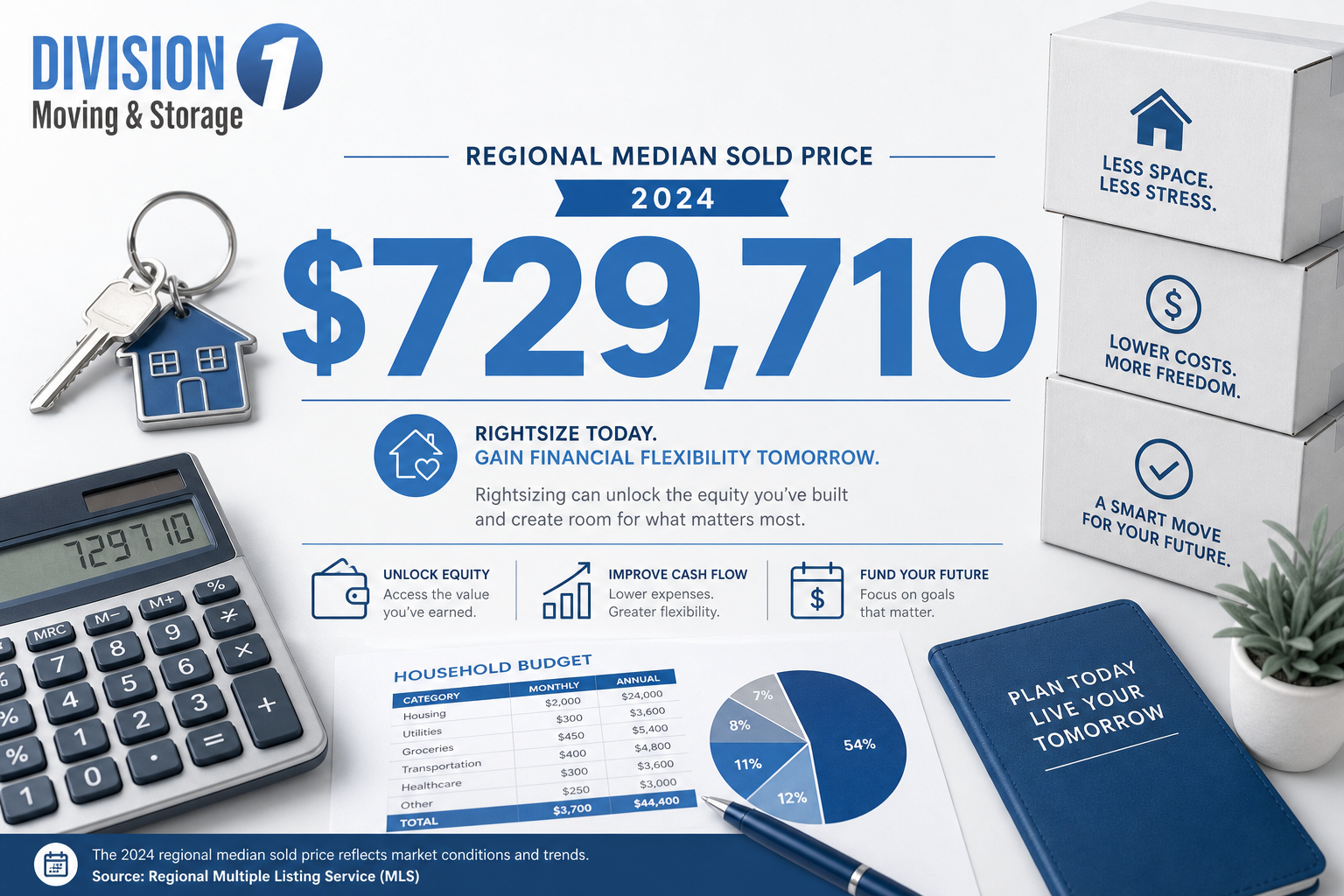
In 2024, Northern Virginia recorded about 16,357 home sales, up from roughly 15,958 in 2023. The total dollar volume grew to about $13.84 billion, and the regional median sold price reached about $729,710. That is far above the national median of about $407,500, which makes each space decision meaningful.
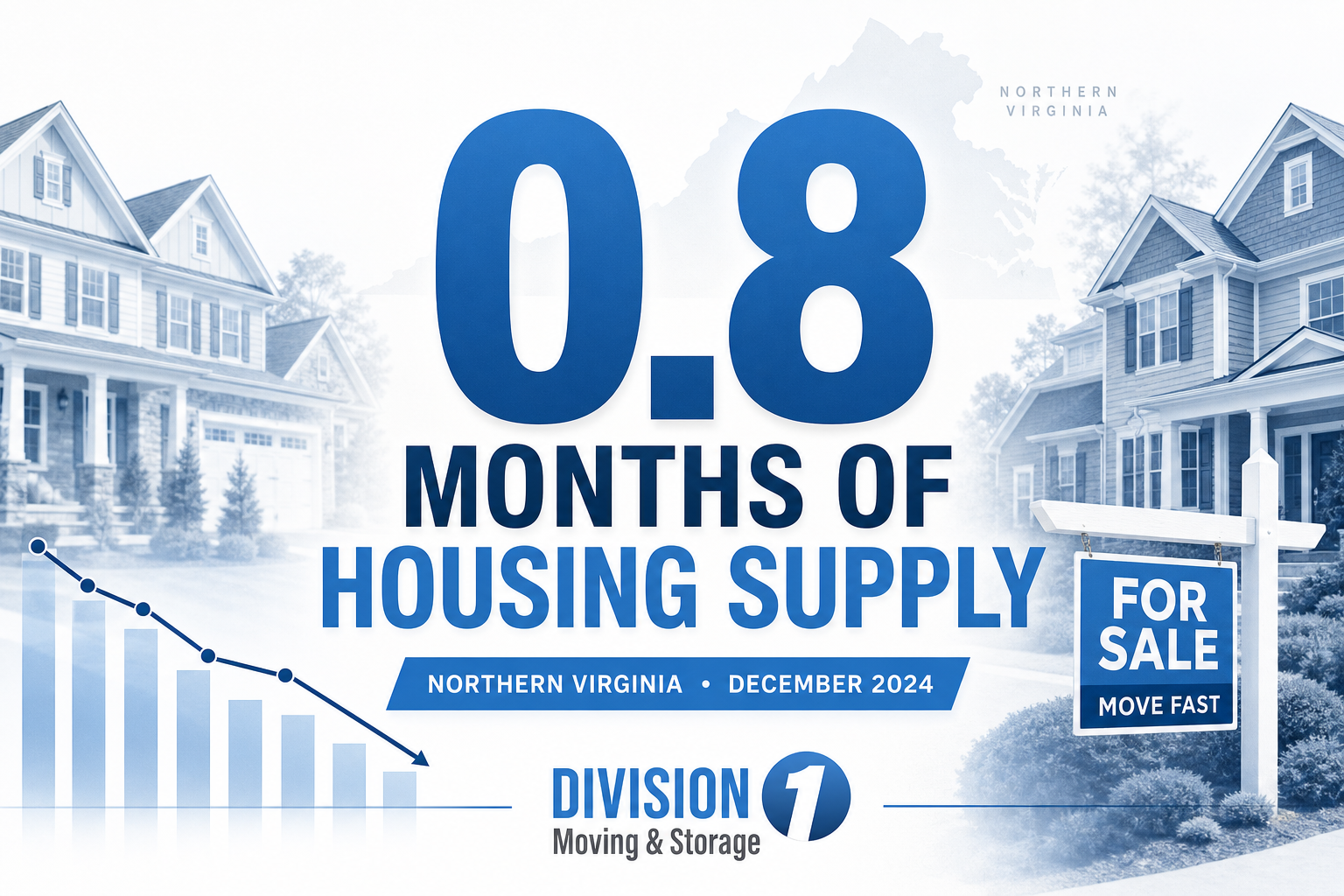
Inventory has also remained tight. In December 2024, Northern Virginia had only 0.8 months of housing supply, compared with a national 3.3-month supply. In a market like this, vague goals can lead to rushed decisions. Specific priorities help you act when the right property appears.
A practical space assessment begins with daily routines
The best rightsizing decisions usually start inside your current home. Look at how you actually use each room. Notice which areas support your daily life and which areas mostly collect furniture, storage bins, or items you rarely touch.
A formal dining room may have mattered when you hosted large family holidays. A finished basement may have been essential when children lived at home. Multiple upper-level bedrooms may no longer make sense if stairs are becoming inconvenient or if most of your time is spent on the main level.
Before looking at listings, it helps to separate daily needs from occasional wants. This step is especially important when prices, mortgage rates, and inventory limit your options. The clearer your criteria, the easier it becomes to recognize a home that fits.
Identify the rooms you use every day, such as the kitchen, bedroom, family room, office, or laundry area.
List the spaces that sit mostly unused, including guest rooms, formal rooms, extra storage areas, or hobby spaces that no longer serve a purpose.
Note what causes stress in your current home, such as stairs, yard work, long drives, maintenance needs, or rooms that are difficult to clean.
Define must-have features for the next home, such as main-level living, walkability, a shorter commute, or easier access to family or healthcare.
Separate nice-to-have features from true requirements, such as extra bedrooms, a large yard, or separate formal entertaining areas.
Moving to a Right Size Home Can Improve Financial Flexibility
Rightsizing can create financial breathing room, especially for homeowners who have built substantial equity in a larger property. A smaller or smarter home can reduce housing-related costs, including property taxes, utilities, and maintenance. It can also free equity that was previously tied up in unused space.
The financial benefit is not always about choosing the cheapest home available. Rightsizing is often about long-term value. A home closer to work, transit, family, healthcare, or daily services may support a better lifestyle while reducing future stress and expense.
In Northern Virginia, the numbers make this especially relevant. With the regional median sold price around $729,710 in 2024, moving from a larger home into a better-fit property can be a meaningful financial decision. Homeowners may gain flexibility without feeling as though they are simply cutting back.
Lower maintenance can be part of financial freedom
Maintenance has both a cost and a time burden. A large yard, multiple levels, unused rooms, and aging systems can take up weekends and create ongoing responsibility. Even when homeowners can afford the work, they may no longer want their home to demand so much attention.
Rightsizing creates a chance to choose a home where the upkeep matches your current priorities. That might mean a condo with limited exterior responsibilities, a townhome with less yard work, or a detached home with a more efficient layout. The right answer depends on your life, not on a fixed square footage target.
Financial flexibility also includes predictability. If a home is easier to maintain and better suited to daily routines, you may reduce the strain that comes from carrying more space than you use. That practical relief is one reason rightsizing can feel empowering rather than restrictive.
The Best Right Size Home Matches Layout, Location, and Lifestyle
Rightsizing your home is not only a question of square footage. In Northern Virginia, location and home type can matter just as much. A smaller home in a more convenient area may feel larger in daily life because it reduces commuting stress, maintenance, and isolation. A similarly sized home with a better layout may feel easier to live in than a larger but inefficient property.
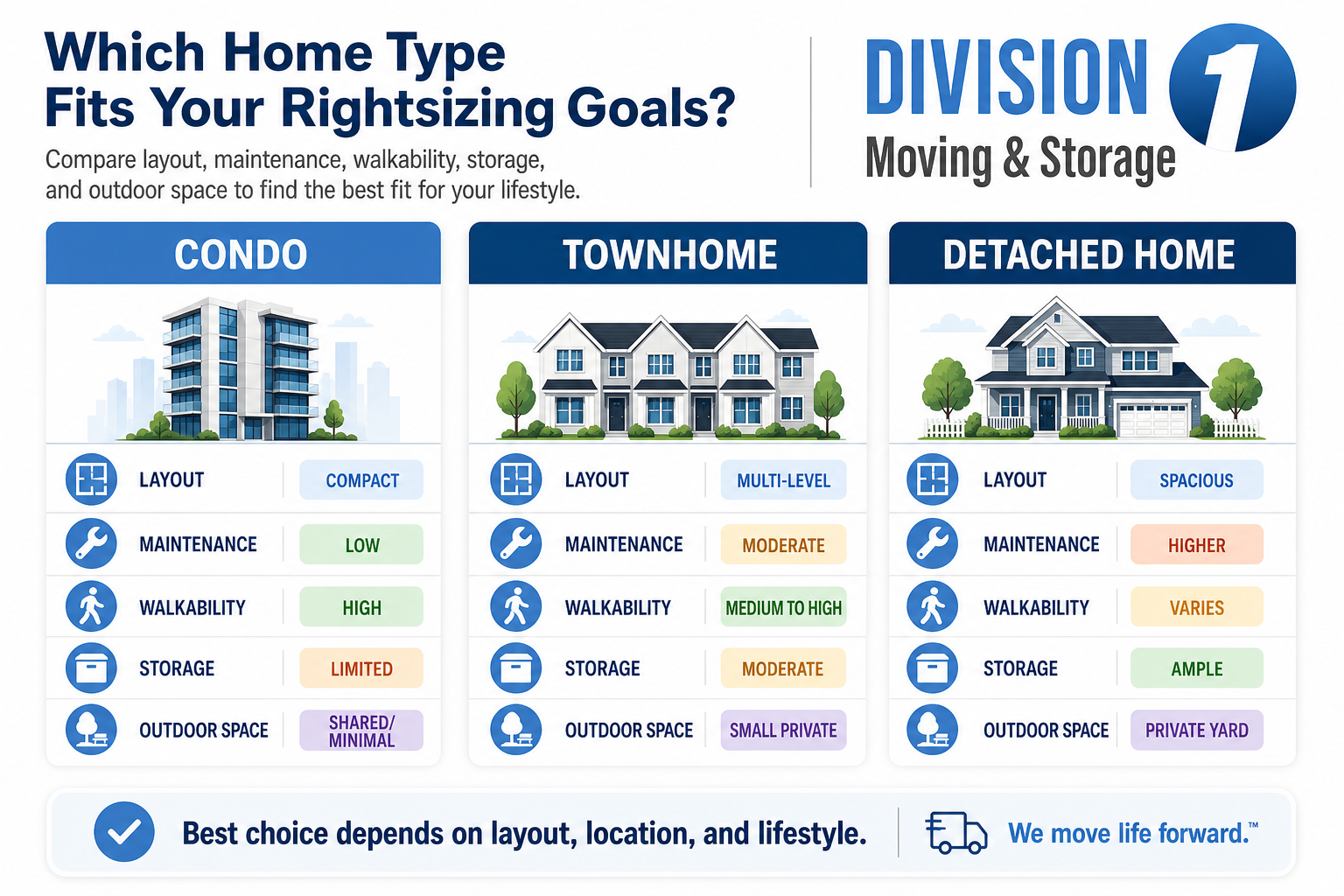
The region offers many possible paths. Some homeowners may prefer urban condos in Alexandria or Arlington. Others may want townhomes in Fairfax or Loudoun. Some households may still want detached homes in Prince William, Stafford, or outer Loudoun, especially if outdoor space, schools, taxes, or commute patterns are part of the decision.
Forecasts for 2025 show moderate price increases across many Northern Virginia jurisdictions and property types. In Fairfax County, townhome inventory is projected to grow around 6.0%, with townhome prices forecast to rise about 3.9%. In Arlington County, townhome prices are projected to rise about 8.7%, reflecting strong demand near the urban core.
Townhomes often provide a middle ground for rightsizers
Townhomes can be a useful option for homeowners who want to reduce exterior maintenance without giving up too much interior living space. They may still provide room for visiting family, a home office, hobbies, or storage. At the same time, they can reduce the burden of a large yard or detached property.
This makes townhomes especially relevant for empty nesters and busy professionals who want convenience but are not ready for a major lifestyle shift into a smaller condo. The right townhome can preserve a sense of space while simplifying upkeep.
Condos can support walkability and lock-and-leave living
Condos may be a better fit for homeowners who prioritize amenities, walkability, and flexibility over private outdoor space. In high-demand areas, a condo can provide access to dining, services, healthcare, and cultural amenities while reducing exterior maintenance responsibilities.
Forecasts show condo price increases of about 3.5% in Fairfax County, 1.6% in Arlington, and 1.5% in Alexandria for 2025. For some rightsizers, that makes condos a practical way to move closer to amenities while keeping maintenance manageable.
Detached homes can still be part of rightsizing
Rightsizing does not require moving into an attached home. Some households still want a detached property, but with a smarter layout, fewer maintenance demands, or a better cost-value balance. In outer jurisdictions, homeowners may find options that better align with commute, schools, taxes, outdoor space, or family needs.
Prince William County single-family homes are forecast to see price increases around 3.5% in 2025. Stafford County is projected to see single-family price growth around 4.5%, and Loudoun County forecasts show single-family price increases around 5.5%. These patterns show that moving to a right size home may mean changing location or layout, not simply shrinking.
Decluttering Makes a Right Size Home Feel Comfortable, Not Crowded
Nearly every rightsizing move requires editing possessions. This is not about throwing away a life’s worth of memories. It is about deciding what deserves space in the next chapter. A right size home only works if the belongings inside it match the space and the routines you want.
Many homeowners start with the easiest categories first. Duplicate kitchenware, old clothing, unused tools, and books can be simpler to evaluate than family photographs or inherited furniture. Early progress builds momentum and makes the more emotional decisions easier.
A useful question is whether each item has real sentimental value, monetary value, or practical use, and whether it fits the life you are designing for the next five to ten years. If it does not, it may be ready for donation, sale, recycling, or removal.
Sentimental belongings need boundaries, not rushed decisions
Photographs, documents, music collections, and memorabilia can be the hardest items to sort. They carry stories, relationships, and identity. Rightsizing works best when these belongings are handled with care, not treated as clutter.
Digitizing can help preserve memories without requiring large physical storage. Scanning family photos and papers into digital archives, or converting CDs and DVDs to digital formats, can reduce the number of boxes while making memories easier to share with children and grandchildren.
Physical keepsakes can also be limited intentionally. A defined keepsake box gives sentimental items a place of honor while preventing them from expanding into every closet, attic, and spare room. The goal is to keep what is meaningful, not everything connected to a memory.
Storage Can Support Rightsizing When It Is Used With a Plan
Some belongings are worth keeping even if they do not belong in your daily living space. Seasonal decorations, sports equipment, inherited furniture, and family heirlooms may not fit comfortably in the new home, but that does not mean they must be discarded immediately.
Off-site storage can be useful when it supports a clear plan. It can help during staging, while transitioning between homes, or when deciding what to do with items that need more time and thought. The key is to avoid using storage as a way to postpone every decision indefinitely.
For Northern Virginia moves, Division 1 Moving and Storage can help coordinate moving and secure warehouse storage when items need to be separated between the new home, storage, and removal. That kind of structure can keep a rightsizing project organized instead of letting extra belongings spill into the new space.
Storage works best when each item has a purpose
Before sending items to storage, decide why they are being stored. Some items may be seasonal. Others may be intended for family members, future use, or a later home setup. If you cannot explain why an item is being kept, it may belong in the donation, sale, recycling, or junk removal category instead.
This step protects the main benefit of rightsizing: a home that is easier to live in. When storage is intentional, your everyday rooms stay clear, useful, and calm. When storage is accidental, clutter simply moves from one address to another.
Professional Moving Help Can Keep the Transition From Becoming Overwhelming
Rightsizing involves real estate decisions, financial planning, emotional choices, packing, lifting, scheduling, cleaning, and setup. Even a positive move can become stressful if every task falls on the homeowner. Professional moving support can make the process more structured and less physically demanding.
Many Northern Virginia moving companies offer full-service support that may include packing, furniture protection, transport, storage, and setup in the new residence. Some regional operators also maintain warehouse facilities for storage during the transition. These services are especially helpful when the move is tied to a closing date, staging schedule, or tight timeline.
Professional packing can be full or partial. Some households prefer to pack personal documents and sentimental items themselves, while crews handle kitchen items, furniture, fragile pieces, and the bulk of household goods. For rightsizing moves, the separation of items is particularly important.
Items going to the new home should be clearly labeled by room and priority.
Items going to storage should be grouped separately so they do not arrive at the new home by mistake.
Donation items should be removed before packing day whenever possible.
Junk or unsalvageable items should be handled before the final move-out cleanup.
Furniture placement should be planned around the new home’s layout, not copied automatically from the old home.
Move-related cleanouts can also be useful when garages, basements, attics, or storage rooms contain items that donation centers cannot accept. Junk removal services can handle bulky items, old appliances, unsalvageable furniture, and debris so the property is ready for buyers or landlords.
Post-move setup matters too. Reassembling beds, placing sofas and dining furniture, and putting boxes in the correct rooms can make the first night in a new home more comfortable. A rightsized home should begin with clear pathways, accessible essentials, and furniture scaled to the rooms.
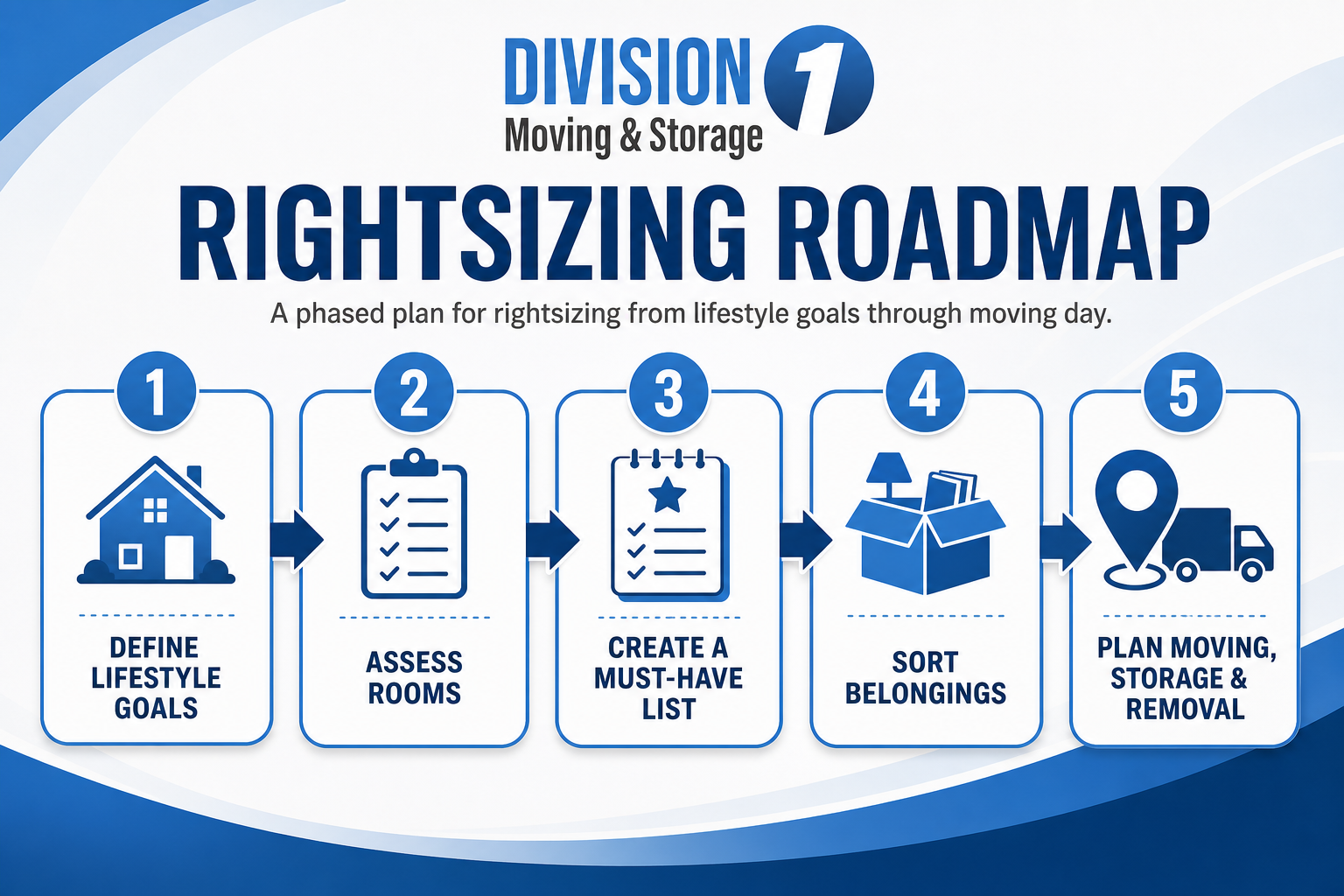
A Step-by-Step Plan for Rightsizing Your Home
A successful rightsizing move usually happens in stages. Trying to make every decision at once can create fatigue and frustration. A phased approach lets you connect lifestyle goals, space planning, decluttering, storage, and moving logistics in a practical order.
The process should begin before you start packing. It may even begin before you start looking seriously at homes. When you know what you want the next home to do for your life, every later decision becomes easier.
Start with the life you want before choosing the square footage
Think about the next five to ten years. Consider your health, work, family connections, hobbies, travel, and daily routines. A home that made sense ten years ago may not be the best fit for the next ten.
Ask what you want to gain. More time? Less maintenance? Better access to grandchildren? A safer layout? A shorter commute? A more walkable neighborhood? A lower monthly burden? These answers should guide the search more than a target square footage number.
Build a room-by-room inventory before you pack
Walk through your current home and evaluate each room by function. Decide what will be needed in the next home, what can be released, and what may need storage. This prevents the common mistake of moving everything first and trying to sort it later.
Pay special attention to formal rooms, guest rooms, closets, basements, garages, and attics. These spaces often hold items that no longer support daily life. They also create much of the packing volume in a move.
Match your home search to your must-have list
Once your lifestyle goals are clear, translate them into property criteria. A main-level bedroom, accessible bathroom, open-plan living area, den, walkability, or proximity to family may matter more than extra bedrooms or a larger yard.
In a competitive market, this list helps you move decisively. It also helps you avoid paying for features you will not use. Rightsizing works best when your home search is guided by lived reality, not old assumptions about what a home should include.
Plan packing, storage, and removal before moving day
After you know what is coming with you, decide what happens to everything else. Some items may be donated. Some may be sold. Some may be recycled or removed. Some may go into storage for a defined reason.
This is where a moving plan becomes essential. The more clearly items are separated before move day, the less likely you are to recreate clutter in the new home. A right size home should feel functional from the beginning, not overloaded with boxes from the past.
Rightsizing Your Home Is a Positive Move Toward Better Daily Living
Rightsizing is not a step backward. It is a practical way to align your home with your priorities, your routines, and your future. For many Northern Virginia homeowners, that means less maintenance, stronger social connection, improved convenience, and more financial freedom.
The right home may be smaller, but it may also simply be smarter. It may have fewer unused rooms, better access to the spaces you use most, less yard work, or a location that supports the life you want. The goal is not to own the most space. The goal is to live well in the space you choose.
If you are moving to a right size home in Alexandria or Northern Virginia, Division 1 Moving and Storage can help with local moving, packing and unpacking, secure warehouse storage, junk removal, furniture assembly and staging, and move-out cleaning and repairs. Get a Quote by calling (571) 970-3189 or visiting https://www.division1moving.com/contact-us.