%201.webp)


.svg)
Planning a move across state lines or across the country? Whether you’re a homeowner or renter, the prospect of long-distance moving can feel overwhelming. With more logistics, higher stakes, and a longer journey than a local move, the right approach can make all the difference. At Division 1 Moving and Storage, we’ve helped countless families and individuals move successfully from Alexandria, VA and throughout Northern Virginia. We know what works, and what can go wrong. Get ready to master your move with these proven long distance moving tips that make relocation safer, smoother, and less stressful.
Don’t Skip Strategic Route Planning
Route planning is at the heart of any long-distance move. Optimizing your path for time, safety, and predictability takes more than plugging your destination into a GPS. Start by setting clear constraints: your ideal arrival date, your budget for fuel and lodging, and your preferred daily driving time. Most experts recommend capping drive time at 6 to 8 hours per day, especially for families or older adults, to reduce fatigue and risk.
Use a combination of online route planners, navigation apps for real-time updates, and weather services to avoid traffic and hazardous conditions. Choose routes that stick to major interstates, which are designed for heavy vehicles and offer wider lanes and better services. Plan fuel stops in advance, especially on rural stretches, and avoid major city rush hours whenever possible. Build in flexibility for weather or unexpected detours.
To ensure a comfortable and safe road trip, it's important to set daily driving limits, aim for about six to eight hours behind the wheel each day. Make use of navigation and weather apps so you can adjust your route in real time if needed. Planning your fuel, meal, and bathroom stops ahead of time will help the journey go smoothly and prevent unnecessary stress. Whenever possible, choose interstate routes, as they typically offer a smoother and more efficient travel experience. Finally, be sure to schedule regular breaks to combat fatigue and stay refreshed throughout your trip.
Careful planning here ensures your long-distance move stays on schedule and reduces the risk of accidents or logistical headaches.
Choose Overnight Stops for Safety and Comfort
Long-distance moves often require at least one overnight stop. The right choice of where to stay can make a huge difference. Prioritize medium-sized towns or suburbs near main highways over isolated exits. These areas tend to have better amenities, safer neighborhoods, and a range of lodging options.
Arrive before dark whenever possible, especially when traveling with children or pets. Use major booking platforms to vet hotels for safety, cleanliness, and secure parking. Opt for properties with interior corridors and visible staff, and factor in total costs, including parking and meals. If you’re moving as a family, look for hotels with included breakfast or in-room refrigerators to save on meals and keep routines steady.
1. Arrive at overnight stops before sunset for better safety
2. Choose hotels in well-serviced, suburban areas
3. Check for secure parking and interior corridors
4. Consider amenities like breakfast and laundry facilities
5. Factor in total costs (room, parking, meals)
Strategic overnight planning reduces stress and keeps everyone rested and ready for the next day’s drive.
Master Efficient Packing Techniques
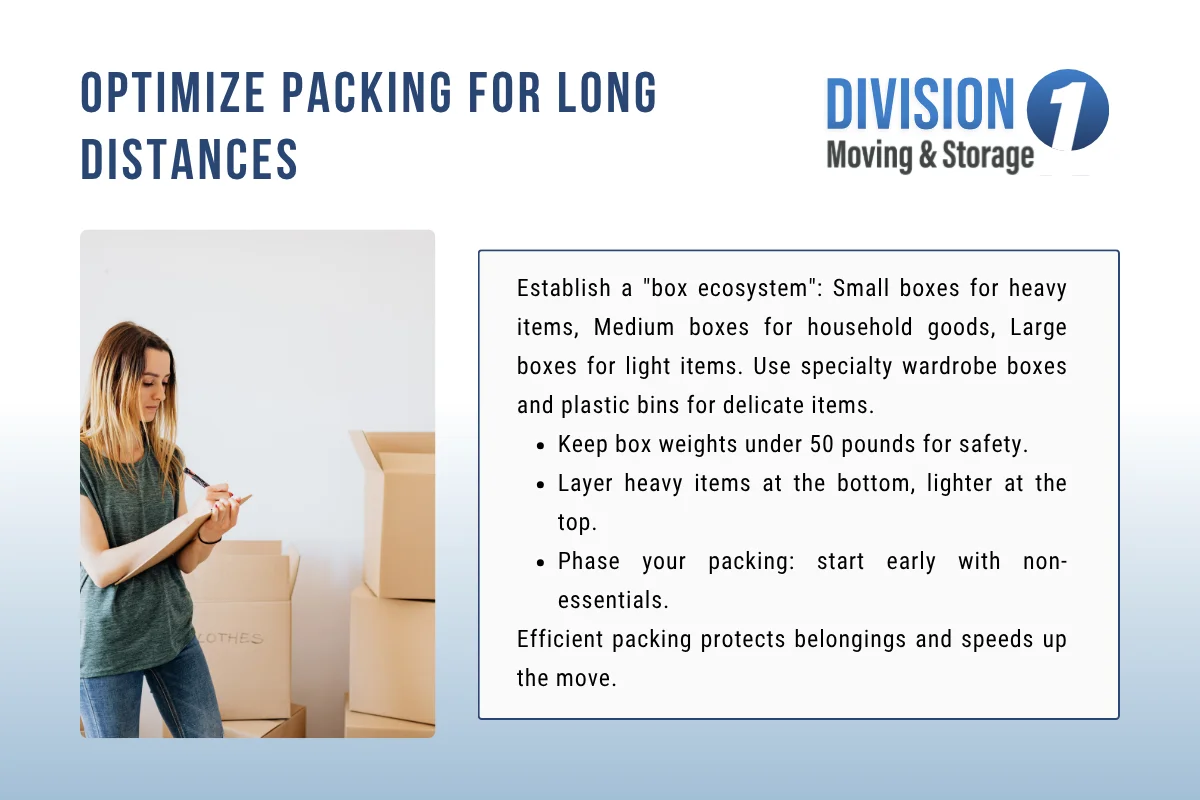
Efficient packing is critical when your belongings will be on the road for hundreds or thousands of miles. Start by designing a “box ecosystem” with standard sizes: small boxes for heavy items, medium for most household goods, and large for light, bulky items. Add specialty wardrobe boxes for hanging clothes and plastic bins for items that need extra protection from humidity or repeated handling.
Keep box weights under 50 pounds to avoid injury and make stacking easier for movers. Layer dense, heavy items at the bottom of each box, then fill the top with lighter, soft items and void fill like towels or packing paper. This prevents internal movement and keeps boxes manageable. Use a phased approach to packing: start with rarely used items weeks in advance and finish with essentials right before moving day.
Efficient, system-level packing not only protects your belongings but also speeds up loading and unloading at both ends of your move.
Pack Valuables and Fragile Items with Extra Care
Long-distance moves can be rough on fragile and high-value items. Protect electronics, art, and heirlooms with double-walled boxes, foam inserts, and plenty of padding. If possible, use original packaging for electronics. For dishes and glassware, wrap each piece individually and pack plates vertically like records, using specialty dish packs when available.
Jewelry, important documents, and irreplaceable items should always travel with you in the car, not on the moving truck. For sentimental or high-value possessions, consider custom boxes or professional packing services. Use stretch wrap to protect furniture surfaces, and avoid overfilling boxes to minimize the risk of crushing. Mark all fragile boxes on at least two sides with clear handling instructions.
Here are some additional tips on how to pack valuables and fragile items:
Double-box fragile items for extra protection
Wrap electronics in original packaging if possible
Carry irreplaceable valuables and documents yourself
Use stretch wrap on furniture to prevent scratches
Label all fragile boxes with clear handling notes
Thoughtful packing of valuables helps prevent costly losses and ensures peace of mind throughout your move.
Create a Family-Friendly Packing and Labeling System
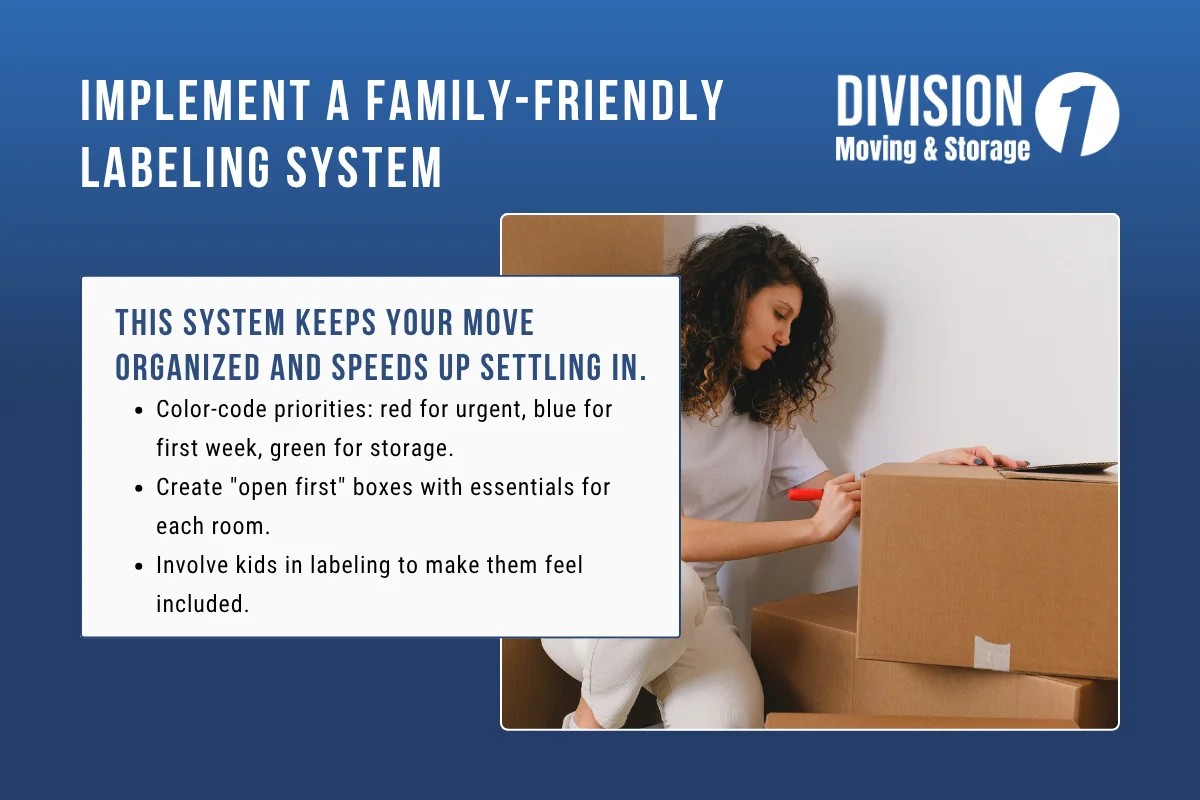
Organization is everything in a long-distance move. Go beyond basic “room + contents” labeling with a four-part system: room code, priority level, content snapshot, and handling indicator. For families, color-code priorities so everyone knows which boxes to unpack first. Kids can help apply colored stickers, giving them a sense of control and helping keep boxes organized.
Packing by room and by “zone” (archive, standard, active) makes it easier to unpack logically at your new home. Prepare “open first” boxes for each room with essentials for the first few days, think bedding, favorite toys, kitchen basics, and toiletries. These should be the last loaded and first unloaded.
To make your move smoother, assign room codes and priority levels to each box so you know exactly where everything belongs and how quickly it needs to be unpacked. Be sure to label at least two sides of every box for easy identification, no matter how they're stacked. Implement a color-coding system to indicate unpacking priority, use red for items that should be opened first, blue for things needed within the first week, and green for items that can go into storage. Prepare special "open first" boxes for each room so essentials are always within reach. If you have kids, involve them in the labeling process to make the move more engaging and help them feel included.
This approach keeps your move organized and helps every family member settle in faster at your destination.
Follow a Room-by-Room Packing Timeline
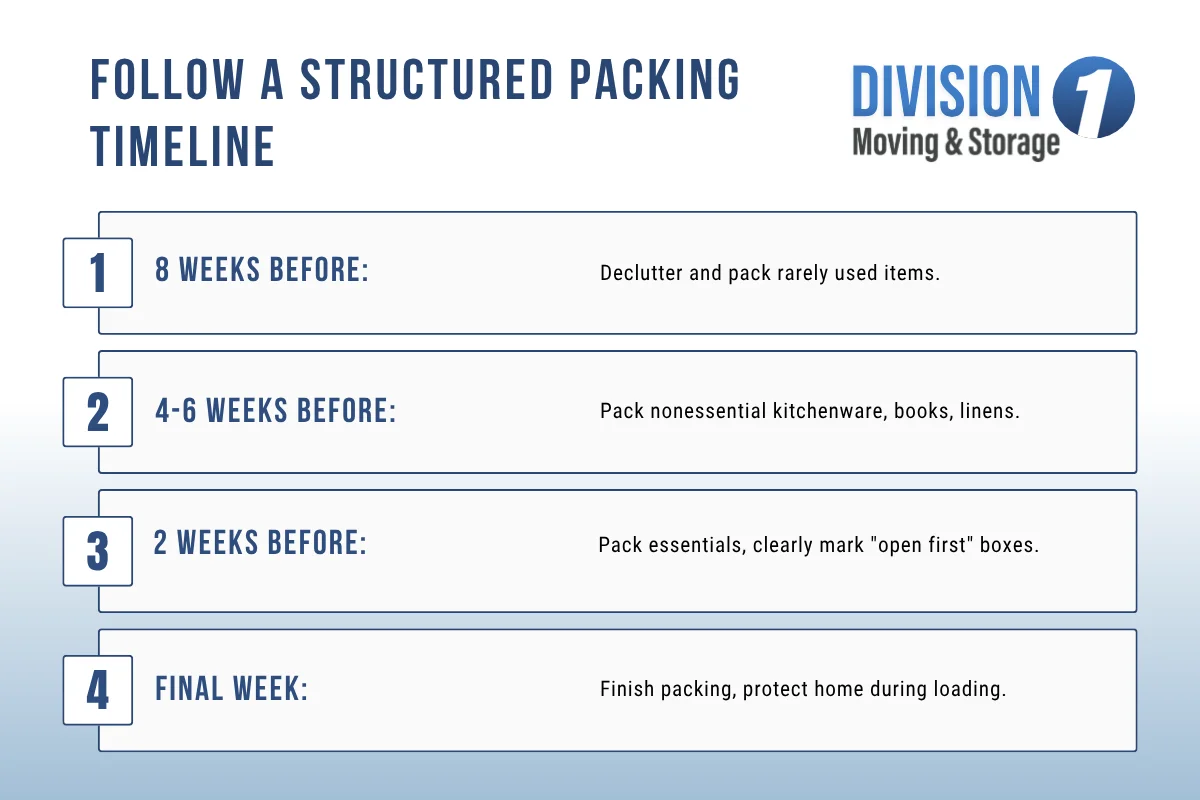
A structured, phased packing timeline keeps your move organized and prevents last-minute chaos. Start 8 weeks before your move by gathering supplies and decluttering. Pack rarely used “archive” items like seasonal décor and off-season clothes first. Four to six weeks out, pack nonessential kitchen gear, books, and backup linens. Two weeks before moving day, pack almost everything except daily essentials, clearly marking “open first” boxes.
The week of the move, finish packing active zones and ensure important items are set aside for travel in your car. This methodical approach creates minimal disruption to daily life and reduces stress for everyone involved.
Timeline Moving Tasks 8 weeks before Begin by decluttering your home and packing items you rarely use. 6 weeks before Start packing nonessential rooms and belongings you won’t need soon. 4 weeks before Pack the majority of your possessions, leaving out only items for daily use. 2 weeks before Organize and label “open first” boxes with essentials for your first days in the new home. Final week Complete the last of your packing and take steps to protect your home while loading the moving truck.
This time-based system is proven to keep long-distance moves on track and manageable.
Plan for Kids and Pets: Comfort and Routines Matter
Long-distance moves are especially challenging for children and pets. Give kids age-appropriate packing tasks, let them help with labeling, and prepare comfort kits with their favorite items for the journey. Create an “open first” box for each child’s room that includes bedding, nightlights, and a few favorite books or toys.
For pets, pack a travel kit with food, water, bowls, medications, and familiar bedding. Crate-train pets in advance and keep them with you during the move. Never transport pets in the moving truck.
Involve kids in packing and labeling
Create comfort kits for kids and pets
Prepare “open first” boxes for routines
Keep pets’ essentials and crates accessible
Maintaining familiar routines and comfort items helps everyone adjust more smoothly to the move and the new environment.
Understand and Manage Delivery Windows
Unlike local moves, long-distance moving companies provide delivery windows rather than exact dates. These windows account for variables like distance, route complexity, and truck sharing. Standard windows are more affordable but can mean more waiting; premium or dedicated services offer tighter timelines at a higher cost.
To ensure a smooth move, coordinate your arrival to align with your delivery window so you are not left waiting for your belongings. Book your moving services early, provide detailed inventory and access information, and stay in regular contact with your moving company to avoid surprises. Understand your delivery window options and adjust your travel plans to minimize the time spent without your possessions. In case there is a gap between your arrival and the delivery of your items, be prepared by arranging temporary housing or storage solutions.
Being proactive with delivery windows prevents unnecessary downtime and helps your transition go smoothly.
Know What Never Goes on the Moving Truck
Some items should always travel with you, not in the moving truck. Keep important documents, passports, valuables, medications, small electronics, and sentimental items in your car or carry-on. Hazardous materials, perishable food, and irreplaceable items should never be loaded onto the truck for safety and compliance reasons.
Carry vital documents and valuables yourself
Never pack hazardous materials or perishables
Keep kids’ and pets’ essentials with you
Consult your mover for a list of prohibited items
This risk-based approach minimizes potential losses and ensures you have everything critical at hand during your move.
Choose the Right Movers for Your Long Distance Relocation
The mover you select can make or break your long-distance move. Look for companies with a strong reputation in the Alexandria and Northern Virginia region, proper licensing and insurance, and transparent written estimates. Check reviews for consistent feedback about on-time arrivals, communication, and damage handling. Value is about more than price, make sure your quote includes all the services you need, from packing help to storage or furniture assembly.
Be clear about your requirements: distance, timing, special items, and any potential need for storage. At Division 1 Moving and Storage, we offer a range of services tailored to long-distance moves, including reliable long distance moving services and secure storage options to bridge any gaps between homes.
Tip Details Confirm Licensing and Insurance Make sure the moving company is properly licensed and carries adequate insurance to protect your belongings. Ask for Written Estimates Request detailed, written estimates from each mover so you can compare pricing and avoid hidden fees. Review Customer Feedback Read online reviews and testimonials to gauge the company’s reliability and quality of service. Check Available Services Verify that the mover provides all the specific services you need for your relocation.
Choosing the right moving partner gives you peace of mind and ensures your belongings arrive safely and on schedule.
Legal and Regulatory Considerations for Cross-State Moves
Moving across state lines comes with its own set of legal requirements. Update your vehicle registration and obtain a new driver’s license within the required period (often 20, 60 days after establishing residency). Make sure your auto insurance is valid in your new state before registering your vehicle. The Federal Motor Carrier Safety Administration (FMCSA) regulates interstate movers, requiring them to provide specific documentation and adhere to liability standards. Know your rights and the regulations for both your origin and destination states to avoid fines or coverage lapses.
Update driver’s license and vehicle registration promptly
Check insurance requirements in your new state
Understand your mover’s FMCSA compliance
Keep copies of all moving documents
Staying compliant with state and federal moving regulations protects you from unexpected legal or financial headaches during your relocation.
Long Distance Moving Checklist: Stay on Track
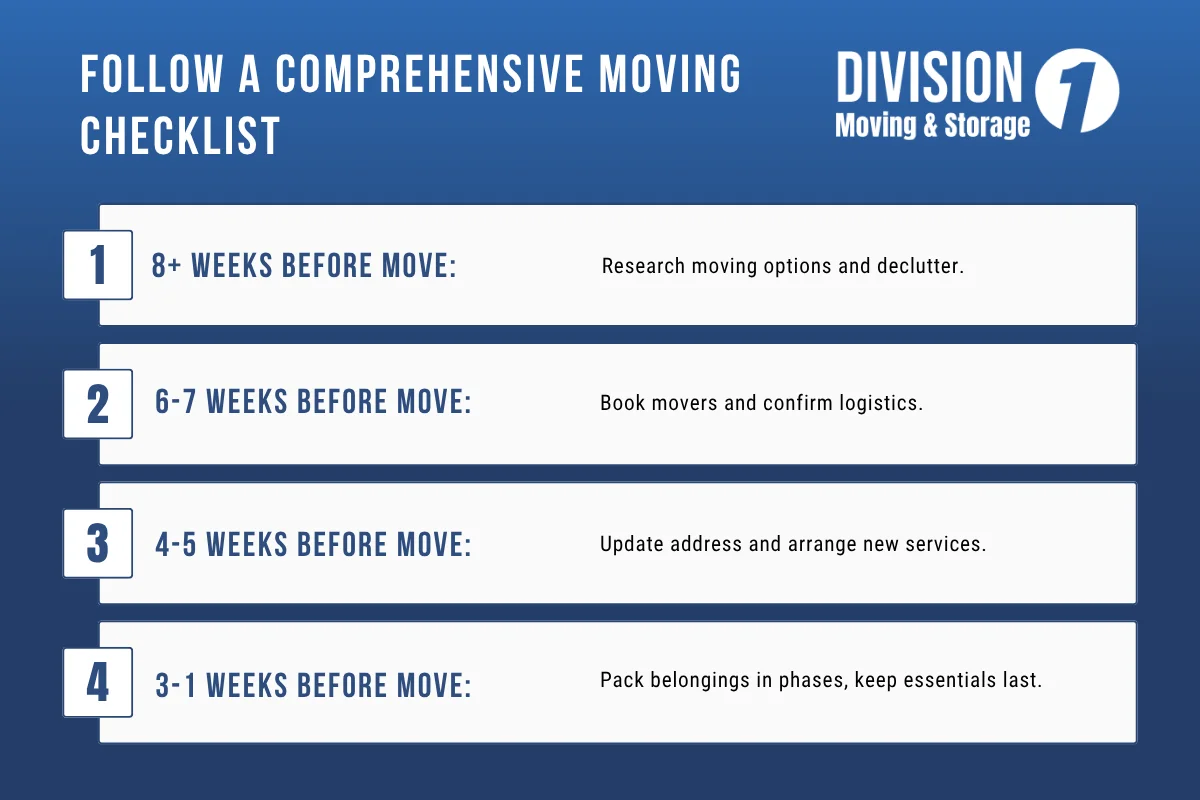
A detailed checklist is your best friend for a successful long-distance move. Start planning at least eight weeks out, and sequence tasks by priority and lead time. Begin by defining your move’s scope, researching movers, and booking services. Declutter and create a detailed inventory to reduce shipment weight and cost.
Lock down housing, school, and medical arrangements early. Four weeks out, update your address and utilities, and confirm move logistics with your mover. The week before your move, pack essentials, double-check your delivery window, and prepare for your travels. Upon arrival, prioritize unpacking “open first” boxes and verify performance against your delivery agreement.
Timeline Task 8+ Weeks Before Move Begin your moving journey by researching moving options and decluttering your home. Donate, sell, or discard items you no longer need to lighten your load. 6-7 Weeks Before Move Book your moving company or rental truck and confirm all logistics. Ensure you have a clear plan for moving day. 4-5 Weeks Before Move Start updating your address with post offices, banks, schools, and utility providers. Arrange for new services at your new home as needed. 3-1 Weeks Before Move Pack your belongings in phases, starting with items you use least. Leave essentials for last to keep your daily routine uninterrupted. Moving Day & After Track your delivery and begin unpacking, focusing on the most important rooms and items first to settle in smoothly.
Following a structured moving checklist ensures nothing gets missed and your transition is as smooth as possible.
Your Long Distance Move: Make It Simple with Division 1 Moving and Storage
Relocating across the country or to another state is a big undertaking, but it doesn’t have to be overwhelming. By following these expert long distance moving tips, you’ll stay organized, protect your belongings, and keep your journey stress-free from start to finish. If you’re moving from Alexandria or anywhere in Northern Virginia, Division 1 Moving and Storage is your trusted partner for professional, on-time, and on-budget long distance moves. Ready to get started? Get a quote today or call us at (571) 970-3189. Let’s make your next move your best move.