%201.webp)


.svg)
Arlington neighborhoods are among the most sought-after places to live in Northern Virginia, offering a rare blend of suburban comfort, urban convenience, and rich community spirit. Whether you’re a growing family, a young professional, or someone seeking historic charm, family-friendly Arlington neighborhoods promise a lifestyle that’s hard to match. From top-tier schools and lush green spaces to vibrant dining hubs and excellent transit options, this guide will help you explore what makes Arlington neighborhoods truly exceptional.
Top Family-Friendly Arlington Neighborhoods
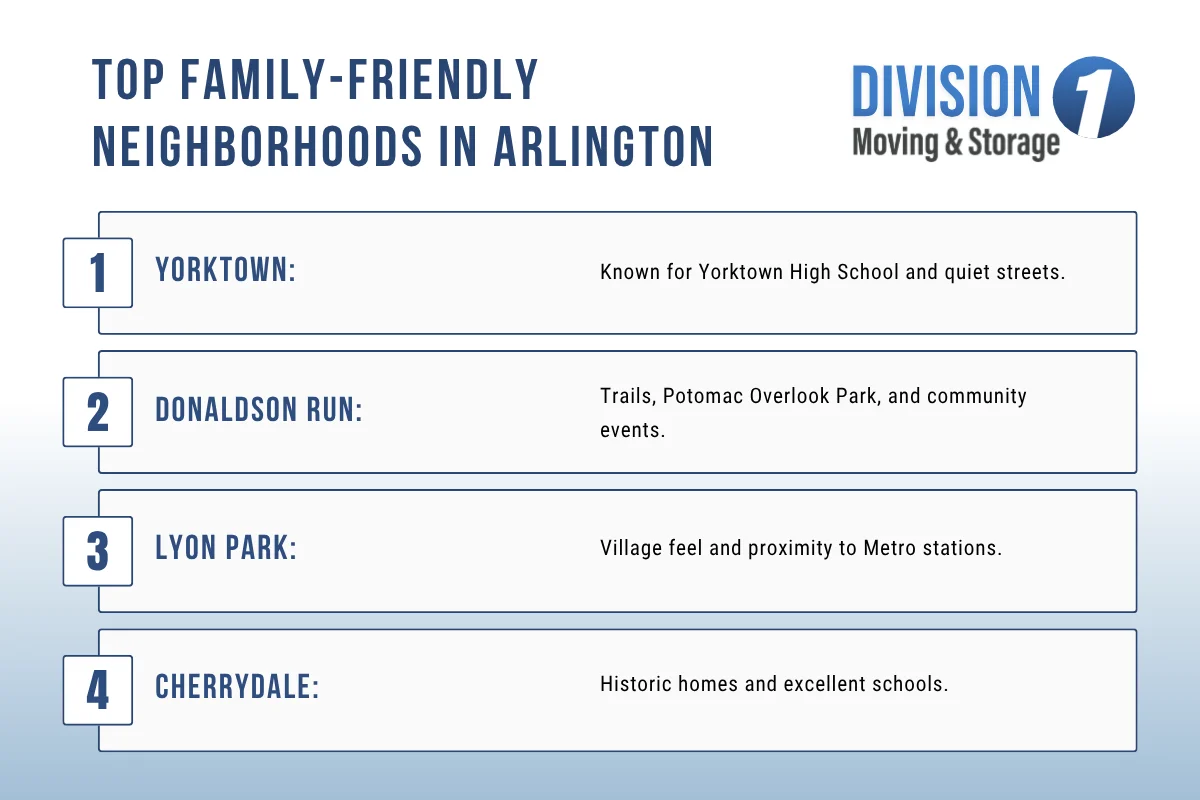
Families searching for the perfect home in Arlington have no shortage of options. The top family-friendly Arlington neighborhoods are distinguished by their safe streets, highly rated schools, and a strong sense of community. Notable areas like Yorktown, Donaldson Run, and Lyon Park consistently attract families who want both suburban tranquility and easy access to Washington, D.C.
One of the hallmarks of these neighborhoods is walkability. Children biking to school, neighbors gathering for block parties, and parents chatting on front porches are everyday sights. Homes here range from classic Colonials to charming Tudors and well-kept townhouses, each supporting long-term family living.
Families are drawn to amenities such as parks, playgrounds, and community centers. Quincy Park, for instance, boasts 14 acres of playgrounds, sports fields, and picnic areas, perfect for family outings. Community centers like Langston-Brown and Arlington Mill offer everything from arts rooms to fitness facilities, ensuring kids and adults alike have plenty to do.
Yorktown: Known for top-ranked Yorktown High School and leafy, quiet streets.
Donaldson Run: Offers trails, Potomac Overlook Park access, and close-knit community events.
Lyon Park: Village-like feel, local markets, and walkable to Metro stations.
Tara-Leeway Heights/Westover: Family-friendly charm and vibrant local businesses.
Cherrydale: Historic homes, excellent schools, and strong community engagement.
Safety is a key priority. These neighborhoods typically receive high ratings for low crime, contributing to peace of mind and long-term stability. Demographically, Arlington’s population is diverse and family-focused, with about 17.7% under 18 and a blend of cultures that enrich the community fabric.
Walkability: The Heartbeat of Arlington Neighborhoods
Walkability is a signature feature of Arlington neighborhoods, earning the county a prestigious Platinum-level Walk Friendly Community status. The best neighborhoods seamlessly blend residential living with easy access to shops, parks, dining, and transit, making daily life both convenient and enjoyable.
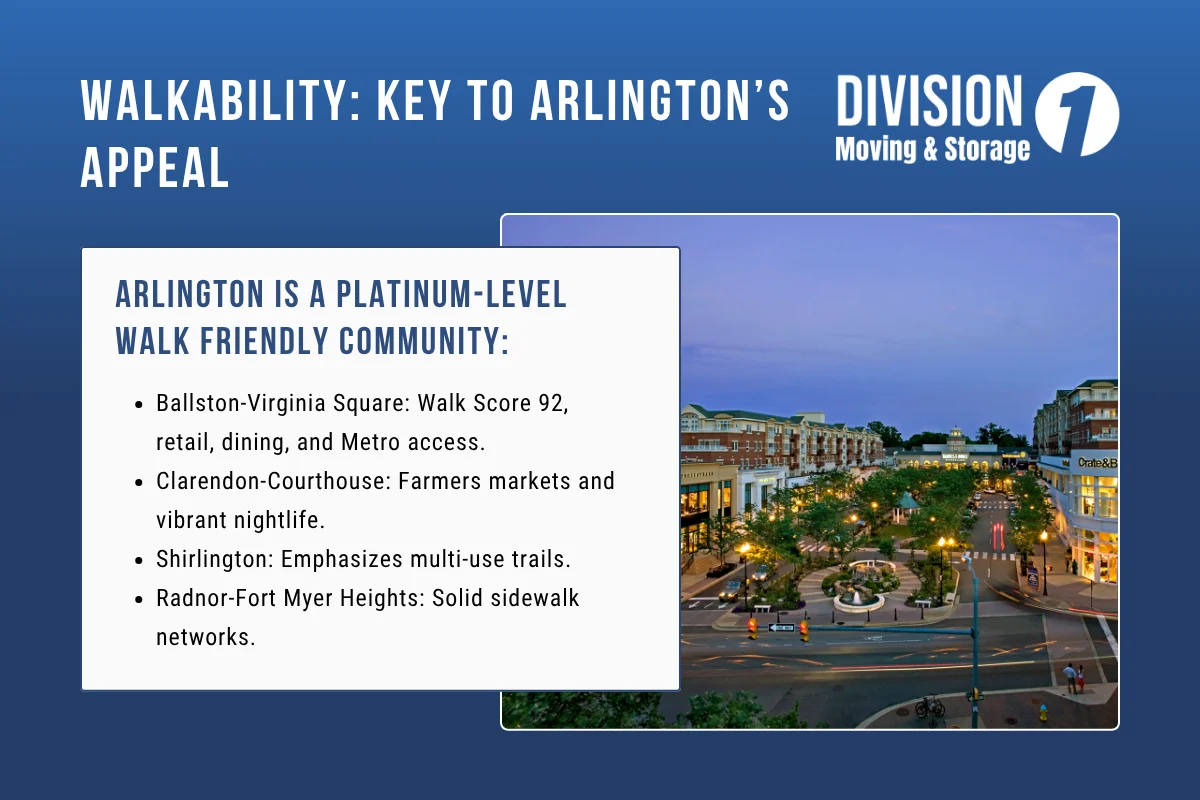
Areas like Ballston-Virginia Square and Clarendon-Courthouse stand out for their exceptional walkability. Wide, continuous sidewalks, well-lit crosswalks, and traffic-calmed streets encourage residents to leave the car at home. In these neighborhoods, it’s possible to accomplish 80-90% of daily errands on foot.
Ballston-Virginia Square: Walk Score 92, major retail, dining, and Metro access.
Clarendon-Courthouse: Mixed-use zoning, farmers markets, and vibrant nightlife.
Shirlington: Emphasis on multi-use trails and park connectivity.
Radnor-Fort Myer Heights: Solid sidewalk networks and trail access.
Sidewalks cover over 527 miles in Arlington, connecting neighborhoods and parks. The county’s “Complete Streets” initiative ensures all arterial and neighborhood roads are built for pedestrians, cyclists, and vehicles, making it easier and safer for everyone to get around.
Access to Public Transit: Seamless Connectivity Across Arlington
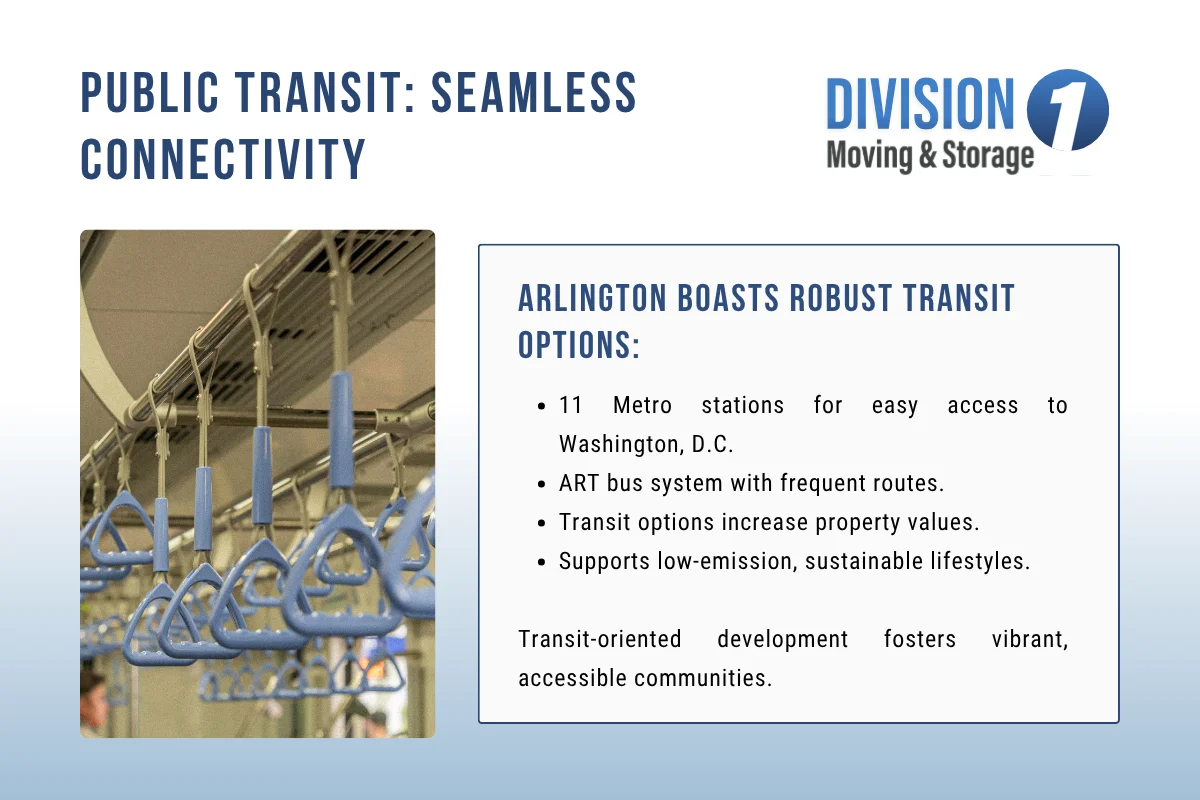
Public transit is a cornerstone of Arlington’s appeal, making it possible for many residents to live car-free. The county boasts 11 WMATA Metro stations situated across the Orange, Silver, Blue, and Yellow Lines, as well as a robust ART bus network. This integration of transit options expands the reach of walkable neighborhoods and adds to Arlington’s desirability.
Key Metro stations such as Rosslyn, Clarendon, Ballston-MU, Pentagon, and Crystal City connect Arlington to Washington, D.C. and the broader region. ART buses provide additional coverage, particularly for neighborhoods not directly on Metro lines. In Ballston and Clarendon, the synergy between Metro, bus routes, and walkable streets creates a “walker’s paradise” where commuting, shopping, and entertainment are all within easy reach.
11 Metro stations throughout Arlington for easy access to D.C. and beyond
ART bus system with frequent routes and high on-time performance
Proximity to transit raises property values and attracts professionals
Metro and bus routes support sustainable, low-emission lifestyles
Transit-oriented development has shaped Arlington neighborhoods, driving economic growth and fostering vibrant, mixed-use communities. For families and professionals alike, the ability to walk or take transit to work, school, or entertainment venues is a major advantage.
Best Schools in Arlington: A Magnet for Families
The reputation of Arlington Public Schools (APS) is a primary factor in the popularity of many Arlington neighborhoods. Consistently ranked among the top districts in Virginia, APS delivers strong academic performance, high graduation rates, and a broad range of extracurricular opportunities.
Neighborhoods such as Yorktown, Cherrydale, and Westover are especially prized for their school zones. Top-performing schools like Williamsburg Middle, Jamestown Elementary, and Arlington Traditional attract families seeking the best educational opportunities for their children.
Yorktown High: High academic standards and community involvement
Glebe Elementary and Washington-Liberty High: Serving Cherrydale
Williamsburg Middle: Top 15 statewide, strong proficiency rates
Jamestown Elementary: Small classes and collaborative teaching
Nottingham and Tuckahoe: Ranked in Virginia’s top 15 elementary schools
The quality of APS schools drives housing demand, often resulting in higher property values in coveted zones. Families value not just test scores, but also the quality of extracurriculars, teacher engagement, and community support. School proximity and walkability further enhance these neighborhoods’ desirability.
Dining and Entertainment Hubs: The Social Pulse of Arlington
Arlington neighborhoods are known for their dynamic dining and entertainment scenes. Areas like Clarendon, Ballston, and Rosslyn have transformed into vibrant social hubs, offering everything from global cuisine and trendy cafes to lively nightlife and music venues.
Clarendon leads the way with a diverse mix of restaurants, bars, and coffee shops. Northside Social is a favorite for coffee and wine, while AMBAR offers unique Balkan small plates. Lyon Hall brings brasserie charm to the neighborhood, and the Clarendon Ballroom is a go-to for nightlife.
Ballston’s Silver Diner and Bronson Bierhall provide family-friendly dining and live music, while Rosslyn’s Upside on Moore food hall caters to a variety of tastes in a spacious, event-ready setting. Shirlington’s Village at Shirlington blends dining, retail, and entertainment, including the beloved Busboys and Poets.
Clarendon: Premier destination for dining, nightlife, and events
Ballston: Mix of family-friendly eateries and live music venues
Rosslyn: Upscale food halls and curated culinary experiences
Shirlington: Cultural events and unique restaurant concepts
Columbia Pike: International cuisine and late-night favorites
These hubs not only provide entertainment but also strengthen community ties, attract young professionals, and support the local economy. Frequent events, happy hours, and pop-up markets keep the social calendar full and foster a sense of belonging.
Green Spaces and Parks: Arlington’s Outdoor Advantage
Green spaces are integral to the quality of life in Arlington neighborhoods. With more than 100 parks and over 950 acres of public spaces, Arlington is consistently ranked as one of the nation’s best cities for park access. Nearly every resident lives within a 10-minute walk of a park, underscoring the county’s commitment to outdoor living.

Quincy Park, Long Bridge Park, and Lubber Run Park are just a few examples of Arlington’s well-maintained recreational spaces. These parks offer playgrounds, athletic fields, picnic areas, and walking trails, making them ideal for families, fitness enthusiasts, and anyone seeking a breath of fresh air.
99% of residents live within a 10-minute walk of a park
Long Bridge Park: 30 acres of greenspace and sports facilities
Lubber Run Park: Renovated for improved accessibility and play
Mosaic and Chestnut Hills: Popular park-school combinations
Arlington’s green infrastructure also provides ecological benefits, improving air quality and supporting biodiversity. The county’s Urban Forest Master Plan protects nearly 130,000 trees, while the Public Spaces Master Plan aims to add even more acreage and amenities in the years ahead.
Access to parks and green spaces is a key consideration for homebuyers and renters alike, often boosting property values and contributing to high resident satisfaction.
Historic Neighborhoods: Preserving Arlington’s Unique Heritage
Arlington neighborhoods are steeped in history, with over 30 local historic districts and more than 70 properties listed on the National Register of Historic Places. Areas like Maywood, Lyon Park, Glencarlyn, and Arlington Village showcase a fascinating mix of architectural styles and cultural traditions.
Historic districts are carefully preserved, maintaining their distinctive look and feel through regulated design standards. This preservation not only safeguards Arlington’s heritage but also enhances property values and promotes neighborhood stability.
Maywood: Queen Anne, Colonial Revival, and bungalow homes from early 1900s
Lyon Park and Lyon Village: Federal-style and Cape Cod houses from the interwar period
Glencarlyn: Colonial-era sites and simple frame homes
Arlington Village: WWII-era garden apartments in Colonial Revival style
Preservation efforts are managed by the county’s Historical Affairs and Landmark Review Board, which oversees exterior changes and ensures new developments blend with historic surroundings. Residents take pride in maintaining their homes, often hosting tours and community events to celebrate Arlington’s diverse past.
Living in a historic Arlington neighborhood means enjoying a unique blend of old-world charm and modern convenience, with easy access to top schools, parks, and transit.
Real Estate Trends in Arlington Neighborhoods
The real estate market in Arlington remains robust, with historic neighborhoods commanding premium prices due to their scarcity, charm, and preservation protections. Median sale prices for vintage homes range from $670,000 to $742,000, with overall median prices in Arlington hovering between $698,000 and $826,000 as of early 2026.
Demand is driven by Arlington’s proximity to Washington, D.C., excellent schools, and strong transit infrastructure. Homes in historic districts often receive multiple offers and sell quickly, especially when well-maintained. Teardowns are rare in protected areas like Maywood, where preservation ensures long-term value and neighborhood character.
Median single-family home prices projected to grow by 3.8% this year
Active listings are up, but demand remains high for move-in-ready homes
Townhome and condo markets are stabilizing after recent declines
Historic designations prevent overdevelopment and speculative flipping
Buyers are prioritizing neighborhoods with enduring appeal, historic homes, walkable locations, and access to parks and schools. Preservation acts as a value multiplier, attracting long-term residents who appreciate Arlington’s unique identity and community spirit.
Why Arlington Neighborhoods Stand Out
Arlington neighborhoods offer a rare combination of safety, walkability, top-rated schools, diverse dining, abundant parks, and rich history, all within a vibrant, inclusive community. Whether you’re looking for the perfect place to raise a family, enjoy car-free city living, or invest in a property with lasting value, Arlington delivers on every front.
If you’re considering a move within Northern Virginia, Division 1 Moving and Storage is here to help make your transition smooth and stress-free. From professional local moving services in Arlington and throughout Northern Virginia to secure storage options and expert packing, our team ensures your next chapter in one of Arlington’s premier neighborhoods starts off right. Explore our service areas to see how we can support your move in Alexandria, Arlington, and beyond.

Ready to Move to Your Ideal Arlington Neighborhood?
At Division 1 Moving and Storage, we take pride in serving Arlington and Northern Virginia with professional, reliable moving services. Whether you’re relocating to a family-friendly enclave, a bustling urban hub, or a historic district, we have the experience and local knowledge to make your move effortless. Get a quote today or call us at (571) 970-3189, and let’s start your journey to one of Arlington’s exceptional neighborhoods.

















.webp)
.webp)
.webp)









.webp)









.webp)


