


.svg)
Moving a refrigerator is one of the most challenging tasks during a home relocation. With its weight, bulk, and sensitive components, improper handling can lead to costly damage or even injury. For homeowners and compliance professionals in Alexandria, VA, understanding the right process is essential to protect your investment and ensure a smooth transition. This guide details every step, from preparation to post-move setup, so you can move your fridge safely and efficiently.
In Alexandria, VA, Division 1 Movers are your trusted specialists for local and long distance moves. If anything is unclear as you read this guide, feel free to contact us.
Preparation and Planning: The Foundation of a Safe Move
Before you even unplug your fridge, careful planning is crucial. Start by measuring the refrigerator’s height, width, and depth, including handles. Map out your route through doorways, hallways, and staircases, noting any tight turns or obstacles. This step helps you avoid last-minute surprises and ensures the fridge will fit through all spaces without damage. If necessary, consult your fridge’s manual to determine if doors or handles need to be removed for clearance.
Next, empty the fridge completely. Consume perishables, donate extras, and use coolers with ice packs for temporary storage. This not only reduces the appliance’s weight, fridges can weigh between 200 and 400 pounds, but also prevents spills and odors during the move. If your fridge has an ice maker or water dispenser, shut off the water valve, detach the hose, and drain any remaining water into a bucket to prevent leaks.
Gather the right tools before you begin:
- Appliance dolly or hand truck
- Moving blankets and straps
- Floor protectors (sliders or plywood)
- Painters tape or stretch wrap
- Helpers, never attempt to move a fridge alone
Defrosting: Preventing Leaks and Odors
Defrosting is a critical step that should not be rushed. Unplug your refrigerator at least 24 hours before moving day. Open the doors wide and place towels or trays underneath to catch melting ice. This prevents water damage to your floors and ensures the fridge is dry and odor-free for transport.

If you need to speed up the process, place a pan of boiling water on a towel-protected shelf inside the fridge and replace it every 10 minutes. Alternatively, use a hairdryer on a low setting, keeping it away from water. In warm rooms, a fan can help circulate air and accelerate melting. Once all ice is gone, wipe down the interior and leave the doors open to allow any remaining moisture to evaporate.
Cleaning: Protecting Your Appliance and Your Health
With the fridge empty and defrosted, it’s time to clean. Remove all shelves, drawers, and bins. Soak these parts in warm, soapy water, scrub gently, and dry thoroughly. For the interior, use a hot soapy rag followed by a CDC-recommended bleach solution (1 tablespoon bleach per gallon of hot water) to sanitize all surfaces, including doors and seals. This step eliminates bacteria and prevents odors from developing during transit.
Don’t forget hidden areas like the evaporator pan and coils, vacuum these to remove dust and debris. For stainless steel exteriors, use a mild soap and a microfiber cloth. Avoid wrapping the fridge in plastic directly, as it can cause discoloration. Dry every component meticulously, as even a small amount of moisture can lead to mildew. Pack removable parts separately in bubble wrap or towels for added protection.
Securing Doors and Components: Preventing Damage in Transit
Securing the fridge’s doors and internal components is essential to avoid damage. Use painter’s tape or stretch wrap to keep doors closed, but do not overtighten, as this can bend the seals. For side-by-side or double-door models, bungee cords, Velcro straps, or zip ties over the handles work well. If your fridge has a freezer compartment, secure it separately. Specialized RV latches are also available for added security during travel.
Wrap the entire fridge in moving blankets or pads, focusing on corners and handles. Secure the blankets with tape to prevent scratches and dents. If you haven’t removed the shelves, tape them in place to prevent shifting. Always keep the fridge upright during the move to protect the compressor and ensure proper oil flow as Whirlpool advises.
Loading and Transport: Safety First, Every Step of the Way
Loading and transporting a fridge is where most accidents and appliance failures occur. Attention to detail and teamwork are essential. Here’s how to do it right:
Positioning the Dolly
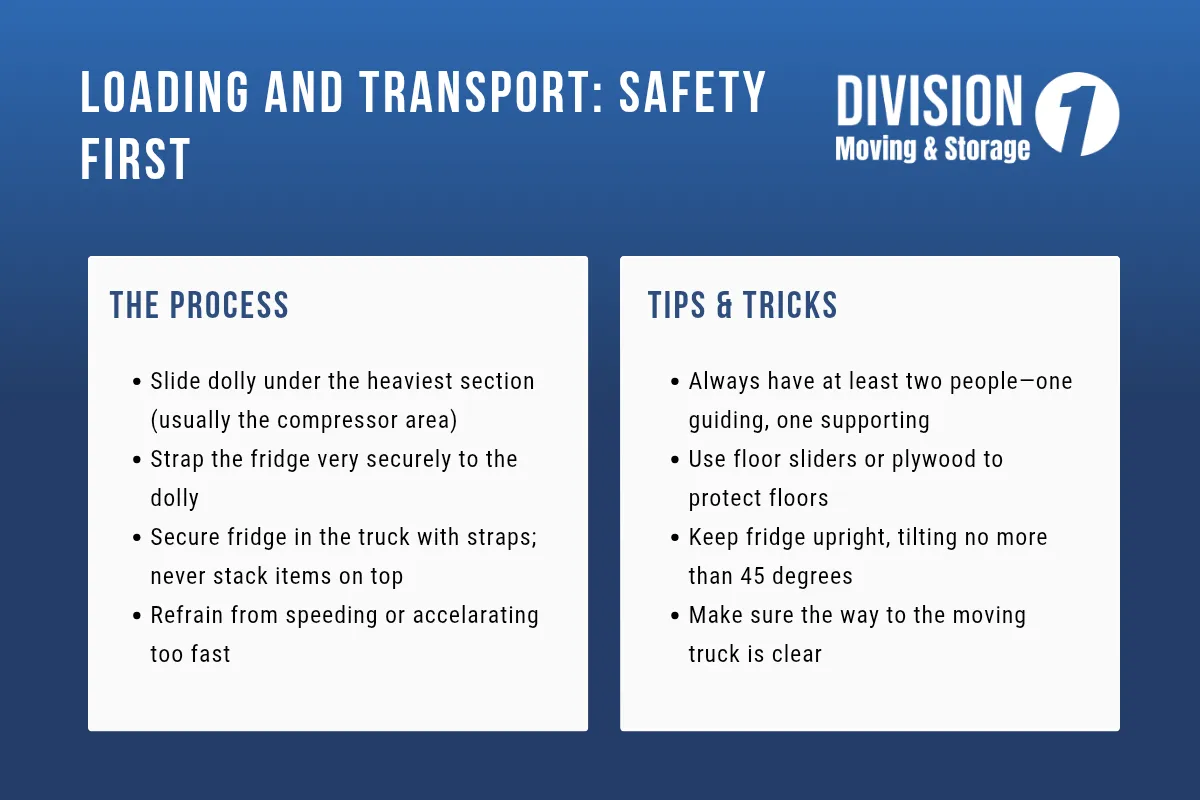
Tilt the fridge slightly sideways (never forward) to slide the dolly underneath. Center the dolly under the fridge’s heaviest section, usually the compressor area at the bottom rear. Strap the fridge securely to the dolly at the center, ensuring it cannot shift during movement.
Teamwork and Communication
Always have at least two people, one guiding from the front and another supporting from behind. For stairs or tight spaces, a third person can help stabilize and spot. Communicate clearly about every move, especially when navigating corners or thresholds.
Protecting Floors and Walls
Use floor sliders or plywood sheets to protect hardwood, tile, or carpet from scratches and dents. Place moving blankets or pads along walls and door frames to prevent accidental bumps.
Moving Technique
Keep the fridge as upright as possible, tilting back no more than 45 degrees. Move slowly and steadily, pausing at each threshold or step. Never rush, momentum can cause loss of control.
Loading into the Truck
Use a ramp if available. Roll the fridge up the ramp, keeping it upright. Once inside the truck, position the fridge against a wall and strap it securely to the truck’s anchor points. Avoid stacking items on top of the fridge, as this can damage the appliance and affect cooling performance.
Transport Position
Always transport the fridge upright. If it must be laid on its side for a very short distance, allow it to rest upright for at least 8 hours before plugging it in to let the compressor oil settle.
Extra Tips for Safe Loading and Transport
- Double-check that all doors are secured and nothing is loose inside the fridge.
- Use extra straps or bungee cords if the truck ride will be long or bumpy.
- For long-distance moves, periodically check the fridge’s position and straps during stops.
- Never leave the fridge in a hot truck for extended periods, as this can damage internal components..
Moving a Fridge Up or Down Stairs: Advanced Techniques
Stairs present a unique challenge due to the fridge’s weight and size. Use a stair-climbing dolly with rubber tracks for added traction. For moving upstairs, lift or “walk” the fridge up one step at a time, with clear communication among your team. At least two people are required, but three or four are ideal for safety. Angle the fridge diagonally for tight turns and protect walls and banisters with pads.
When moving downstairs, control the descent by pushing or walking the fridge backward slowly, with spotters below to guide and support. Clear the path of any obstacles and cover the stairs to prevent slips. Electric stair climbers can make this process safer and more manageable, especially in tight spaces. Take breaks as needed to avoid fatigue, which can lead to accidents.
Post-Move Setup: Ensuring Optimal Performance
Once your fridge is in its new location, keep it upright and wait at least 3 to 24 hours before plugging it in. This allows the compressor oil to settle, preventing long-term damage. Reconnect the water and power lines, reinstall shelves and drawers, and let the fridge cool empty for several hours before restocking. Test for proper cooling and listen for the compressor’s hum. Level the fridge to ensure efficient operation.
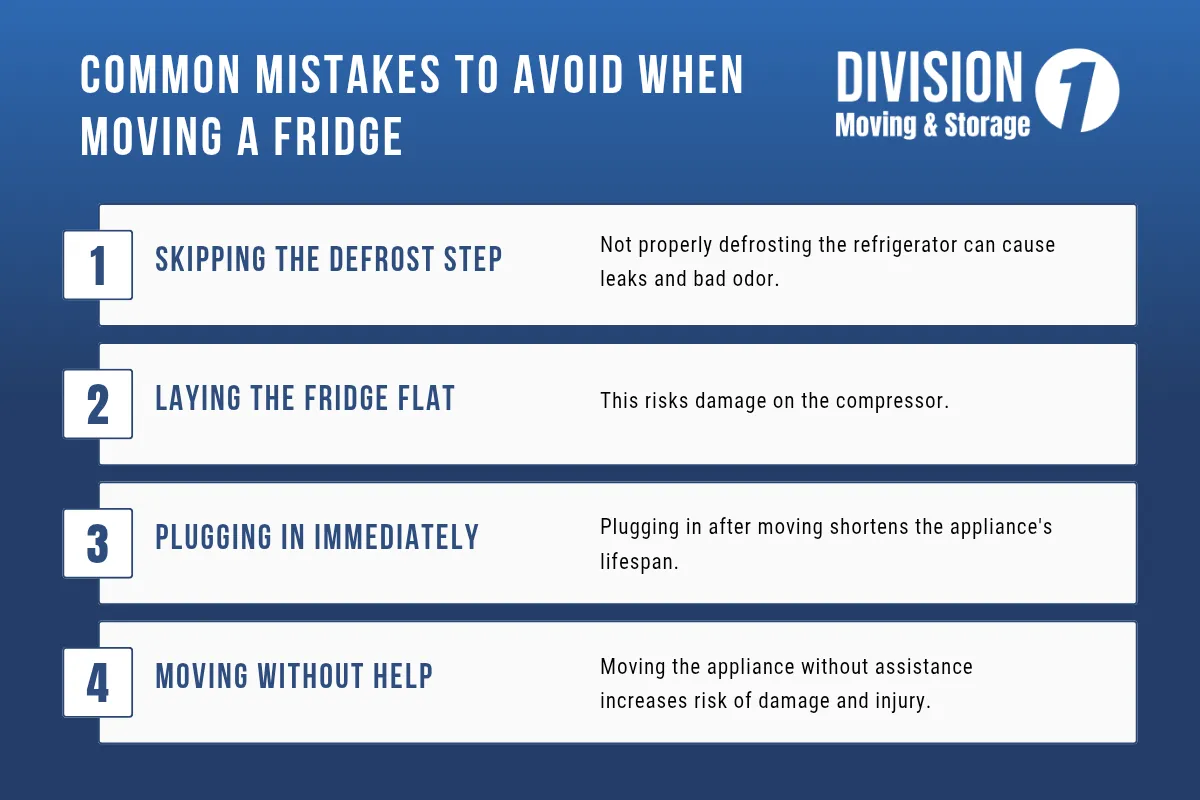
Common mistakes to avoid include skipping the defrost step (which can cause leaks and odors), laying the fridge flat (which can ruin the compressor), and ignoring the rest period after moving (which can shorten the appliance’s lifespan). For built-in or oversized fridges, or if you’re moving multiple appliances, consider hiring professionals to minimize risk and protect your investment.
Frequently Asked Questions About Moving a Fridge
How long should I wait before plugging in my fridge after moving?
Wait at least 3 to 24 hours, depending on how much the fridge was tilted during the move. This allows the compressor oil to settle and prevents damage.
Can I move a fridge on its side?
It’s best to keep the fridge upright. If you must lay it on its side for a short distance, let it rest upright for at least 8 hours before plugging it in to allow the oil to return to the compressor.
What’s the fastest way to defrost a fridge?
Place a pan of boiling water inside the fridge and replace it every 10 minutes, or use a hairdryer on a low setting. Always monitor the process to prevent water damage.
Do I need to remove the fridge doors to move it?
Measure all doorways and hallways first. If the fridge won’t fit, consult the manual for instructions on removing the doors or handles safely.
Is it safe to move a fridge downstairs by myself?
No. Always have at least one helper, and use a stair-climbing dolly for safety. For heavy or awkward fridges, consider hiring professionals.
Why Choose Division 1 Movers for Your Appliance Move?
Moving a fridge is a complex task that requires planning, strength, and the right equipment. Division 1 Movers in Alexandria, VA, have the expertise and tools to handle your appliance move safely and efficiently. Our team is trained to protect your home and your investment, whether you’re moving locally or long distance. We use professional-grade dollies, moving blankets, and secure strapping techniques to ensure your fridge arrives in perfect condition. If you want peace of mind and a hassle-free move, contact Division 1 Moving today for a quote or to discuss your specific needs.