


.svg)
With its mix of fragile glassware, heavy cookware, and daily essentials, packing a kitchen demands careful planning and smart techniques. For homeowners in Alexandria, VA, a well-packed kitchen not only protects your belongings but also ensures a smooth transition into your new home. This guide will walk you through every step, from decluttering to unpacking, with proven strategies to save time, reduce stress, and minimize breakage.
Here in Alexandria, VA, Division 1 Movers are known for dependable local and long distance moving. If you need clarification on anything in this guide, please get in touch.
Why Packing the Kitchen Is So Challenging
The kitchen is unique among household rooms. It contains a high concentration of fragile items, heavy appliances, and food products that require special handling. Most kitchens need 15–20 boxes or 10–15 reusable bins, with small boxes best for breakables and medium ones for lighter items. Poor packing is a leading cause of damage claims, especially for dishes and glassware, so a methodical approach is essential.
Starting early, ideally two weeks before your move, gives you time to declutter, organize, and maintain your daily routine. Professional movers recommend sequencing your packing to keep the kitchen functional until the last possible moment.
Step 1: Declutter Before You Pack
Decluttering your kitchen before packing can cut your workload by up to 50% and lower your moving costs. Begin by setting clear goals for what you want to keep, donate, or discard. Start with damaged or expired items, chipped plates, rusted pans, and old pantry goods should go first. Rank your small appliances by how often you use them, keeping only the essentials and donating or selling the rest.
Work through your cabinets and pantry one shelf at a time. Wipe down each item before packing to avoid bringing crumbs or residue to your new home. For unopened, non-perishable food, consider donating to local food banks or organizations like Move for Hunger. If you’re unsure about certain items, create a “maybe” pile and revisit it after a day or two, most people find they can let go of more than they expected.
- Set up “keep,” “donate,” “discard,” and “maybe” zones.
- Eliminate duplicates, keep only one set of measuring cups or spatulas.
- Sort out expired pantry items and donate what you won’t use.
- Downsizing now means a more organized kitchen in your new home.
Step 2: Sequence Your Packing for Maximum Efficiency
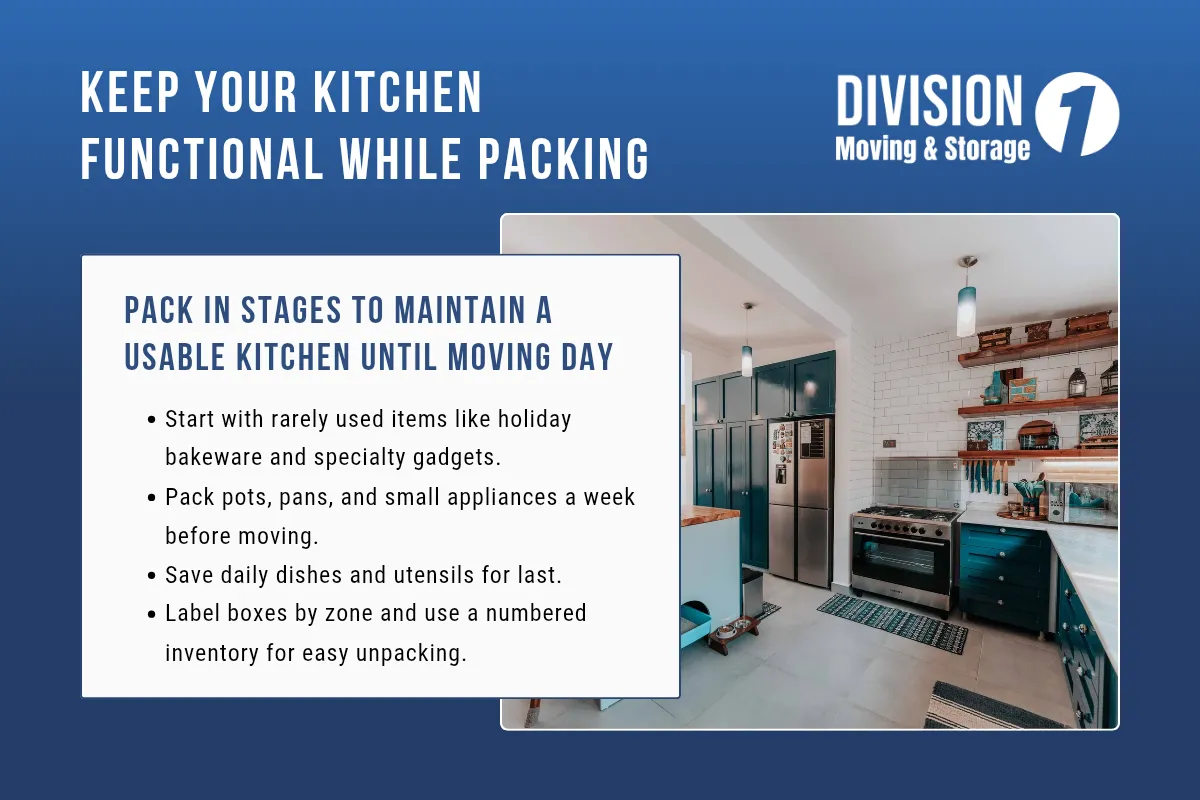
Sequencing is the key to keeping your kitchen functional while you pack. Start with items you rarely use, such as holiday bakeware, extra serving platters, and specialty gadgets. About a week before your move, pack up pots, pans, and small appliances you can live without for a few days. Save your everyday dishes, utensils, and essential cookware for last.
For last-minute moves, set up three staging zones: one for daily items, one for fragile glassware, and one for heavy appliances. This approach helps you stay organized and prevents disruption to your daily routine.
- Pack least-used items first (seasonal, specialty, or duplicate items).
- Group by category, appliances, cookware, pantry, for easier unpacking.
- Label boxes by zone (e.g., “Coffee Station,” “Everyday Dishes”).
- Use a numbered inventory list to prioritize unpacking.
- Heavy items like cast iron go in small, reinforced boxes marked “Heavy - Low Stack.”
Step 3: Gather the Right Packing Materials
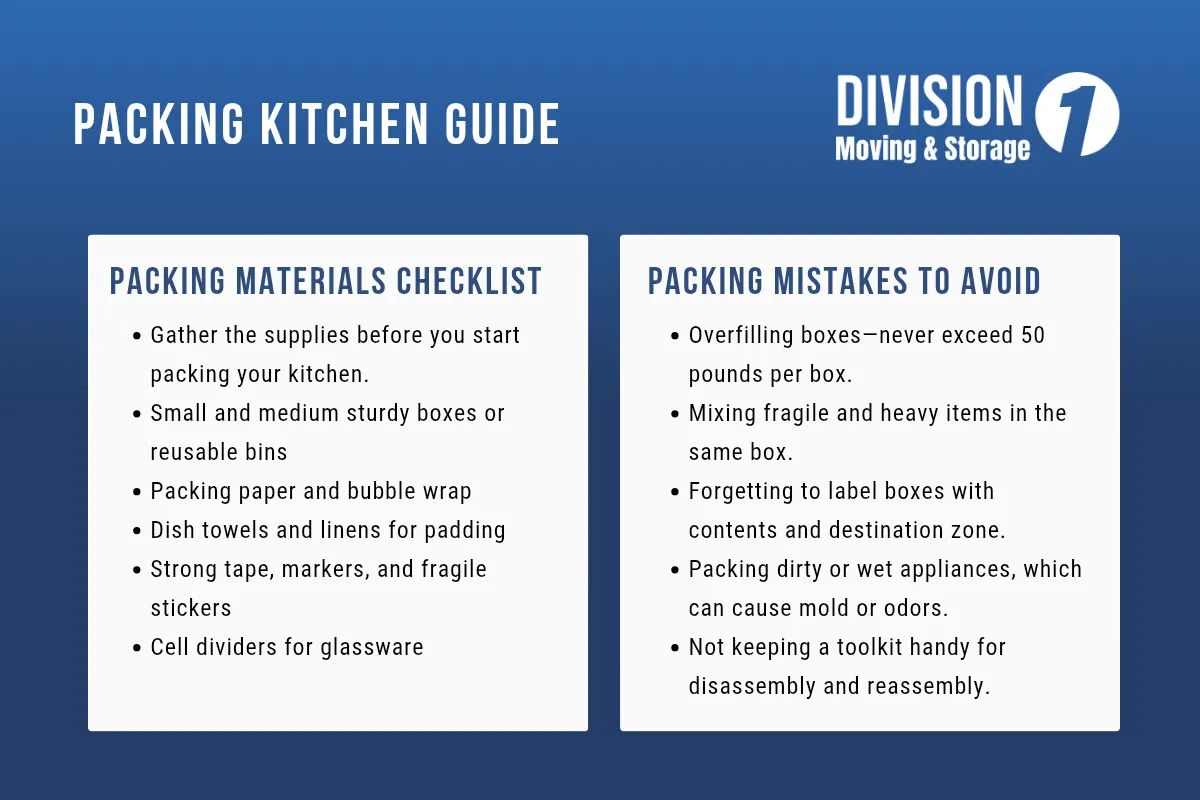
Having the right supplies on hand will make packing safer and more efficient. Stock up on packing paper, bubble wrap, sturdy boxes (small for heavy items, medium for lighter ones), tape, markers, and fragile stickers. Reusable plastic bins can save money and reduce waste compared to cardboard boxes.
Use dish towels, napkins, and linens as padding to save on packing materials. Avoid overpacking boxes, keep them under 50 pounds for safety. For extra protection, line the bottom of each box with 2–3 inches of crumpled paper or towels.
Step 4: Packing Dishes and Glassware Safely
Dishes and glassware are the most vulnerable items in your kitchen. The best way to pack dishes is vertically, like records, with each piece individually wrapped in packing paper. Add foam sheets or towels between layers and fill any gaps with crumpled paper or linens. This method absorbs shocks and prevents breakage.
For glassware, use divided boxes or cell dividers. Wrap each glass with packing paper, fill the interior with crumpled paper, and use bubble wrap for stems and bases. Never stack glasses or mix heavy mugs with delicate stemware. For especially fragile items, consider transporting them in your car.
- Wrap each dish and glass individually, double wrap for fine china.
- Pack dishes on edge, not flat, to reduce pressure on the centers.
- Use plenty of padding at the bottom and top of each box.
- Label boxes “Fragile – This Side Up.”
- Check for shifting before sealing boxes, add more padding if needed.
Step 5: Packing Cookware, Utensils, and Small Appliances
Cookware can be nested to save space. Place smaller pots inside larger ones, wrap lids separately, and use towels or paper for padding. Utensils can be bundled with rubber bands or placed in zip bags. Wrap sharp knives securely and pack them in a separate, clearly labeled box.
For small appliances, remove and wrap all detachable parts. If you have the original boxes, use them; otherwise, choose medium boxes with plenty of padding. Secure cords and use zip bags for attachments. Clean and dry all appliances before packing to prevent mold or odors.
Tips for Packing Heavy Items
- Pack heavy items like cast iron in small, reinforced boxes.
- Separate with cardboard or towels and oil lightly to prevent rust.
- Mark boxes “Heavy” and stack them low in the moving truck.
Step 6: Handling Pantry Items and Cleaning Supplies
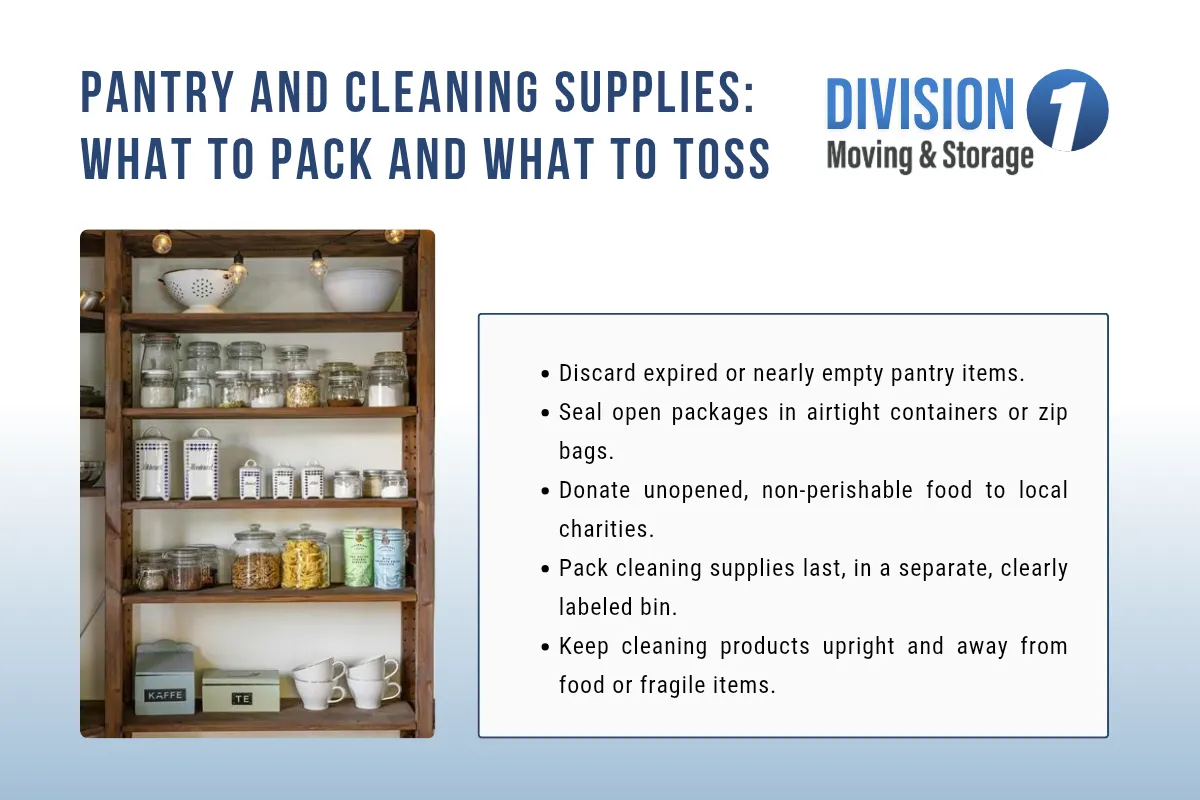
Sort through your pantry and discard expired or nearly empty items. Seal open packages in airtight containers or zip bags to prevent spills. Avoid packing perishables unless you’re moving a short distance. Donate unopened, non-perishable food to local charities.
Pack cleaning supplies last, in a separate, clearly labeled bin. Make sure all lids are tightly closed and place bottles upright to prevent leaks. Keep these items away from food and fragile items during the move.
Step 7: The “Open First” Box for Moving Day

Prepare an “open first” box with everything you’ll need for the first 24 hours in your new home. This should include a few plates, bowls, mugs, utensils, a pan, dish soap, sponge, paper towels, coffee or tea, snacks, and trash bags. Having these essentials easily accessible will make your first night much more comfortable.
Step 8: Unpacking Your Kitchen Efficiently
When you arrive at your new home, prioritize unpacking your “open first” box and setting up a basic kitchen station. Label a “drop zone” in your new kitchen for movers to place boxes, making it easier to sort and unpack. Use your inventory list to unpack by priority, starting with daily essentials and working your way to less frequently used items.
Expert Hacks and Common Mistakes to Avoid
Even with the best intentions, it’s easy to make mistakes when packing a kitchen. Avoid overfilling boxes, which can lead to breakage or injury. Use linens and soft items as padding to save space and money. Store spices inside pots with taped lids, and wrap silverware trays in plastic wrap to keep them intact.
- Never pack boxes heavier than 50 pounds.
- Don’t mix fragile and heavy items in the same box.
- Label every box clearly with its contents and destination zone.
- Double-check that all appliances are clean and dry before packing.
- Keep a small toolkit handy for disassembling and reassembling items.
Why Choose Division 1 Movers for Your Alexandria Kitchen Move?
Packing your kitchen doesn’t have to be stressful. With the right approach and expert help, you can protect your belongings and enjoy a smooth move. Division 1 Movers offers professional packing and moving services tailored to the unique challenges of Alexandria homes. Our team uses proven techniques and high-quality materials to ensure your kitchen arrives safely and is ready for use in your new space.
Whether you need full-service packing, specialty handling for fragile items, or just advice on getting started, we’re here to help. To learn more or request a quote, contact Division 1 Moving today. Let us take the stress out of your next move, so you can focus on settling into your new home.