


.svg)
A good moving expenses checklist does more than estimate the price of the truck. It helps you see the full financial picture, including deposits, packing supplies, cleaning, storage, permits, utility setup, and the small fees that tend to appear when you are already busy.
For homeowners and renters in Northern Virginia, the details matter. A local move in Alexandria can look very different from a long-distance relocation, and a rowhouse, condo, or single-family home can each create different access and building requirements.
Division 1 Moving and Storage is a family owned and independently operated moving company based in Alexandria, serving Northern Virginia customers with local moving, long-distance moving, storage, packing, and related move services. If you have questions while planning your move, you can reach out to us for guidance on what to include in your budget.

A moving budget checklist should start with the main moving service cost
Professional moving services are usually the largest line item in a moving budget checklist. This is the cost most people expect, but it is also the cost that can vary the most depending on home size, distance, access, services selected, and timing.
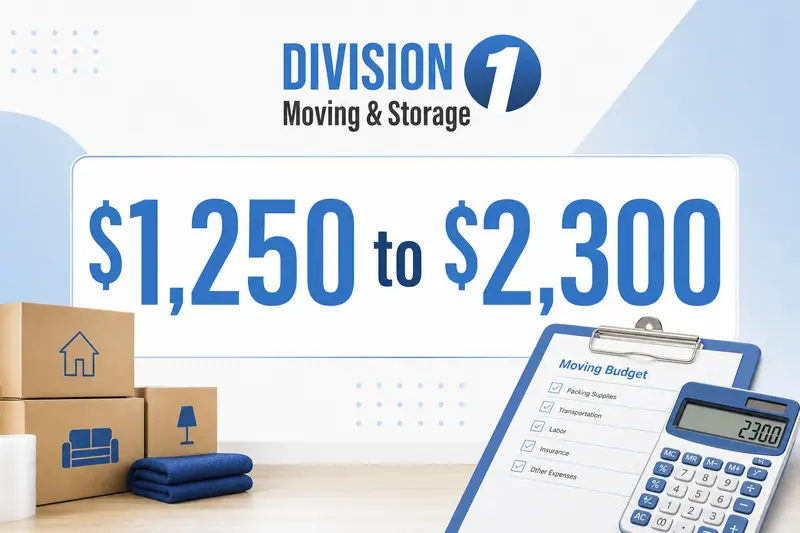
For a typical local move involving a 2 to 3 bedroom home in the United States, one moving cost guide places the average at about $1,250 to $2,300, with broader averages changing based on labor hours, home size, and access issues. In Virginia, full-service professional moving for a three-bedroom household is reported at $1,200 to $2,400 for local moves under about 100 miles, $2,400 to $4,500 for longer intrastate hauls, and $4,500 to $9,000 for interstate moves coming from another state.
Northern Virginia can sit toward the higher end of statewide averages because of demand and access challenges. Hourly mover labor rates in the region are reported around $115 to $130 per hour, especially in dense areas such as Alexandria and Arlington.
Local moves in Alexandria often depend on access, stairs, and parking
A local move is not priced by distance alone. A two-bedroom condo with reserved elevator access can be simpler than a rowhouse with tight stairs, limited street parking, and a longer carry from the truck to the door.
In the Alexandria area, local single-family home moves are reported in the $1,500 to $5,000 range. Old Town rowhouse moves are reported at $2,000 to $5,500 because of tight streets, older staircases, and the need for temporary reserved parking. High-rise condo moves in nearby neighborhoods such as Carlyle are reported at $1,200 to $3,000 because of elevator scheduling, loading dock rules, and building insurance requirements.
When you compare estimates, look beyond the total price. Ask how the mover accounted for stairs, elevator reservations, long carries, furniture disassembly, truck access, and parking. These details can affect both the time required and the final cost.
Long-distance moving costs should include distance, weight, and service level
Long-distance relocations use a different budgeting mindset. Distance and shipment weight become major cost drivers, and additional services such as packing or storage can raise the total.
For a move of 1,000 or more miles involving a 2 to 3 bedroom home, national averages are around $4,875, with a typical range of $2,500 to $7,500. A full-service professional move, which includes labor, truck, loading, unloading, and often some level of packing, has an overall average of $3,020 within a range of $1,250 to $5,450.
If you are moving from Northern Virginia to or from a higher-cost metro area, it is safer to budget toward the upper end of these ranges. Cross-country moves can also require more planning for travel, temporary lodging, and storage if move-out and move-in dates do not align.
Compare professional, DIY, and hybrid moving scenarios before choosing
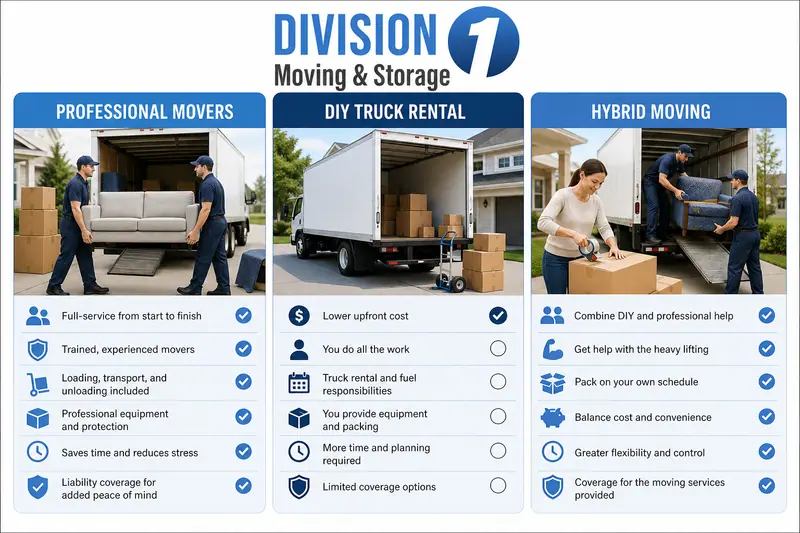
A moving costs checklist should include more than one scenario. Comparing professional movers, a DIY truck rental, and a hybrid option helps you decide whether the lower upfront price is worth the extra time and physical effort.
DIY truck rentals are often listed at $30 to $200 per day plus mileage and fuel. That can look attractive at first, but the final budget may also need equipment such as dollies, furniture pads, straps, and other supplies. A DIY move also places more responsibility on your own schedule and physical capacity.
Many moving checklists recommend getting at least three written quotes from licensed movers. This helps you compare full-service and hybrid options fairly. In a hybrid move, you might pack boxes yourself while professionals handle loading, driving, and unloading.
Hybrid moving can reduce labor costs, but it may increase the time you spend preparing. For Alexandria-area homes with stairs, rowhouse entries, or limited parking, the physical work and logistics can matter as much as the hourly rate.
Pre-move housing costs can arrive weeks before moving day
Some of the largest moving-related expenses are due before the movers arrive. Renters may need deposits and first month’s rent. Homebuyers may be handling down payments and closing costs. These costs belong near the top of your moving expenses checklist because they affect cash flow early.
For renters, a new lease often requires first month’s rent plus a security deposit equal to one month of rent. Some properties may request last month’s rent or multiple months of deposit. Other financial guides describe typical security deposits as one to three months’ rent, with three months possible in competitive markets.
For homebuyers, the checklist should include a down payment and closing costs. Down payments are commonly reported at 3.5% to 20% of the purchase price. Closing costs may include lender fees, title insurance, and transfer taxes.
These costs can overlap with moving company deposits, packing materials, cleaning, and utility setup. The practical step is to separate move-day costs from housing transition costs, then make sure both are funded before you commit to dates.
Cleaning, repairs, and junk removal protect your budget before you leave
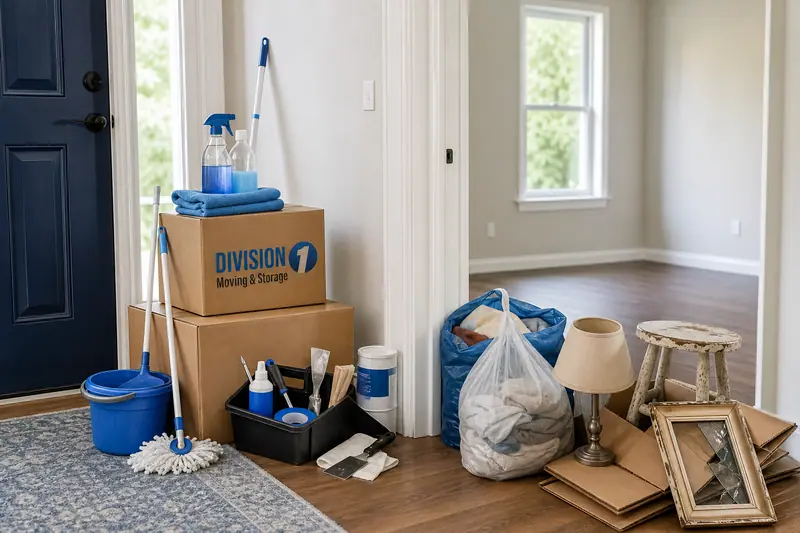
Move-out work is easy to underestimate. By the time boxes are packed, many households are tired and short on time. Still, cleaning, repairs, and decluttering can affect both the final moving cost and the amount of money available after the move.
Renters in Northern Virginia should pay close attention to these items because cleaning and minor repairs may affect security deposit recovery. Homeowners also need to budget for property preparation, especially if they are selling, staging, or handing the home over to new occupants.
These costs are often flexible, but they should not be ignored. A clear moving budget checklist should separate required work from optional upgrades so you can make decisions in the right order.
Move-out and move-in cleaning: One budget template estimates cleaning at $150 to $500, depending on home size and whether professional deep cleaning is needed.
Old-home repairs: Minor repair items can include patching nail holes, repainting scuffed walls, and fixing small fixtures, with one source estimating $50 to $300 for old-home repairs.
New-home improvements: Lock changes, minor hardware upgrades, and similar setup tasks are estimated at $100 to $500 in one moving budget guide.
Trash bags and donation supplies: Decluttering before the move may require bags, bins, or donation-related planning.
Junk hauling and disposal: Junk removal can reduce truck space and labor time, but disposal fees or hauling charges should be listed as their own line item.
For households downsizing from larger homes in Fairfax or Loudoun counties into smaller Alexandria or Arlington properties, decluttering can be especially useful. It can lower the amount that must be packed, carried, stored, or transported. The key is to budget the removal work upfront rather than treating it as a last-minute expense.
Packing supplies, packing services, and equipment should be listed separately
Packing is one of the most common areas where small costs multiply. Boxes, tape, bubble wrap, markers, specialty cartons, and equipment can all seem minor until they are purchased in several rounds.
One 2026 budget guide estimates packing supplies at $50 to $150 for a typical move. Another template lists packing supplies at $60 to $400 depending on home size, specialty boxes, and whether customers buy new materials or source free boxes.

DIY moving checklists also include moving equipment such as dollies, furniture sliders, and straps. If those are not supplied by your mover or truck rental, include them in your moving costs checklist.
Professional packing services can raise the budget, but they can also reduce stress and preparation time. One budget template lists optional packing service at $0 to $2,500, with higher costs tied to larger homes and full-service packing across all rooms.
This is one of the places where Division 1 Moving and Storage’s packing and unpacking services may fit naturally into a plan, especially for customers with tight schedules, fragile items, large libraries, or moves where work responsibilities leave limited time for preparation.
Valuation coverage and specialty items can change the final moving cost
Insurance and valuation coverage are often misunderstood. They should be treated as a distinct budget line, not an afterthought. The goal is to understand what level of protection is included and what optional coverage might cost.
One budget guide notes that moving insurance with full-value protection is typically 1% to 2% of the declared value of the shipment. That means a $50,000 inventory could require a $500 to $1,000 insurance premium.
Customers should also ask about basic carrier liability versus optional full-value protection. Basic coverage may be included, but it may not reflect the actual value of furniture, electronics, art, antiques, or other high-value belongings.
Specialty item handling should also be listed separately. Pianos, safes, artwork, oversized fitness equipment, large tables, modular furniture, and complex bed frames may require more labor or extra preparation. National moving resources also advise asking about surcharges for stairs, long carries, shuttle trucks, and difficult access.
For Northern Virginia moves, these questions are especially important in older neighborhoods, high-rise buildings, and homes with tight staircases. If a mover knows about specialty pieces during the quoting process, the estimate is more likely to reflect the real work required.
Permits, elevators, loading docks, and building rules are hidden moving costs
Urban and building-related fees are among the most common hidden costs in a moving expenses checklist. They are not part of the furniture or the truck, but they can affect whether the move happens smoothly.
Alexandria-area moves may require temporary reserved parking when a moving truck blocks street parking. The research notes that Alexandria requires Temporary Reserved Parking permits to be filed in advance through the city’s APEX system, and that for many rowhouse or Old Town moves, the permit is effectively a necessary expense.
Condo and apartment buildings may also have their own rules. High-rise buildings in areas such as Carlyle may require a certificate of insurance from the moving company. They may also charge elevator reservation or loading dock fees as part of building policy.
Your moving budget checklist should include separate lines for municipal parking permits and building move fees. Keeping them separate makes it easier to ask your building manager or HOA the right questions before the move date is locked in.
Long-distance travel costs belong outside the mover estimate
The mover’s estimate covers the transportation of belongings, but it may not cover your household’s travel. If you are driving to a new state, staying overnight, or coordinating multiple vehicles, those expenses need their own section.
Moving cost checklists typically include fuel, tolls, parking, lodging, and meals on the road. One budget template estimates fuel and mileage at $50 to $700, depending on distance, vehicle type, and fuel prices. The same template lists travel costs such as hotels and meals at $0 to $1,000.
For Northern Virginia customers moving to distant states, this can mean planning for hotel stays along major corridors and budgeting meals for the travel period. If you have pets, children, multiple vehicles, or a gap before you can access the new home, the travel section becomes even more important.
Administrative travel-related costs can also appear after the move. Some checklists mention mail forwarding, driver’s license updates, vehicle registration updates, and change-of-address charges where applicable. One checklist cites USPS online mail forwarding at around $1.10 and driver’s license updates at $10 to $30 depending on the state.
Utility transfers and home setup costs start before the first night
Utilities, internet, and home services are easy to push aside during packing, but they can create real costs before and immediately after move-in. Some services may require activation charges, deposits, or installation fees.
One moving budget guide lists utility activation for electric, gas, and water at $25 to $75. Another template groups utility deposits and connection fees in a broader $100 to $500 range. A financial preparation guide also identifies utility deposits and connection fees as core moving expenses, with a sample budget listing utilities setup at $100 to $300.
Contact electric, gas, water, sewer, trash, and internet providers 2 to 4 weeks before moving, based on the research guidance. Ask whether there are deposits, activation fees, installation appointments, or equipment charges. This helps you avoid having several setup costs arrive at once.
New-home essentials should also be part of the moving costs checklist. One 2026 moving budget checklist lists furnishings and essentials such as curtains, light fixtures, and shelving at $200 to $1,500. Other setup costs may include appliance installation, laundry setup, furniture and kitchen basics, and parking permits or space rentals.
Storage costs should include rent, coverage, and extra handling
Storage can be temporary, but the cost planning should be specific. It often becomes necessary when closing dates, lease dates, renovation timelines, or downsizing plans do not line up neatly.
National moving resources recommend including storage in the moving budget when move-out and move-in dates do not align. One template estimates storage, if needed, at $0 to $500 per month. Another sample budget lists storage fees and storage unit rental separately and notes that moving items to and from storage can be an added expense.
A storage line item should not stop at monthly rent. If belongings are handled twice, once into storage and once out of storage, the additional labor should be included. You should also consider any insurance or valuation coverage for stored goods.
For Northern Virginia households dealing with delayed closings, short-term relocation, construction timelines, or downsizing, a practical storage section should include monthly storage rent, insurance for stored goods, and two extra handling events.
Ongoing monthly costs can change after the move
A moving expenses checklist should not stop when the truck unloads. Some costs continue into the first month and beyond, especially when moving into a different city, building type, or cost-of-living area.
Financial planning checklists recommend reviewing recurring costs after relocating. These may include utilities, renters or homeowners insurance, HOA fees or property taxes, lawn care, snow removal, pest control, security systems, parking, and commuter changes.
For Northern Virginia residents moving into Alexandria, Arlington, Fairfax, or nearby areas, ongoing costs may differ from the previous home. Utility patterns, HOA rules, property taxes, parking needs, and transit expenses can all shift the monthly budget.
One financial guide recommends reviewing the household budget after the first 30 days in the new home. That gives you enough time to see actual utility costs, commuting costs, and new recurring fees, then adjust savings, debt payments, and discretionary spending.
A practical moving expenses checklist for planning your move
The easiest way to use a moving budget checklist is to organize costs by timing. Some expenses are due before moving day, some happen during the move, and others appear after the truck is unloaded.
This structure also helps separate fixed costs from flexible costs. Fixed costs include rent or mortgage payments, deposits, booked movers, and confirmed truck or storage fees. Flexible costs include packing supplies, cleaning, food, optional packing, junk removal, and some new-home purchases.
Use the checklist below as a planning framework. Add your own estimated amount, confirmed amount, payment date, and notes for each item so you can track what is still uncertain.
Professional mover estimate: Include labor, truck, loading, unloading, distance, and service level.
DIY or hybrid move comparison: Include truck rental, mileage, fuel, equipment, and the time required to pack and load.
Housing deposits and payments: Include first month’s rent, security deposit, possible last month’s rent, down payment, and closing costs.
Packing materials: Include boxes, tape, bubble wrap, markers, wardrobe boxes, dish barrels, and other specialty supplies.
Packing services: Include full packing, partial packing, or specialty packing if needed.
Cleaning: Include move-out cleaning, move-in cleaning, and any required deep cleaning.
Repairs: Include patching, paint touch-ups, fixture repairs, lock changes, and minor hardware upgrades.
Junk removal and disposal: Include hauling, trash bags, donation prep, dumping fees, or special item disposal.
Valuation or insurance coverage: Include basic included coverage and any optional full-value protection.
Specialty item handling: Include pianos, safes, artwork, oversized fitness equipment, modular furniture, and difficult access.
Parking permits: Include municipal reserved parking permits for the moving truck.
Building fees: Include elevator reservations, loading dock fees, certificate of insurance requirements, and HOA move fees.
Travel costs: Include fuel, tolls, parking, lodging, meals, and car-related costs for long-distance moves.
Utility setup: Include deposits, activation fees, connection fees, installation, and internet setup.
Storage: Include monthly rent, insurance for stored goods, and labor to move items into and out of storage.
Furniture assembly and home setup: Include disassembly, reassembly, curtains, shelving, light fixtures, appliance installation, and basics for the new home.
Administrative updates: Include mail forwarding, driver’s license updates, vehicle registration updates, and change-of-address costs where applicable.
Ongoing monthly costs: Include utilities, insurance, HOA fees, parking, taxes, lawn care, pest control, security systems, and commuter changes.
Contingency fund: Add a buffer for overtime, extra packing materials, last-minute furniture disassembly, unforeseen parking issues, or building fees.
A contingency fund keeps small surprises from disrupting the move
Even a detailed moving costs checklist should include a buffer. Moving estimates are based on known information, but real homes often reveal extra work once packing begins, furniture is disassembled, or access conditions become clear.
One moving cost guide recommends setting aside 10% to 15% of the total projected budget as a buffer. Another recommends 15% to 20% because unexpected charges can represent 10% to 30% of final costs.
For a Northern Virginia move, a contingency fund might cover overtime if the move takes longer than estimated, extra packing materials, furniture disassembly that was not anticipated, last-minute cleaning, or parking and building fees in dense neighborhoods.
The best way to control surprises is to give your mover accurate information during quoting. Share stairs, elevator rules, parking limitations, heavy items, fragile items, storage needs, and whether packing help is required.
Get a quote for a Northern Virginia move with a clearer budget
A strong moving expenses checklist helps you plan for the visible and hidden costs of relocation, from mover labor and packing supplies to storage, cleaning, permits, travel, and utility setup. The more specific your checklist is, the easier it is to compare options and avoid last-minute budget pressure.
If you are planning a local or long-distance move from Northern Virginia, Division 1 Moving and Storage can help you understand the moving-service portion of your budget and identify services that fit your situation. Get a Quote through our contact page at https://www.division1moving.com/contact-us or call (571) 970-3189.