


.svg)
Moving heavy furniture can look simple until a couch gets stuck on a stair landing, a treadmill will not clear a doorway, or a safe starts shifting on a dolly. The real challenge is not only weight. It is the combination of weight, awkward shape, tight pathways, fragile surfaces, and physical strain.
At Division 1 Moving and Storage, we help homeowners and renters in Alexandria and across Northern Virginia handle local moves, heavy items, packing, storage, and related moving services with a focus on safety and protection.
If you are unsure whether an item is safe to move yourself, reach out with questions or Get a Quote.
Start with a risk assessment before moving heavy items
A safe heavy-item move starts before anyone lifts a corner. First, decide whether the item, the route, and the people available make the move reasonable. If one person cannot comfortably rock, tilt, or shift the item a few inches, treat it as a team-lift or professional-only piece.
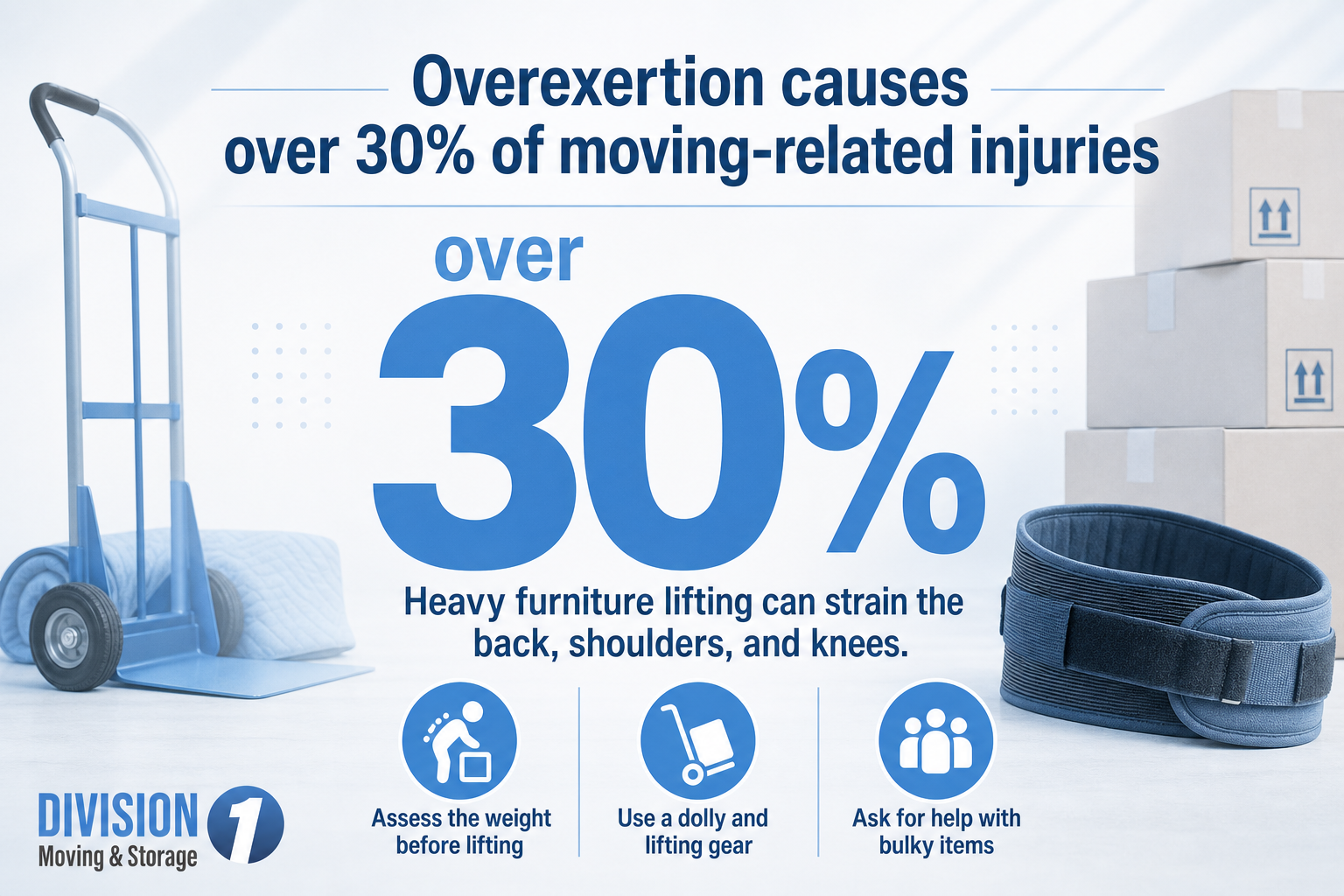
Physical strain is a major concern. Moving guidance notes that overexertion accounts for over 30% of moving-related injuries, with back injuries making up around 60% of those cases. That risk climbs when the item is bulky, heavy, or difficult to grip, such as a reclining sectional, piano, safe, or treadmill.
Next, look closely at the home. Northern Virginia homes often include apartments, townhomes, finished basements, narrow stairs, and split-level layouts. Tight turns, low ceilings at stair landings, and narrow hallways increase the chance of injury and property damage.
Measure the full route, not just the item. Doorways, hallways, staircases, and landings all matter. Diagonal clearance can be as important as width and height because large pieces often need to be angled through openings.
Warning signs that heavy furniture may need professional movers
Some situations deserve extra caution. A heavy item that fits through one doorway may still fail at the next turn. A piece that seems stable on flat flooring may become dangerous on stairs. Before you begin, look for signs that the move is likely to exceed what a household crew can safely control.
The item must be lifted over a railing or tilted sharply around a stair turn.
The route requires threading the piece through a tight doorway with little clearance.
The item is unusually valuable, irreplaceable, or structurally complex.
The pathway includes multiple flights of stairs, long carries, or limited parking access.
The home has delicate finishes, including hardwood, tile, luxury vinyl plank, painted stair rails, or narrow drywall corners.
Risk assessment should include repair costs. Scratched floors, dented drywall, chipped door frames, and damaged stair rails can quickly outweigh the perceived savings of a DIY move. If the move feels like it depends on luck, bring in professionals.
Prepare couches, pianos, safes, and treadmills before lifting
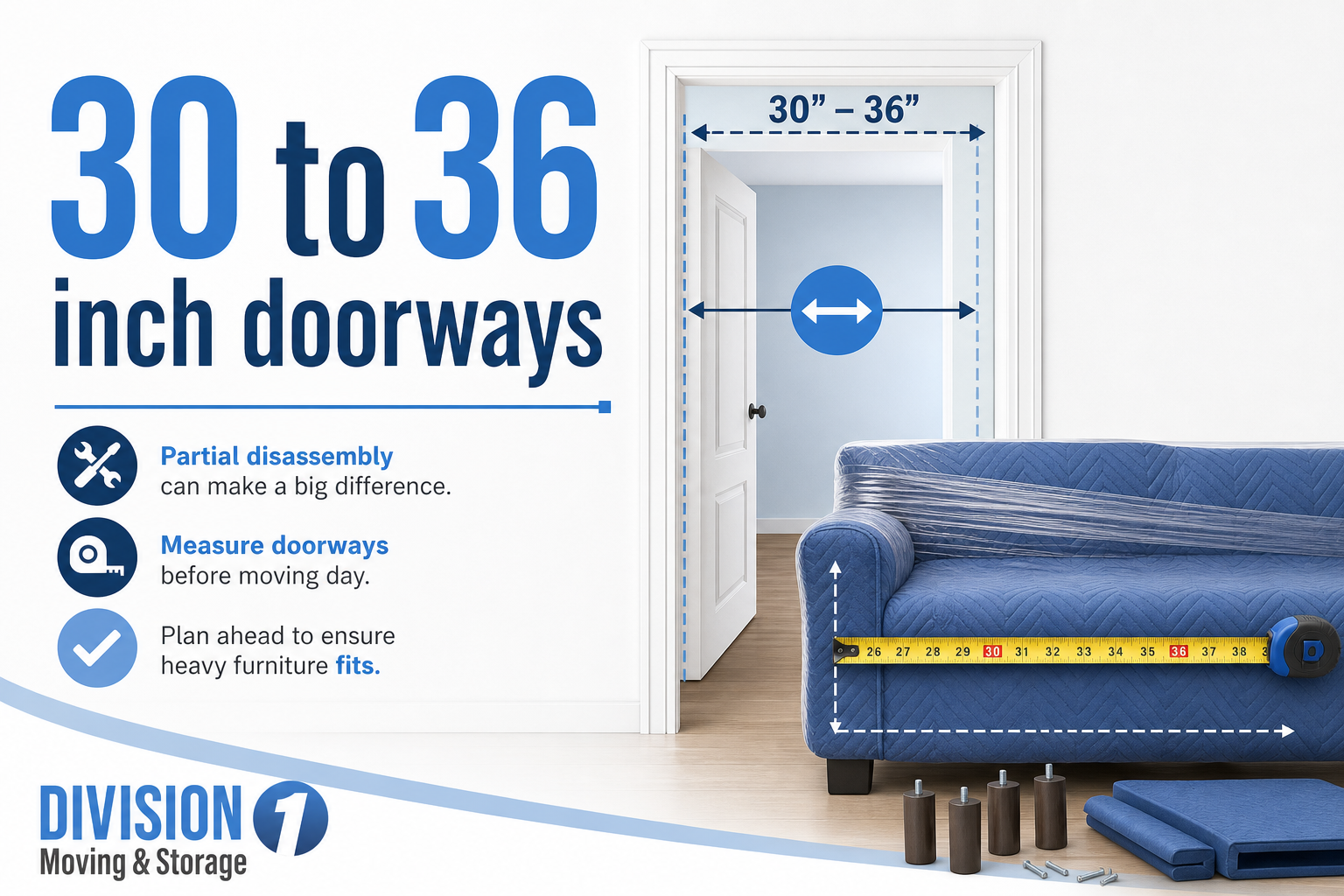
Heavy furniture is often safer to move after partial disassembly. Removing table legs, headboards, couch feet, sectional connectors, or other detachable parts can reduce both weight and footprint. A smaller profile can make a major difference when navigating typical 30 to 36 inch doorways, stairwells, and tight exits.
Glass should be removed whenever possible. Shelves, cabinet doors, and tabletops can shift, crack, or shatter when furniture is tilted. These pieces should be wrapped and transported separately rather than left attached to a heavy frame.
Wrapping is just as important as disassembly. Large pieces such as couches, armoires, dressers, and appliances should be covered with thick quilted moving blankets. The goal is to create a padded shell that protects both the furniture and the home. Stretch wrap or moving tape keeps blankets from slipping and prevents drawers or doors from swinging open.
For upholstered furniture, exposed fabric is a problem. Even minor friction against a doorway, wall, railing, or truck surface can stain or abrade the material. Couches and sectionals should be covered before they leave the room, especially when they must be turned on end or tilted.
Specialty items need more than basic wrapping
Pianos, safes, and treadmills require special preparation because weight is only part of the challenge. Internal parts, balance, and handling angles all matter. Professional guidance on heavy and bulky furniture safely highlights the need for the right equipment, manpower, and planning.
Pianos may require secured lids, removed music stands, custom padding, straps, and specialized boards. Safes should be emptied when possible and balanced carefully on equipment designed for extreme loads. Treadmills may need folded and locked decks, secured cords, and sometimes removed console assemblies to pass through narrow doors.
This is where professional moving help often becomes the practical choice. Our crews can evaluate heavy, awkward pieces during a move plan and determine whether disassembly, padding, specialty equipment, or additional movers are needed.
Use the right equipment and safe technique for heavy furniture
The safest way to move heavy furniture is to roll or glide it whenever conditions allow, not carry it for long distances. Furniture sliders can help heavy pieces move across floors while reducing direct contact. Hard plastic sliders are used on carpet, while felt-bottom sliders are used on hardwood, tile, and similar hard surfaces.
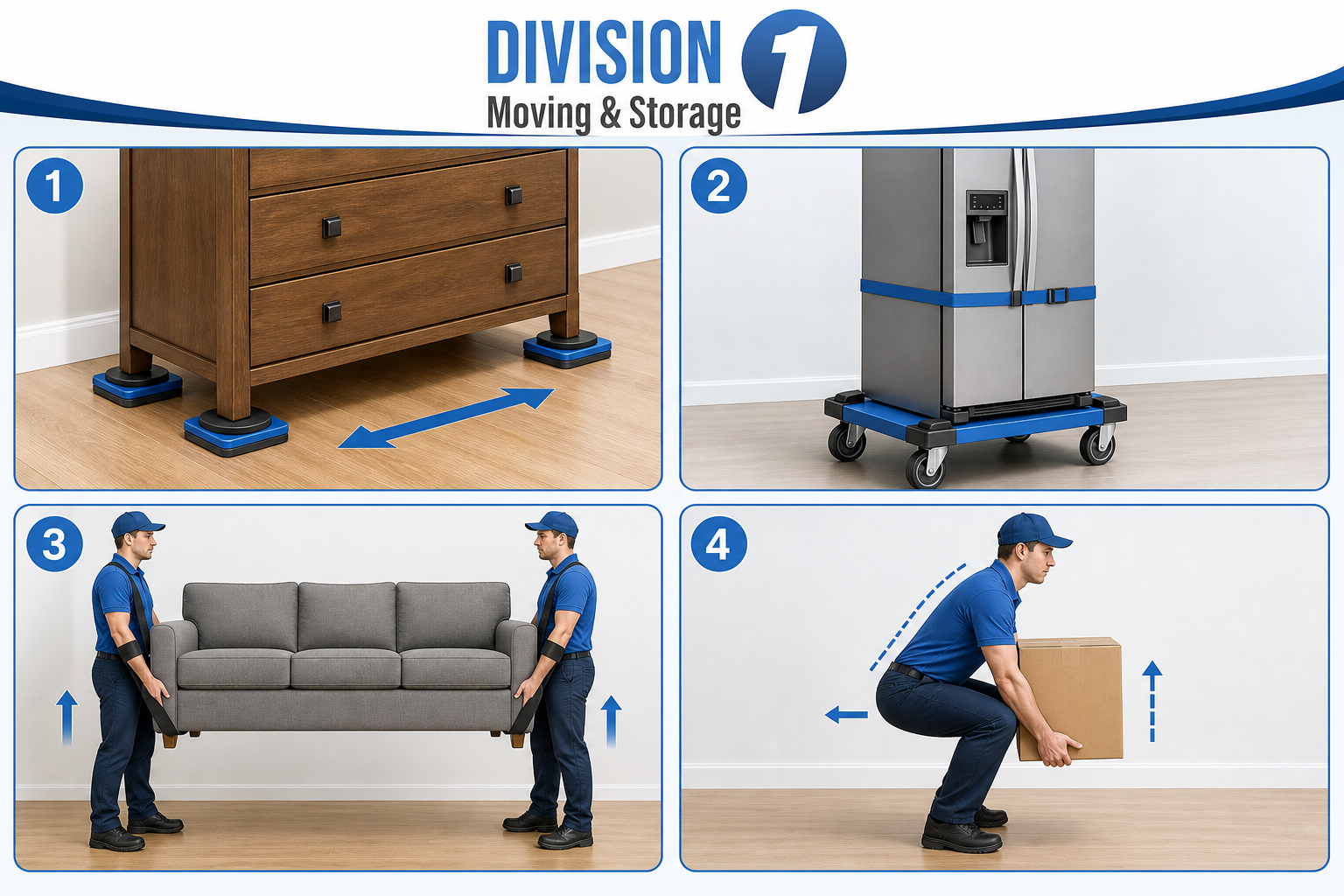
Dollies are another essential tool. Furniture dollies and appliance dollies provide stable platforms on rubber wheels, allowing dressers, appliances, safes, and bulky furniture to be rolled instead of carried. Moving straps and lifting harnesses can redistribute weight to stronger muscle groups and help two people coordinate a lift.
Safe lifting still matters, even with equipment. Movers use a power position: feet shoulder-width apart, knees bent, back straight, and core engaged. The lift should come from the legs, not the back. Twisting while carrying weight is especially risky, so carriers should pivot with their feet.
Team communication prevents sudden shifts
Heavy furniture moves depend on timing. Two people should lift and set down together using clear verbal cues. No one should jerk, rush, or make a sudden turn without warning. A minor surprise can become a major problem when the item is heavy enough to pull someone off balance.
Moving couches through doorways often requires a tilt-and-pivot approach. The sofa may be stood on end or angled so the narrowest dimension passes through the opening. One person guides while the other pushes or stabilizes, and both must watch for door frames, ceiling height, wall corners, and floor protection.
Stairs raise the risk considerably. Heavy items should be low and centered on the dolly to reduce tipping. On stair descents, the person below controls much of the load while the person above guides and stabilizes. Small, controlled steps are safer than trying to muscle through quickly.
Before any move begins, clear the pathway. Remove rugs, lamps, small furniture, loose items, and clutter. A clean route reduces tripping risk and gives movers room to adjust grips or set the piece down safely.
Protect floors, walls, doors, and furniture before damage happens
Protection should be installed before the heavy item moves. Floors, walls, door frames, stair rails, and corners are common contact points. A single scrape from a dresser, safe, or sectional can leave damage that takes time and money to repair.
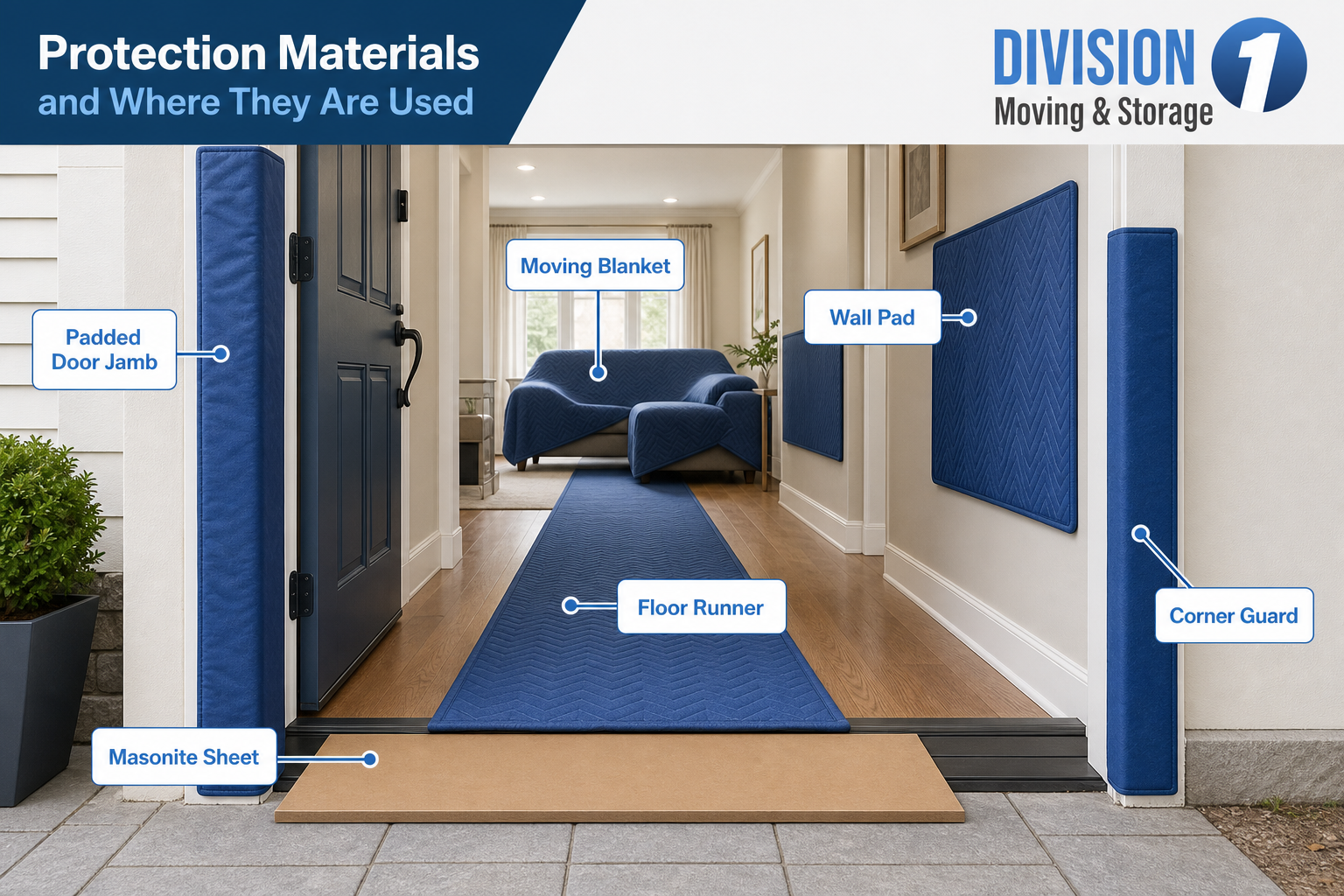
Professional movers typically map the route first, then install materials where needed. On hard floors, they may use neoprene or rubber-backed runners, Ram Board, or Masonite sheets to create a protected path. These materials shield finishes from scuffs, dents, and tracked-in grit while spreading the impact of foot traffic and dollies.
Heavy items like pianos and safes can create concentrated pressure on flooring. Rigid boards are often used to help distribute weight and reduce the risk of indentations, especially on softer flooring. Floor coverings also need to be secured at seams so they do not become tripping hazards.
Walls and openings need targeted protection. Door jamb pads wrap around door frames to cushion contact. Corner guards or foam edge protectors can be placed on hallway corners and stair landings. Wall pads can help when tall items must be tilted or turned close to painted surfaces.
Movers also protect the furniture itself. Guidance on how movers protect floors, walls and stair rails emphasizes route mapping, padding, floor runners, and careful equipment choices before lifting begins.
Common surface protection materials used during heavy moves
The best protection depends on the item, the surface, and the route. A light dresser may only need sliders and blankets, while a safe or piano may require rigid flooring protection and extra wall padding. The key is to match the material to the level of weight and contact risk.
Moving blankets: Cushion furniture surfaces and reduce damage when pieces brush walls or doorways.
Stretch wrap or moving tape: Keeps blankets secure and prevents drawers, doors, or loose parts from opening.
Floor runners: Protect high-traffic paths from dirt, scuffs, and foot traffic.
Ram Board or Masonite: Helps distribute weight from dollies, safes, pianos, and other heavy loads.
Door jamb protectors: Cushion frames where bulky items are likely to make contact.
Corner guards and wall pads: Shield drywall corners, stair turns, and narrow hallway edges.
Equipment condition matters too. Dollies and hand trucks with non-marking soft rubber tires are better suited for delicate residential floors than hard wheels that can scuff or gouge. Clean footwear or shoe covers can also limit grit that may scratch floors.
Northern Virginia apartments and townhomes add moving challenges
Moving heavy furniture in Northern Virginia often involves more than getting an item from one room to another. Apartments, condos, townhomes, and multi-story homes can add elevators, long interior hallways, tight stairs, finished basements, split levels, narrow streets, and limited parking.
Apartment and condo moves may require coordination with building management. Elevator reservations, move-in and move-out windows, rules for common area protection, and proof of insurance can all affect how the move is handled. In buildings with high-end finishes, floor coverings and elevator padding may be expected.
Townhomes create different challenges. Narrow staircases, sharp turns, low ceilings, and multi-level layouts can complicate moving couches, pianos, safes, and treadmills. A couch that fits through the front door may still be difficult to carry up a tight staircase or around a landing.
For couches and sectionals, measuring diagonal clearance is critical. Movers often stand a sofa on end, tilt it, and pivot through doorways to use its narrowest dimension. On narrow stairs, a low-high carry can help, with one mover at the lower end and one at the upper end.
Access outside the home matters as well. Dense neighborhoods, cul-de-sacs, and limited street parking can create long carries from the truck to the door. That extra distance adds fatigue and handling time, especially when the route includes stairs or elevators.
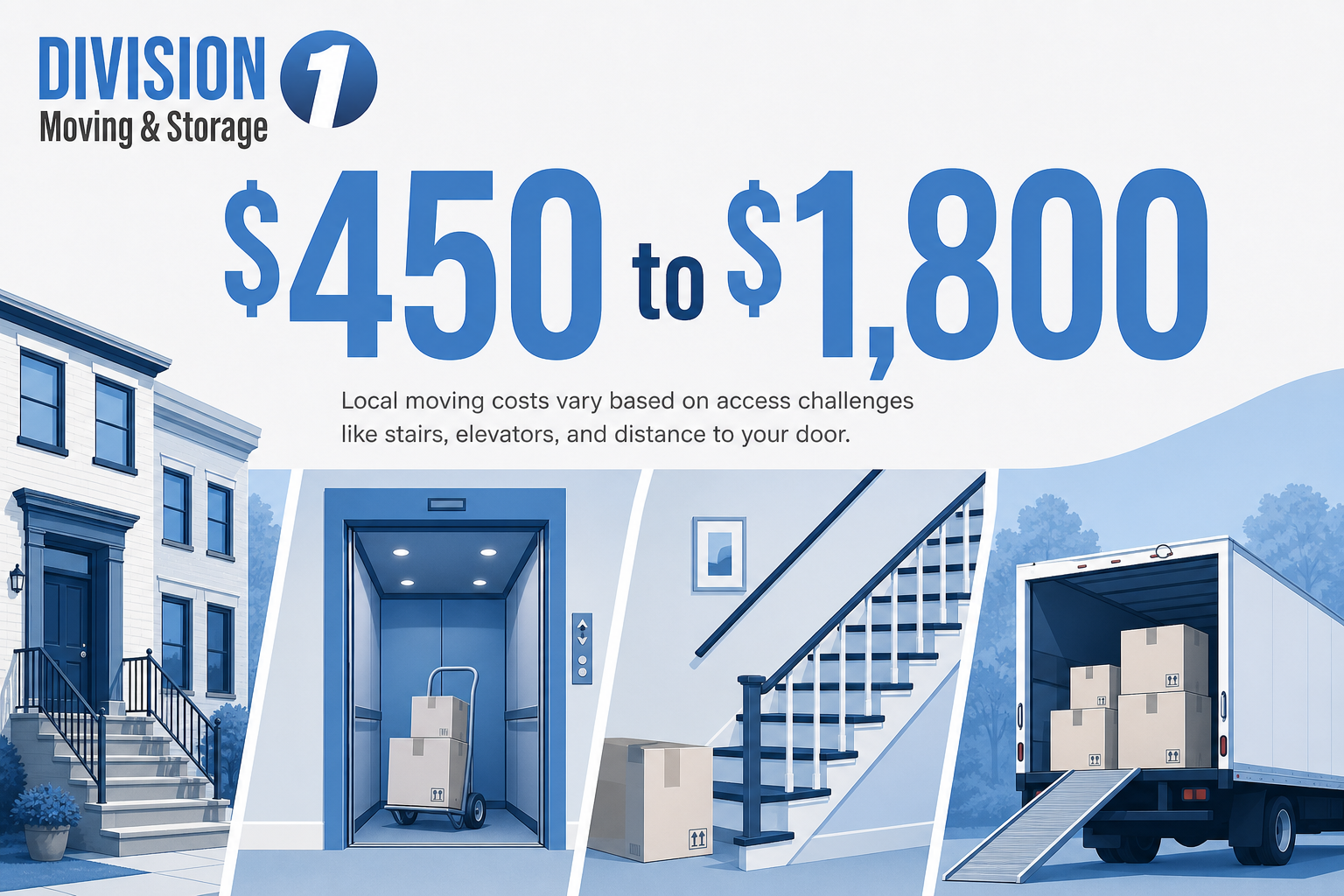
Local moving cost guidance notes that Northern Virginia moves can be affected by home size, access, crew size, stairs, long carries, and specialty items, with local moves ranging from $450 to $1,800 depending on the situation. Heavy items may add complexity because they require more manpower, equipment, and planning.
Professional movers reduce injury, damage, and uncertainty
The main reason to call professionals for moving heavy furniture is risk control. Heavy-item moves require the right mix of planning, equipment, strength, timing, and surface protection. Missing any one of those elements can lead to injuries, broken furniture, damaged walls, or floors that need repair.
Cost is part of the decision, but it should not be viewed in isolation. A DIY move may seem less expensive until someone strains a back, drops a safe, dents a stair rail, or scratches hardwood flooring. Medical expenses, lost work time, deductibles, and repairs can quickly exceed the cost of hiring movers.
Professional crews bring predictable systems. They survey the route, identify hazards, decide how many people are needed, prepare furniture, install protection, assign roles, and use the correct dollies, straps, sliders, pads, and runners. That preparation helps avoid rushed decisions once a heavy item is in motion.
Specialty items increase the value of professional help. Pianos, safes, and treadmills can be damaged by improper lifting, shifting, or tilting. Specialty moving cost guidance notes that valuable or difficult items involve added risk, handling needs, and liability considerations, especially for specialty moving cost factors tied to item type and access.
Professional movers also improve placement at the destination. Getting a couch, treadmill, or dresser into the room is only part of the job. The item may need to be carried upstairs, positioned carefully, reassembled, or shifted into place without dragging it across finished flooring.
If you are moving couches, pianos, safes, treadmills, or other heavy household items in Northern Virginia, Division 1 Moving and Storage can help you plan the safest approach. Get a Quote through our contact page or call us today at (571) 970-3189.