


.svg)
Packing up your home is always a challenge, but nothing raises your nerves quite like dealing with fragile items. Whether it’s heirloom glassware, delicate décor, or sentimental keepsakes, ensuring these items survive the journey can feel overwhelming. But with the right materials, techniques, and a little insider knowledge, you can safeguard your most precious belongings from start to finish.
At Division 1 Moving and Storage, we’ve helped thousands of Alexandria and Northern Virginia families move with confidence, even when fragile treasures are on board. In this comprehensive guide, we’ll walk you through how to pack fragile items like the pros, so you can relocate without regrets or costly mishaps.
Selecting Proper Packing Materials
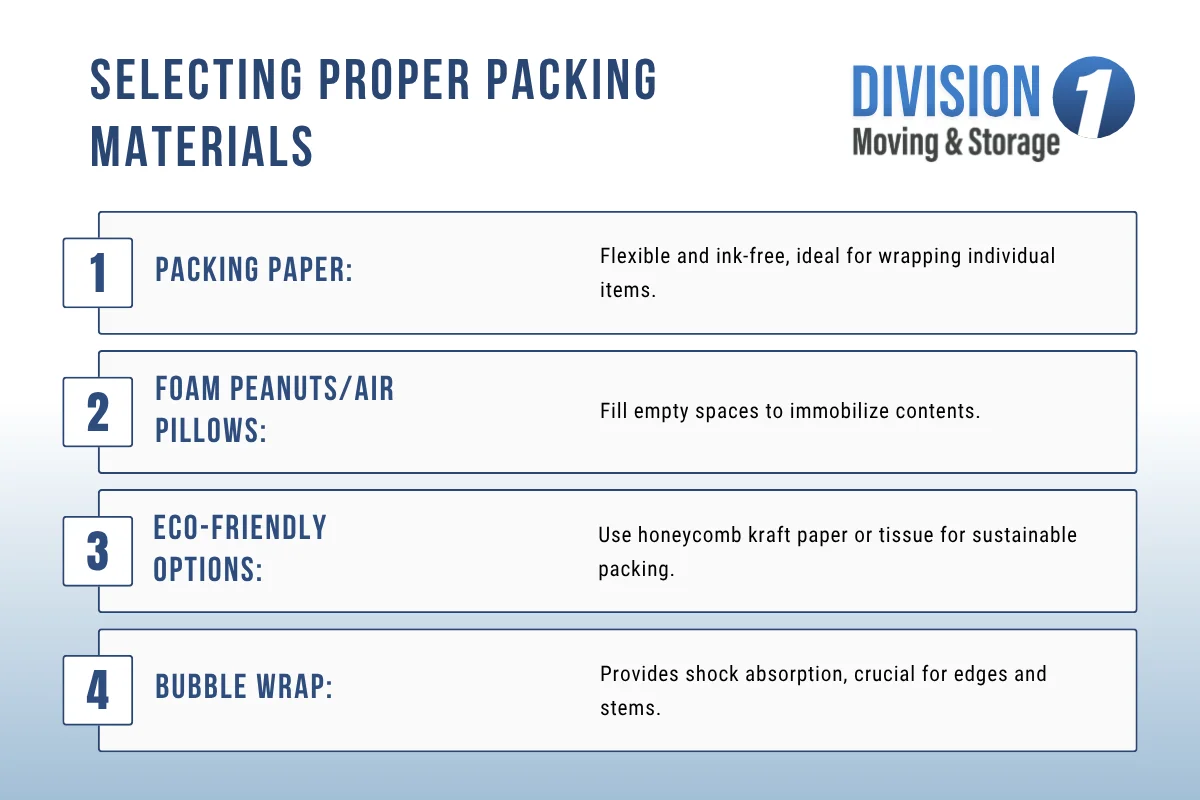
The foundation of safe transport for fragile items is the right packing material. Skimping here often leads to chips, cracks, or worse. Instead, a strategic approach keeps your valuables protected from shocks, vibration, and unexpected bumps in the road.
Packing paper: Flexible, ink-free, and perfect for wrapping individual items.
Bubble wrap: Excellent shock absorption, especially for edges and stems.
Foam peanuts/air pillows: Fill empty spaces and immobilize contents.
Sturdy boxes: Use dish pack or double-walled boxes for structural integrity.
Eco-friendly options: Honeycomb kraft paper or tissue for green-minded packing.
Not all fragile items need the same level of protection. Tumblers and mugs can often be wrapped with packing paper and nestled in peanuts, but stemware and fine china demand small-bubble wrap, foam sleeves, and custom inserts. Always assess the fragility of each item and over-protect high-risk zones like edges, handles, and stems.
For high-value or irreplaceable items, consider double-boxing with a two-inch foam layer between cartons. This extra step can dramatically reduce the risk of penetration damage during even the bumpiest ride.
Wrapping Techniques for Glassware
Glassware is notoriously vulnerable, but professional wrapping techniques can lower breakage rates to less than 1%, compared to up to 10% with paper-only packing. The key is individualized attention for every piece.
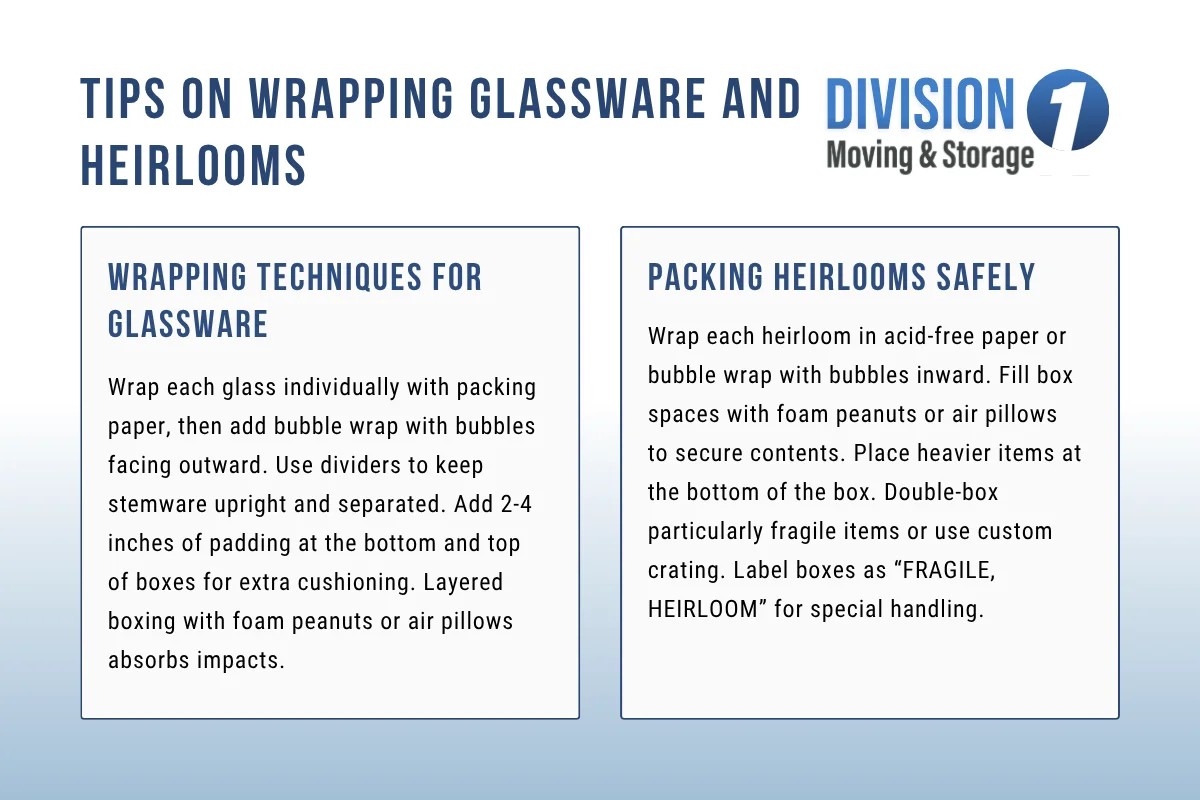
To protect your glassware during a move, start by wrapping each glass individually with packing paper to prevent scratches. Next, add a layer of bubble wrap, make sure the bubbles are facing outward, for the best shock absorption. Place stemware upright in the box, using dividers to keep each piece separated and reduce the risk of twisting or breaking. Finally, add two to four inches of padding at the bottom and top of each box to provide extra cushioning and ensure your glasses stay safe throughout the journey.
Layered boxing is your best friend here. Add soft materials like foam peanuts or air pillows around and between items. Dividers absorb lateral movement, and top/bottom padding fragments impacts before they reach your glassware. For a sustainable option, honeycomb kraft paper can substitute for bubble wrap, delivering similar protection without the plastic.
Box Labeling Best Practices
Even the best-packed boxes can be mishandled if handlers don’t know what’s inside. That’s why smart labeling is essential, transforming your move from chaos to organized efficiency.
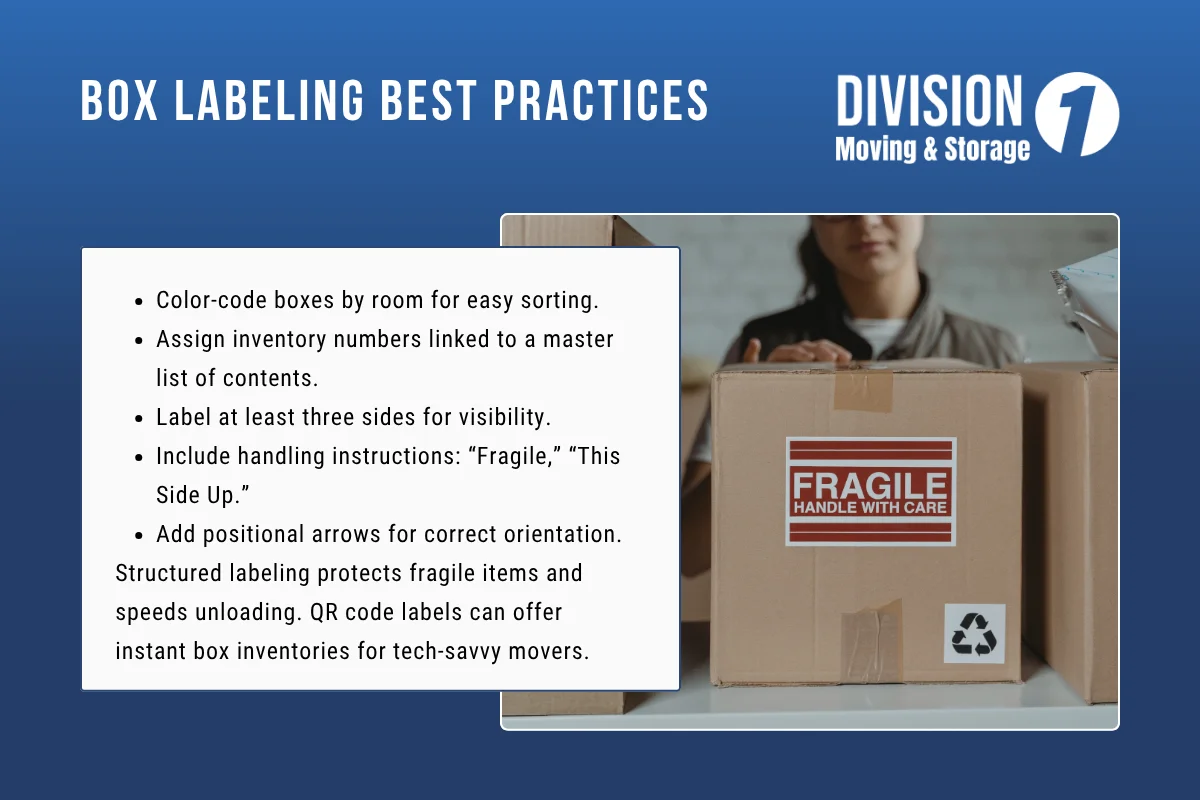
Color-code boxes by room for easy sorting at your new location.
Assign inventory numbers linked to a master list detailing contents.
Label at least three sides of each box to ensure visibility regardless of how boxes are stacked.
Include clear handling instructions (e.g., “Fragile,” “This Side Up,” “Heirloom”).
Add positional arrows to indicate correct orientation for especially delicate items.
Structured labeling not only protects your fragile items but also speeds up unloading by up to 40%. For tech-savvy movers, QR code labels offer instant access to box inventories and special instructions, making the unpacking process smoother than ever.
Packing Heirlooms Safely
Family treasures and valuable heirlooms deserve extra care. The process begins with a careful fragility assessment. Identify weak points, like porcelain spouts or delicate frames, and plan accordingly.
Begin by wrapping each item carefully in acid-free paper or bubble wrap, ensuring that the bubbles face inward for heirloom pieces to provide extra protection. Next, fill any empty spaces in the box with foam peanuts or air pillows until the contents are securely packed and the box is completely shake-proof. For added stability, always place heavier items at the bottom of the box. If you are packing exceptionally fragile or valuable objects, consider double-boxing them or using custom crating for maximum safety. Finally, clearly label each box as “FRAGILE, HEIRLOOM” to alert handlers that the contents require special care.
This layered defense strategy mitigates the risk of shocks and vibrations during transit. For irreplaceable or highly valuable objects, custom crating offers a tailored fit, absorbing impacts more effectively than standard packaging. Strategic labeling ensures that heirlooms are never handled carelessly.
DIY vs Professional Packing for Fragile Items
Should you pack your fragile items yourself or trust the professionals? The answer depends on the value, time, and risk you’re willing to assume. DIY packing saves on upfront costs and gives you personal control, but often falls short when it comes to consistent protection, especially if you’re relying on towels or newspapers.
Professional packing, like our packing and unpacking services, uses systematic techniques and industry-standard materials. We employ double-walled boxes, layered cushioning, and proven methodologies that minimize damage, backed by insurance and full-value coverage. For high-value or sentimental items, professional packing is often more cost-effective in the long run, reducing the risk of loss or costly repairs.
Protecting Fragile Décor and Unique Items
Delicate décor such as porcelain figurines, crystal vases, or antique mirrors demand specialized protection. Professional movers use techniques like custom crating and point-of-contact isolation, ensuring that no two delicate surfaces ever touch and that every item is individually encased.
We use double-walled boxes to provide enhanced structural strength, ensuring your items are well protected during transit. To further safeguard your valuables, we incorporate archival paper and rigid foam, creating multi-density layers that cushion and support each piece. For objects with unusual shapes or sizes, we design custom foam inserts that fit perfectly, offering tailored protection. Additionally, we carefully isolate all contact points to prevent abrasion and minimize the risk of impact damage, giving you peace of mind that your belongings will arrive safely.
While DIY methods might work for some, fragile décor requires a level of engineering that’s best left to professionals for maximum peace of mind. For high-value or sentimental décor, entrusting the packing to experts reduces both stress and liability.
Transporting Delicate Items: Safe Loading and Handling
Even perfectly packed items can be damaged by poor transport. The secret is energy dissipation and immobilization, preventing movement, absorbing shocks, and selecting the right containers.
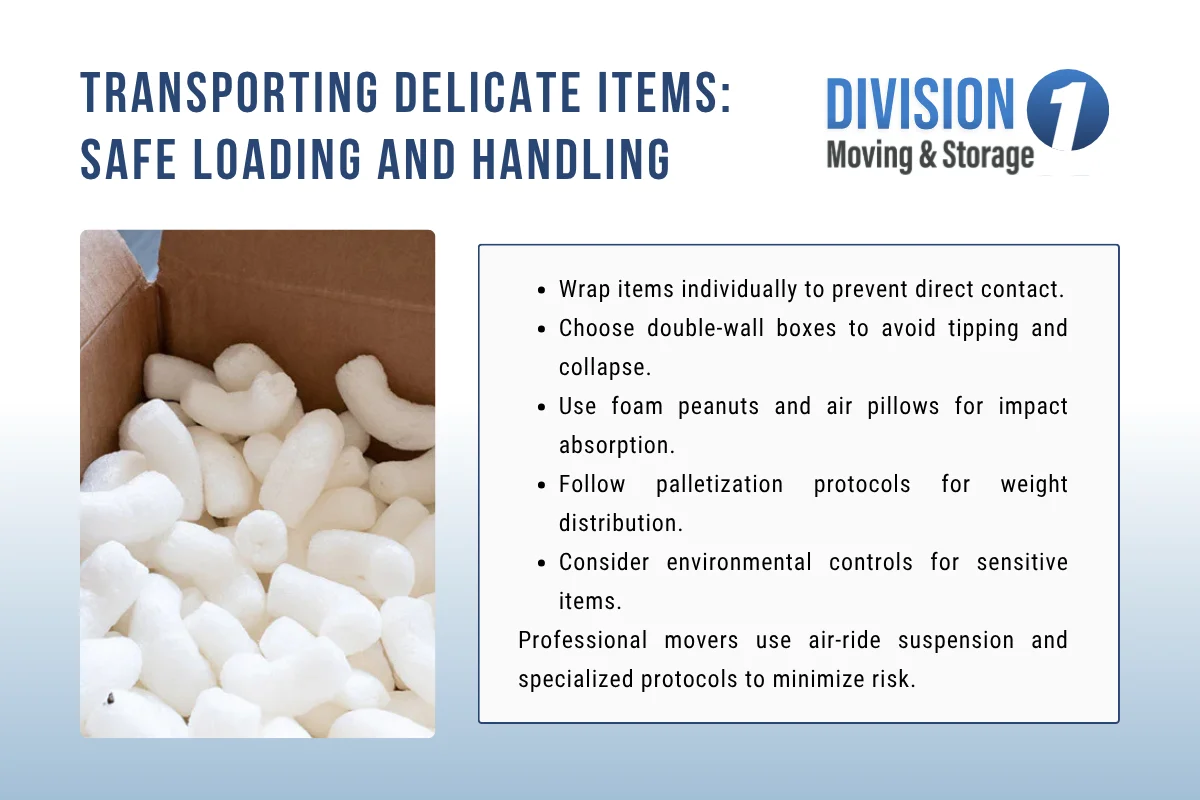
Wrap each delicate item individually and ensure no direct contact between contents.
Choose double-wall corrugated boxes to prevent tip risk and structural collapse.
Use foam peanuts and air pillows to absorb impacts and eliminate empty spaces.
For bulk moves, follow palletization and stacking protocols to distribute weight evenly.
Consider environmental controls for temperature- or pressure-sensitive items.
Professional movers use air-ride suspension vehicles and specialized loading protocols to further reduce risk. If you’re moving highly sensitive items, be sure to discuss special transportation requirements with your mover to ensure optimal protection.
Using Storage for Fragile Items
Sometimes, your fragile belongings need to be stored rather than moved directly. Safe storage requires just as much attention to detail as packing for transit.
Use rigid, sealed containers (plastic totes are superior to cardboard for long-term storage).
Layer items with acid-free tissue and include silica gel packets to control humidity.
Opt for climate-controlled storage units to prevent warping, cracking, or mold growth.
Maintain ideal storage conditions: 15, 24°C and 40, 55% relative humidity.
Climate-controlled warehouse storage units are particularly effective for valuable or temperature-sensitive items, reducing the risk of environmental damage by up to 90%. For long-term peace of mind, always choose storage solutions that match the vulnerability and value of your fragile items.
Move with Confidence in Alexandria and Northern VA
Learning how to pack fragile items is a crucial step for any successful move, whether you’re relocating across Alexandria, Northern Virginia, or beyond. From selecting the right materials to using professional wrapping, labeling, and storage strategies, these steps will safeguard your most cherished possessions every step of the way.
If you’re facing a move and want true peace of mind, our team at Division 1 Moving and Storage is here to help. Our skilled movers handle everything from local apartment moves in Alexandria to cross-country relocations, always with the utmost care for your fragile items. We offer professional packing, secure storage, and expert relocation services across Northern VA.
Ready to take the stress out of your next move? Get a quote or call us at (571) 970-3189 and let us protect your fragile treasures from start to finish.