


.svg)
Moving changes everything familiar for a pet: smells, rooms, routines, car time, people in the home, and the places where food, beds, toys, and litter boxes belong. Dogs may react with pacing, barking, escape attempts, or stomach upset. Cats may hide, resist carriers, stop eating normally, or become stressed by noise and open doors.
The best moving with pets tips are practical and early. A smoother pet move usually starts several weeks before moving day, continues through careful travel planning, and ends with a calm first setup in the new home. This guide focuses on vet preparation, pet essentials kits, safe carriers, move day setup, and long-distance planning for moving with dogs and moving with cats.
At Division 1 Moving and Storage, we help homeowners and renters throughout Alexandria and Northern Virginia plan organized household moves, and we know pets are part of that planning. If you have questions about how your move day schedule may affect your pet setup, you can reach out to us while you are preparing your timeline.
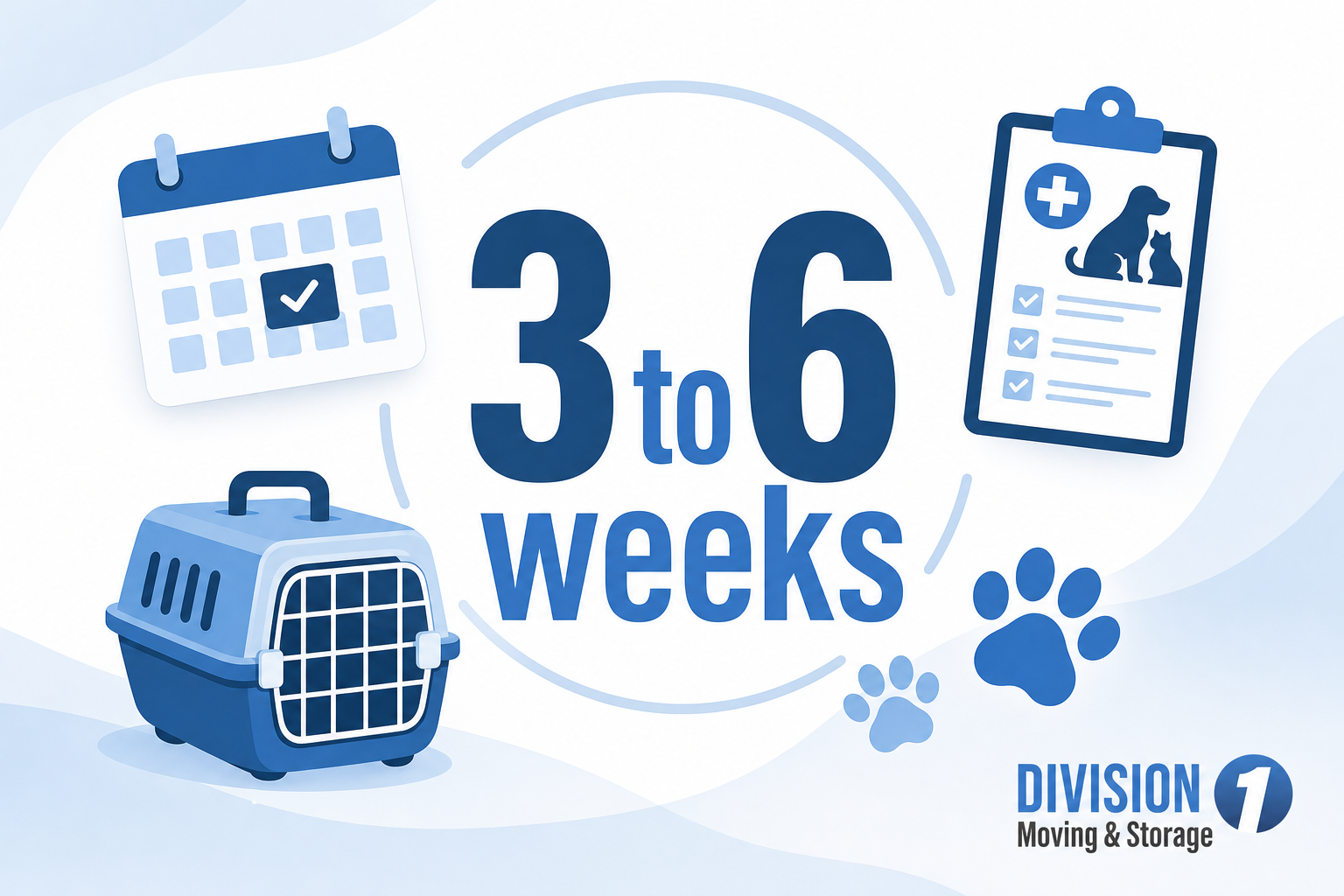
Start Pet Move Planning 3 to 6 Weeks Before Moving Day
A pet-friendly move begins before boxes take over the house. Many moving problems for pets come from last-minute gaps: missing vaccine records, expired rabies documentation, no anxiety plan, or a carrier that the pet has never used until moving day.
Scheduling a veterinary visit 3 to 6 weeks before moving gives you time to update routine care, discuss stress, and gather records. This is especially important for long-distance moves, cross-state moves, pets with medical needs, and animals that have a history of car sickness or anxiety.
A pre-move vet visit should cover records, medications, and travel risks
Use the appointment as a planning session, not just a checkup. Your vet can confirm whether vaccinations are current, help you prepare documentation, and discuss whether anxiety support, anti-nausea medication, or feeding adjustments may be appropriate for travel.
For moves across state lines, ask whether you need a certificate of veterinary inspection. Pet travel rules can vary by destination, and the USDA APHIS pet entry requirements are commonly used to review state-specific requirements before travel.
Keep the vet records with you, not in the moving truck. If a hotel, boarding facility, landlord, emergency clinic, or property manager asks for proof of health or vaccines, you will need fast access.
Before the appointment, make a short checklist so you do not forget key items during a busy moving season. The goal is to leave with records, instructions, and enough medication to get through travel and the first weeks after arrival. This is especially helpful if you will not have a new veterinarian established immediately.
Confirm rabies vaccination status and request proof of vaccination.
Ask for full medical records and vaccine certificates.
Ask whether a certificate of veterinary inspection is needed for your destination.
Refill ongoing medications, including heartworm preventives, flea and tick products, NSAIDs, chronic disease medications, or other prescribed medications.
Discuss anxiety support, including prescribed anxiolytics, supplements, pheromone products, or calming chews if appropriate.
Discuss car sickness, anti-nausea options, and feeding timing before long drives.
Update microchip registration with your cell phone, emergency contact, and new address.
Ask for emergency care guidance if your pet has a chronic condition.
Collect contact information for your current veterinarian and the future veterinarian, if selected.
Identify emergency veterinary hospitals along the route and near the destination.
Update Identification Before Boxes, Doors, and Movers Create Escape Risks
Moving day is full of open doors, unfamiliar people, noise, and distractions. Even pets that normally stay close may bolt when a sofa is carried out, a door is propped open, or a loud sound startles them.
Redundant identification is strongly recommended. That means your pet should have both a microchip with current registration and a collar with ID tags. For dogs and cats, current rabies tags can also be useful when proof is needed quickly.
Microchips and ID tags should be treated as move day safety tools
Confirm that microchip information is not outdated. A chip registered to an old address or inactive phone number can slow down recovery if your pet gets loose. Update the owner’s cell phone, emergency contact, and new address before the move when possible.
Collar tags should also be current. Some families update tags with the new address and phone number before moving day so that if a pet slips out during loading or travel, the tag points people to the right contact information.
For moving with cats, this step matters even if your cat is indoor-only. Indoor cats are often less familiar with outdoor sounds and routes, so a door escape during loading can be especially risky. A secure carrier, updated microchip, and visible ID provide multiple layers of protection.
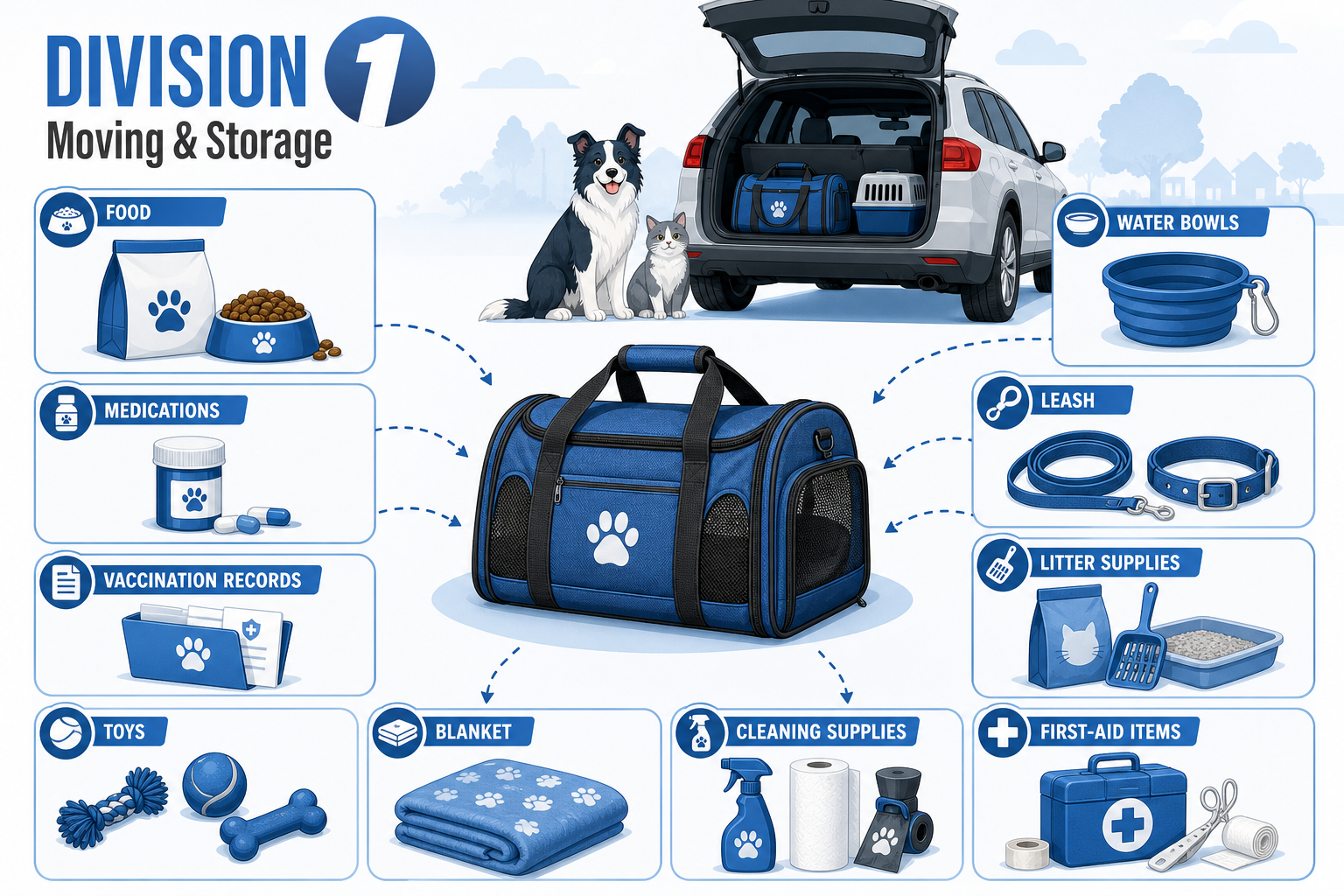
Pack a Pet Essentials Kit That Never Goes on the Moving Truck
One of the most useful moving with pets tips is simple: pack a dedicated pet go-bag and keep it in your vehicle. Do not place it with household boxes. Your pet’s immediate food, medications, records, cleaning supplies, and comfort items should stay within reach during loading, travel, delays, and the first night in the new home.
Most guidance frames this kit as a 24 to 72 hour supply. That gives you a buffer if travel takes longer than expected, the truck arrives later than planned, or you need to make an unplanned overnight stop.
A good pet essentials kit should support health, comfort, feeding, bathroom needs, and cleanup. It should also reduce the need to open packed boxes when everyone is tired at the end of moving day. Pack it early, label it clearly, and keep it with the person responsible for the pet during travel.
Several days of your pet’s usual food to avoid sudden diet changes during transit.
Travel bowls or collapsible bowls for food and water.
Bottled or familiar water, especially at the start of travel, to reduce the chance of stomach upset from unfamiliar water.
All routine and prescribed medications in original labeled containers.
Vaccination records, health certificates, microchip details, and emergency contacts in a waterproof folder.
Printed copies of important records in case phone batteries die or digital files are unavailable.
A basic pet first-aid kit with items such as bandages, antiseptic wipes, tweezers, and a digital thermometer.
Favorite toys, chews, treats, and at least one familiar blanket or bed that smells like home.
Pheromone sprays or diffusers if your veterinarian or pet care plan includes them.
Pet-safe cleaning spray, paper towels, plastic bags, and extra towels.
For dogs, waste bags, absorbent pads, extra leashes, harnesses, and ID tags.
For cats, litter, a compact litter box or disposable tray, scoopers, and secure carrier supplies.
Choose Carriers, Crates, and Restraints Before Travel Day
Car safety is not just about convenience. Pets should not roam freely in the car, ride in open truck beds, travel in trunks, or be placed in moving vans. The safe approach is to use properly sized, well-ventilated carriers, crates, or crash-tested harnesses.
Cats should travel in secured carriers. Dogs should be restrained with crash-tested travel harnesses or travel crates. Carriers and crates should allow the pet to stand, turn around, and lie down comfortably, with enough ventilation to prevent overheating.
Carrier training works best when it starts before the house is packed
Pets are less likely to panic in a carrier if it has been introduced gradually. For both moving with dogs and moving with cats, the crate or carrier should become familiar before moving day. Feeding meals in or near the crate, adding treats, and using short practice sessions can help build positive associations.
Some pets benefit from short practice drives. Start small and reward calm behavior afterward with treats, play, or familiar routines. The goal is to make the carrier feel like a safe den rather than a punishment or surprise.
United Van Lines recommends that pet carriers include potty pads inside carriers and towels underneath to help manage spills, accidents, or motion sickness during the ride. Familiar bedding can also help, as long as airflow remains clear and the carrier stays secure.
Dogs and cats need different travel setups
Dogs may travel in secured crates or in crash-test certified vehicle harnesses rated for their weight. Larger dogs may be better suited to harness systems attached to seat belts, while smaller dogs may travel in ventilated crates placed securely where they cannot become projectiles during sudden stops.
Cats should stay in carriers during travel and should not be allowed loose in the vehicle. Some cats do best with the carrier lightly covered to reduce visual stimulation. At stops, only allow litter box access in a secure environment, such as inside the closed vehicle, if that is part of your travel plan.
Always check airflow around carriers. Do not place carriers near airbags, in trunk spaces with poor ventilation, or in unstable stacked arrangements.
Build a Pet-Safe Move Day Setup Before Movers Arrive
Move day is when pets face the highest combination of stress and escape risk. People are walking in and out, doors may stay open, and large furniture may block normal paths through the home. Pets can be startled by heavy foot traffic, strangers, and unfamiliar sounds.
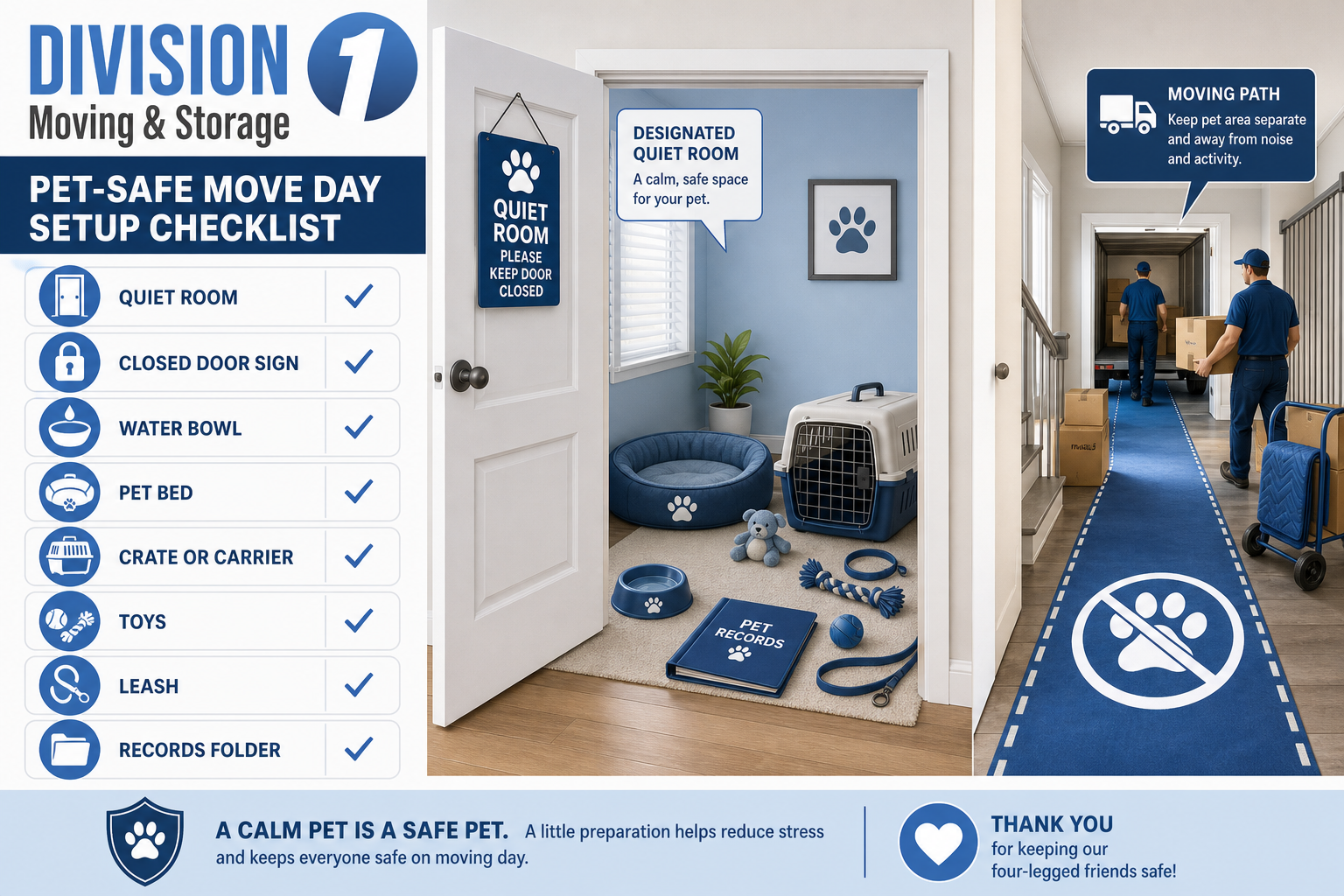
A quiet room or off-site care plan can prevent many problems. This room should be chosen before moving day and set up before activity begins. It should be away from doorways, stairs, and the main path used for carrying furniture and boxes.
When our moving crews are part of the day, it helps to tell us where pets will be secured so that the designated room stays closed and the moving path remains organized.
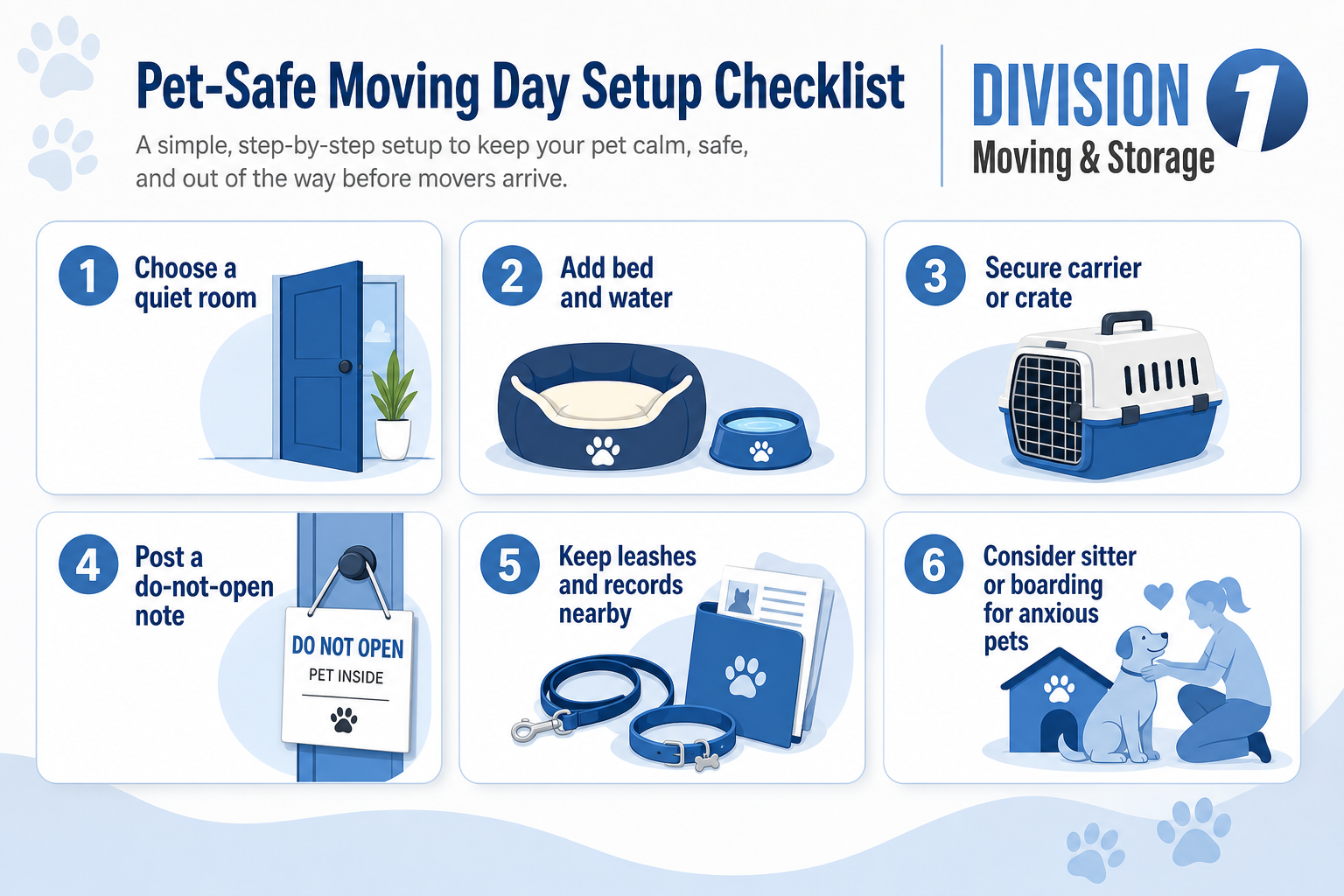
A quiet room helps keep pets away from open doors and heavy traffic
Choose one room that can remain closed while loading happens. Place your pet’s bed, water, toys, crate, and any comfort items inside. For cats, the carrier may stay inside the quiet room, and a light cover over the carrier can reduce visual stimulation during the busiest periods.
Dogs may stay crated in the room if they are comfortable there. If your dog is highly anxious, reactive to strangers, or likely to bark or lunge at the door, a trusted sitter, friend, daycare, or boarding facility may be calmer and safer.
This setup protects pets and people. It reduces the chance of a pet slipping out, getting underfoot, or being startled by large objects moving through tight spaces.
A move day pet setup should be simple, secure, and clearly communicated
The best setup is easy for everyone in the household to understand. Pets should not be moved from room to room throughout the day unless needed. Avoid placing food bowls, litter boxes, or beds in high-traffic areas where movers, family members, or boxes will constantly pass.
Use a checklist the night before the move. A short list helps prevent last-minute decisions when the truck arrives and the home becomes active. The goal is to make one secure plan and keep it consistent until the pet is ready to leave.
Select a quiet room away from the main moving path.
Set up the pet’s bed, crate or carrier, water, toys, and familiar blanket.
Place cats in carriers or in the closed quiet room before activity begins.
Give dogs a long walk or extended play session early in the day when possible.
Feed a light meal if travel is planned, and follow your vet’s guidance for pets prone to car sickness.
Post or share clear instructions so no one opens the pet room by mistake.
Keep leashes, harnesses, waste bags, litter supplies, and records with the pet essentials kit.
Consider boarding, daycare, or a trusted sitter for anxious pets or homes where doors must stay open.
Keep Dogs on Routine With Exercise, Breaks, Water, and Leash Control
Moving with dogs is easier when their routine stays as predictable as possible. Feeding, walking, play, and bedtime patterns give dogs something familiar to rely on while the home changes around them.
In the days leading up to the move, try to keep meal and walk times consistent. On moving day, an early walk or play session can help burn excess energy before packing, loading, or driving begins. Pair that plan with your veterinarian’s guidance if your dog is prone to motion sickness.
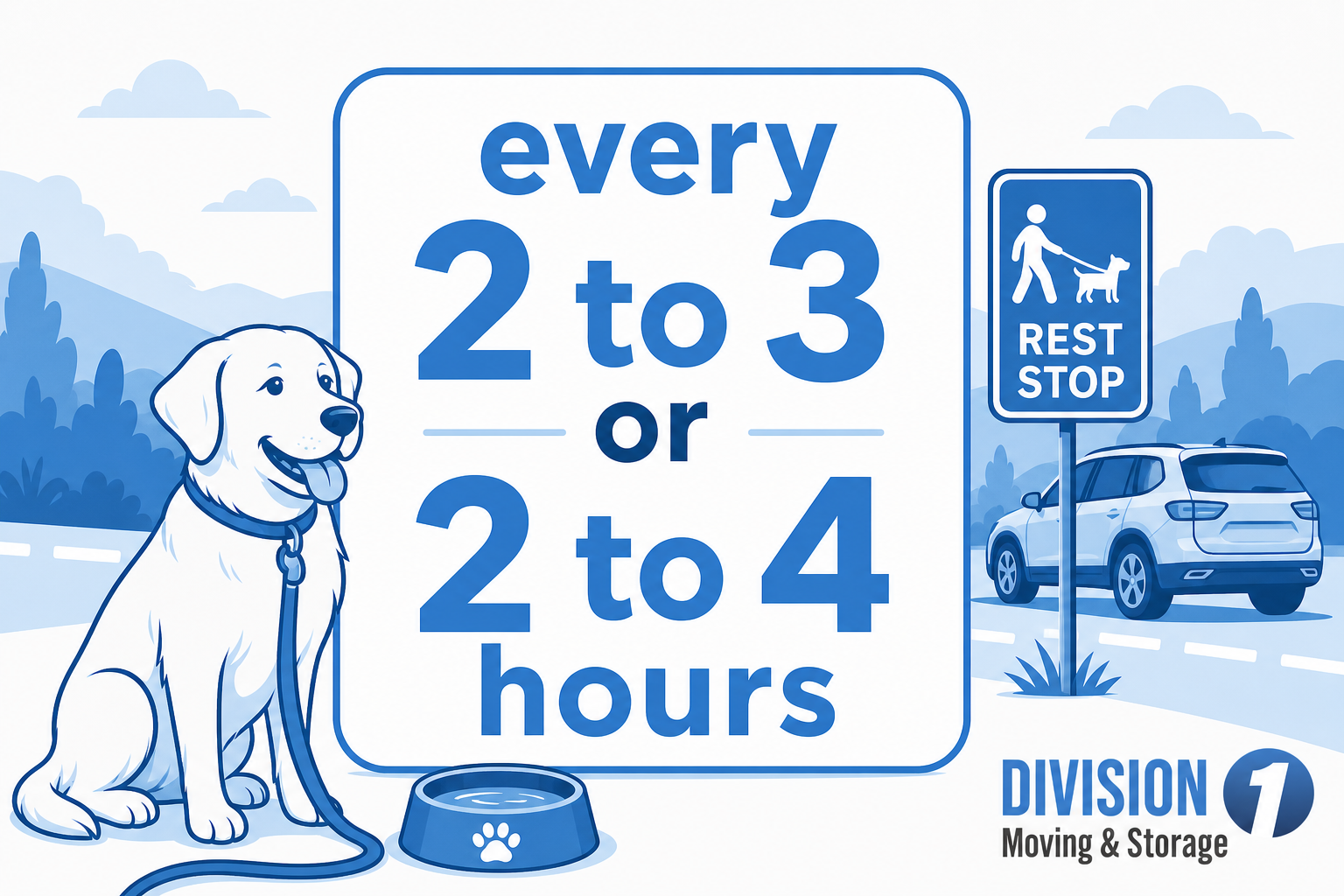
During travel, many pet moving resources recommend rest stops every 2 to 3 or 2 to 4 hours for dogs. Best Friends Animal Society emphasizes that dogs should be kept on leash at all times outside the vehicle or in hotel corridors, since unfamiliar locations can increase the risk of bolting.
At each stop, choose a safe, low-traffic area away from loud noise and traffic. Offer water, use waste bags, and keep your dog close. If the weather is hot or cold, monitor car temperature and ventilation carefully.
Dogs should not be left in parked cars. Animal welfare guidance notes that dogs can overheat rapidly in parked vehicles even when the outside temperature seems moderate. If one person needs to go inside a rest stop, another person should stay with the pet when possible.
Make Moving With Cats Calmer by Limiting Change and Securing Small Spaces
Cats often experience moves differently than dogs. Many cats prefer quiet, dim, contained spaces and may become stressed by frequent handling, car stops, loud voices, or changing rooms. A predictable carrier and a controlled environment are central to moving with cats.
Before moving day, let the carrier become familiar. Place food, treats, or bedding near or inside it. Short sessions with the door open can help reduce fear. As the move approaches, the carrier should feel less like a sudden trap and more like a known space.
Cats should stay contained during loading, driving, and hotel stops
During loading, cats should be secured before doors open and activity begins. A closed quiet room is helpful, but many cats are safest in their carriers during the most active parts of the move. A light cloth over the carrier can help reduce visual stress.
During car travel, keep cats in secured carriers. Avoid letting them roam loose in the vehicle. If a litter break is needed, some guidance allows brief access to a travel litter box inside the closed car, with doors shut and the environment controlled, before the cat returns to the carrier.
At a hotel or temporary stop, check windows, balcony doors, and hiding spaces before opening the carrier. Set up a small home base with litter, food, water, and familiar bedding. Keep routines as similar as possible, especially feeding and litter access.
Plan Long-Distance Pet Travel Around Lodging, Regulations, and Emergencies
Long-distance moves require extra pet planning because the move extends beyond one loading day. You may need hotel stays, longer car rides, cross-state documentation, emergency clinic planning, and a plan for feeding, bathroom breaks, and overnight routines.
Reserve pet-friendly lodging in advance when possible. Confirm that dogs and cats are allowed in rooms, and check policies on size limits, fees, and whether pets may be left unattended. At overnight stops, set up a temporary home base with familiar bedding, food, water, and a litter box or bathroom pads.
Regulations may also matter. Destination states, municipalities, landlords, property managers, and homeowner associations may have documentation requirements or restrictions. Reviewing these details before travel helps prevent delays or stressful surprises.
Emergency planning should be part of the route, not an afterthought
Before leaving, identify emergency veterinary clinics along the travel corridor and near the destination. Keep phone numbers and addresses in your pet essentials kit and on your phone. Printed copies are useful if cell service fails or a battery dies.
Monitor pets during travel for signs of heat stress, dehydration, illness, vomiting, lethargy, excessive panting, or refusal to eat. Seek veterinary care promptly if concerning signs appear. If your pet has chronic medical needs, ask your veterinarian how to handle symptoms during the trip.
For air travel segments, confirm airline pet travel requirements early. Guidance for moving with pets notes that requirements may include crate dimensions, health certificates issued within a set timeframe, and seasonal restrictions for some breeds. This is another reason to start the veterinary and documentation process several weeks before moving day.
Set Up a Home Base Room First at the New Home
Pets do not need immediate access to every room in the new home. In fact, too much space too soon can increase stress, especially when boxes are stacked, furniture is still being arranged, and doors may still be opening frequently.
Set up one home base room first. Include familiar bedding, bowls, toys, and for cats, the litter box. For dogs, keep the leash nearby and return to regular walk, feeding, and bedtime schedules as quickly as possible.
Gradual introduction helps pets adjust. Let them explore additional rooms once they show signs of comfort and curiosity. Avoid forcing exploration if a pet is hiding or hesitant. Calm routines are more useful than rushing them through the space.
During the first few days, keep an eye on behavior changes such as pacing, barking, hiding, reduced appetite, or bathroom accidents. Some adjustment is expected, but strong or persistent signs of distress may call for guidance from your veterinarian.
Use a Pet Move Plan That Keeps Health, Safety, and Timing Connected
The most effective moving with pets tips work together. Vet records help with regulations and emergencies. Carrier training makes car travel safer. A pet essentials kit prevents scrambling for food, medication, or cleanup supplies. A quiet room reduces escape risk. A home base room makes the new space less overwhelming.
When you plan these pieces early, moving with dogs and moving with cats becomes more manageable. Pets still experience change, but they have familiar smells, predictable routines, secure containment, and a safer path through the busiest parts of the move.
If you are preparing for a local or long-distance move in Alexandria or Northern Virginia, Division 1 Moving and Storage can help you plan the household side of the move so your pet setup has the time and space it needs. Get a Quote at https://www.division1moving.com/contact-us or call (571) 970-3189.