


A move gets easier when the work is spread across clear planning windows instead of pushed into the final week. The best moving tips are not complicated. They help you decide what to do first, what can wait, what should never be packed, and how to keep moving day from turning into a search for keys, chargers, documents, or bedding.
This guide walks through a practical moving timeline, decluttering, packing basics, mover selection, moving day tips, cleaning, and first-night setup. Use it as a broad planning hub, then build your own moving day checklist around your household, lease, closing date, distance, and storage needs.
At Division 1 Moving and Storage, we help homeowners, renters, and families across Alexandria and Northern Virginia plan local moves, long-distance moves, packing, storage, furniture assembly, junk removal, and move-out support. If you have questions while planning your move, you can reach out to us for guidance or Get a Quote.
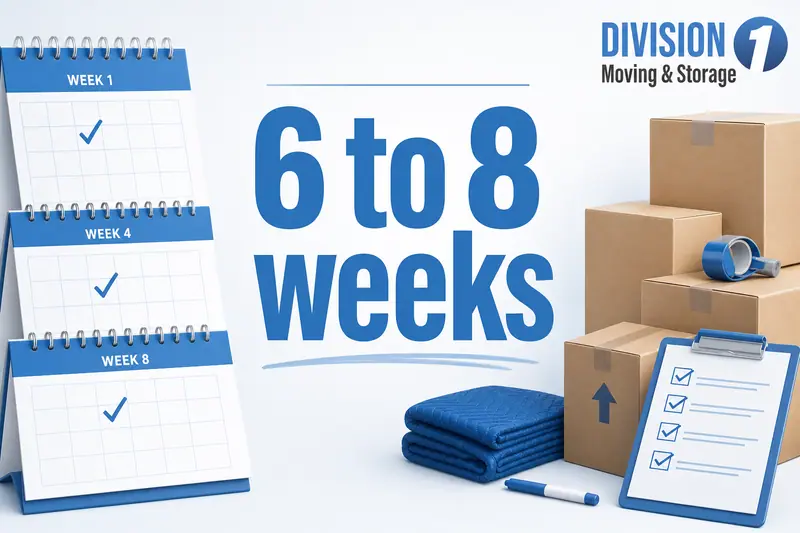
A 6 to 8 Week Moving Timeline Keeps the Process Manageable
A strong moving plan usually starts 6 to 8 weeks before moving day. That window gives you time to set a budget, research movers, gather supplies, declutter, pack gradually, and keep quotes or confirmations in one place. For peak-season or long-distance moves, earlier planning is even more important.
Many moving timelines follow a similar rhythm. The goal is to make each week specific enough that you know what matters now, without trying to solve every detail at once. A complete moving timeline commonly starts at eight weeks out and moves toward utilities, packing, essentials, and final walkthrough tasks.
Eight weeks out is the time to plan, book, and organize paperwork
About eight weeks before the move, focus on the decisions that affect everything else. Start researching movers, reviewing possible dates, and building a moving folder for estimates, confirmations, inventory notes, lease details, and important reminders.
This is also the right time to think about whether your move needs added support. A renter with a lease deadline, a family moving during a busy work season, or a household moving long distance may need a different plan than someone moving a small apartment locally.
Six weeks out is the time to declutter before supplies take over
At six weeks out, shift your attention to decluttering and supplies. This stage should come before serious packing. If you pack everything first and decide later, you may pay to move items you no longer want, then spend more time unpacking them in the new home.
Start with storage areas because they are often easier to evaluate objectively. Garages, basements, attics, closets, and utility rooms tend to hold items that are out of daily use, which makes sorting faster and more practical.
Four weeks out is the time to confirm utilities and pack room by room
By four weeks out, begin room-by-room packing for items you will not need before moving day. Out-of-season clothing, extra linens, decor, books, and rarely used kitchen items are good places to start.
This is also the point when utility planning becomes more important. Your timeline should include what needs to be transferred, turned off, or started at the new home, plus any building access, elevator, parking, or lease-related requirements that affect moving day.
Two weeks out is the time to tighten logistics and pack deeper
Two weeks before the move, continue packing and shift from broad planning to details. Confirm mover timing, decide where packed boxes will be staged, and identify anything that still needs donation pickup, e-waste drop-off, junk removal, or special handling.
This is when loose ends become visible. Borrowed items, old paperwork, bulky pieces that will not fit well, and last-minute donation piles should be handled before the final week becomes crowded.
One week out is the time to protect essentials from being packed
The final week should not be treated like an ordinary packing week. It should be focused on access, safety, and readiness. Set aside toiletries, medications, chargers, basic bedding, a few kitchen items, clothes, keys, and documents so they are not buried in the truck.
A clear essentials plan makes the first night easier. It also reduces the chance that you will open several boxes after a tiring day just to find one item you need immediately.
Decluttering Before Packing Saves Time, Space, and Effort
Decluttering is one of the most useful moving tips and tricks because it affects nearly every later step. Fewer items can mean less packing, less loading, less unpacking, and fewer decisions in the new home. The work is easier when it happens before boxes are sealed.
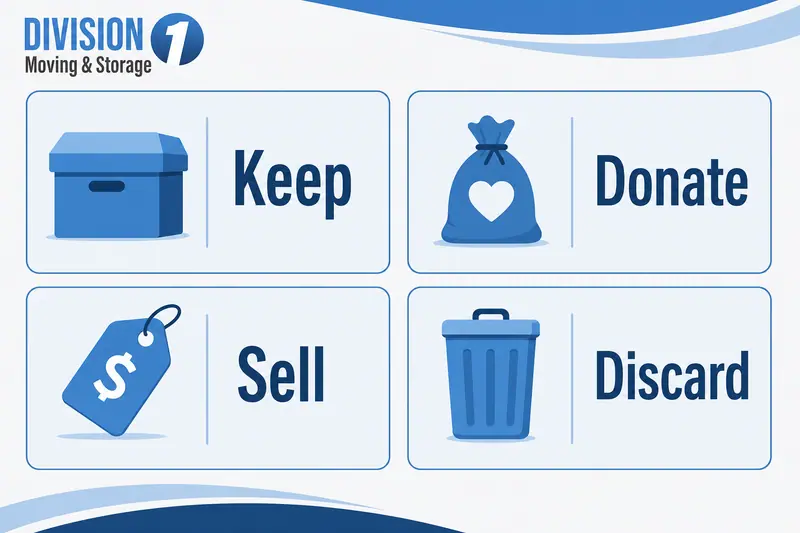
A practical method is to sort each room into keep, donate, sell, and discard categories. The declutter before a move approach works best when you handle large categories early, then do a final sweep in the last one to two weeks.
Decluttering should be visible and physical, not just a mental list. Use separate containers or areas so donation items do not get mixed back into the keep pile. The clearer your sorting system, the less likely you are to move things by accident.
Start with storage spaces such as garages, attics, basements, closets, and utility rooms.
Sort every space into keep, donate, sell, and discard categories.
Schedule donation pickup, e-waste drop-off, or junk removal before the final days.
Set aside bulky items that may not fit well in the new home.
Do a final sweep for old papers, borrowed items, leftover clutter, and forgotten storage areas.
If you are clearing out a home in Northern Virginia and realize some items should not be moved, this is the natural point to consider professional junk removal or short-term storage. Division 1 Moving and Storage offers both options, which can help keep the packing phase focused on what is actually going to the new address.
Room-by-Room Packing Makes Loading and Unpacking Easier
Packing works best when it follows the way the home will be unloaded. Boxes should be packed by room and labeled clearly with room, contents, and priority. This simple system helps movers place items correctly and helps you unpack without opening every box to find one thing.
Start with out-of-season and infrequently used items. Then work toward everyday essentials as moving day gets closer. This keeps the house functional while still creating steady progress.
Fragile items need individual attention. Wrap them separately, add cushioning to the bottom of the box, and keep heavier items below lighter items. The packing checklist guidance emphasizes organized labeling and careful protection so items are easier to move and unpack.
Labels should tell you where a box goes and how soon it matters
A useful label does more than say “kitchen.” Add a short contents note and a priority marker. For example, “Kitchen, plates and bowls, early unpack” is more helpful than a vague room name.
Priority labels are especially helpful when you arrive tired. They help you open the boxes needed for sleeping, bathing, eating, and basic routines before moving on to decor or storage items.
Electronics need photos, cord bundles, and a separate plan
Before disconnecting electronics, photograph the cable setup. Keep cord bundles together so they do not get separated during packing. This small step can make setup easier after unloading.
Electronics are also a good example of why “pack by category” sometimes supports “pack by room.” The devices may belong in a living room, office, or bedroom, but the cords, remotes, and accessories should stay grouped with the equipment they operate.
An essentials box should stay with you or stay easy to reach
Your essentials box is different from an early-unpack box. It should contain items you may need right away, including toiletries, medications, chargers, basic bedding, and basic kitchen items. Keep it clearly marked and easy to access.
If several people are moving, consider essentials for each person. Clothes, medications, bedding, and personal items should not depend on a single box being unloaded first.
Choosing Movers Requires Written Details, Not Just a Low Price
Choosing a mover is one of the highest-impact decisions in the moving process. A low price may be appealing, but the better question is whether the estimate, service details, and responsibilities are clear. Written estimates, itemized pricing, valuation options, and a documented survey help create a more predictable move.
For interstate or long-distance moves, the Federal Motor Carrier Safety Administration advises customers to get multiple written estimates and make sure the estimate is based on an actual in-person or virtual inspection of household goods. That guidance matters because accurate estimates depend on what is actually being moved.
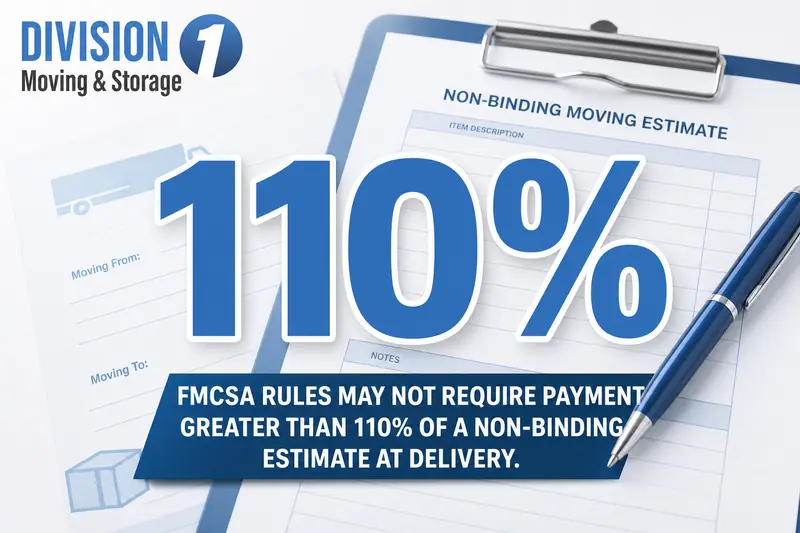
Long-distance customers should also understand the difference between a binding and non-binding estimate. The FMCSA notes that with a non-binding estimate, movers may not require payment greater than 110% of the estimate at delivery, while a binding estimate caps the amount owed at delivery for the agreed shipment and services.
For local Northern Virginia moves, many of the same habits are useful. Ask what is included, how pricing is structured, what happens if the inventory changes, and how the company documents the condition and scope of the move.
A Practical Moving Day Checklist Keeps the Day on Track
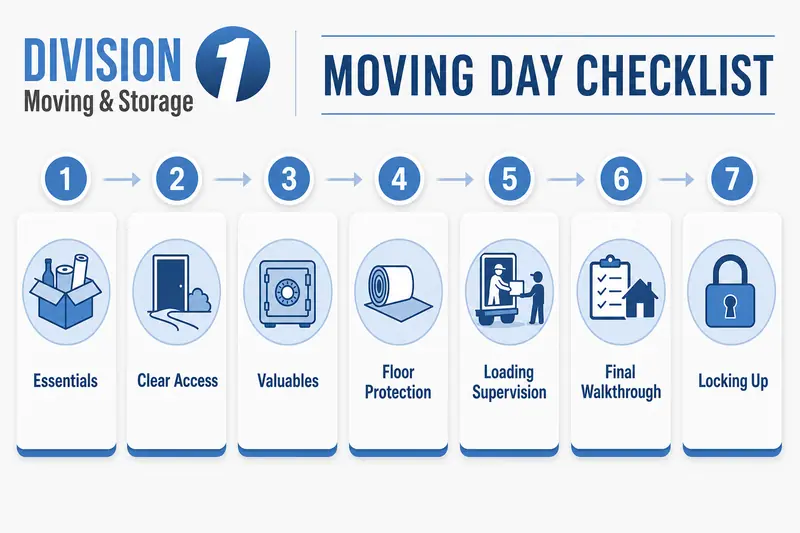
Moving day has too many small tasks to manage from memory. A moving day checklist gives the day a sequence, starting with essentials, safety, and access, then moving into loading, walkthroughs, and final checks. The best moving day tips are simple enough to follow while the house is busy.
Before movers arrive, gather snacks, water, phones, keys, documents, valuables, and your essentials box. Confirm arrival time and make sure children and pets are supervised, contained, or off-site. A moving day checklist also reinforces the importance of checking items as they leave and keeping key belongings with you.
The walkthrough is just as important as the loading process. Every closet, cabinet, drawer, storage area, patio, garage, and utility space should be checked before the home is considered empty. This is one of the easiest moving tips to overlook because it happens when everyone is tired and focused on leaving.
Confirm the mover arrival time and make sure access is clear.
Keep valuables, important documents, keys, phones, and medications with you.
Set aside snacks, water, chargers, and first-night essentials.
Protect floors and walkways where needed before loading begins.
Supervise loading and check boxes or items off as they leave.
Check every room, closet, drawer, cabinet, and storage area before locking up.
Make sure doors and windows are locked and required keys or access items are returned.
Household-Specific Moving Day Tips Help Families, Renters, and Pet Owners
Not every move has the same risks. A single renter moving from an apartment has different pressure points than a family with children, pets, and a long list of rooms. Your moving day checklist should reflect the people and responsibilities involved.
Households with children should plan for childcare and a first-night kit. Children may need clothes, bedding, toiletries, comfort items, and other essentials available immediately. Keeping those items separate prevents the first night from depending on a full unpack.
Households with pets should plan safe containment or off-site care. Moving day includes open doors, people carrying items, and changing noise levels. A clear plan protects pets and keeps loading areas easier to navigate.
Renters should pay special attention to photos and the final walkthrough. Move-out documentation, empty closets, cleaned spaces, returned keys, and lease-related details can matter for deposit protection. The complete moving checklist includes final checks that help prevent items and tasks from being missed.

Move-Out Cleaning and Minor Repairs Should Not Wait Until the Truck Leaves
Move-out cleaning is easier when it is planned as part of the move instead of treated as a leftover task. The main focus areas are kitchens, bathrooms, floors, closets, windows, baseboards, high-touch areas, and spaces that are easy to miss once furniture is removed.
Clean from top to bottom and leave floors for last. That order prevents dust and debris from settling onto finished surfaces after they have already been cleaned. It also helps you see what still needs attention once rooms are empty.
Landlord and buyer walkthroughs often focus on small details
Common final-check areas include the inside of appliances, cabinet interiors, drawers, pantry shelves, windowsills, door frames, outlet covers, and bathroom fixtures. These spots may not stand out during daily living, but they become visible when a home is empty.
Minor repairs can also affect the final impression. Patching holes, touching up paint, replacing bulbs, and cleaning vents are common checklist items. They should be handled before the final walkthrough whenever possible.
The final walkthrough should confirm the home is empty, secure, and ready
Before leaving, confirm that all trash is removed and all closets, cabinets, drawers, and storage spaces are empty. Check that doors and windows are locked. Make sure utilities are transferred or turned off as appropriate.
Keys, remotes, and access codes should be returned according to the lease or sale agreement. That final step is easy to forget, but it is part of finishing the move cleanly.
Unpacking Works Best When the First Night Comes First
After unloading, the goal is not to unpack everything immediately. The goal is to make the home livable. Start with the essentials box, then move into bedrooms, bathrooms, and the kitchen before decorative items, storage areas, or garage spaces.
Create a temporary staging area for boxes and trash. This keeps pathways clearer and prevents packing materials from spreading throughout the home. Unpacking one room at a time also gives the household visible progress instead of creating half-finished piles everywhere.
Assembling beds early is one of the most practical moving tips and tricks for the first night. Everyone needs a place to sleep before the rest of the home is fully organized. Large furniture should be assembled near its final location to avoid unnecessary moving after it is built.
Furniture assembly is easier when hardware and placement are planned
Keep hardware together in labeled bags so screws, brackets, and small parts do not get separated. Measure the room in advance when possible. Assemble large wardrobes, cabinets, beds, or similar pieces close to their permanent location.
Protect floors during assembly and keep basic tools accessible. These small steps make the new home functional sooner and reduce the need to move heavy pieces multiple times.
Helpful Moving Tips and Tricks to Build Into Your Own Plan
The most effective moving plan is specific to your home, but several habits apply to nearly every move. They help reduce uncertainty, protect essential items, and create a smoother path from planning to unpacking. Use these as a quick reference while building your own checklist.
These tips work best when they are added to a timeline. A good idea done too late may still create stress. A good idea scheduled in the right week becomes part of a steady, organized move.
Think of this list as a bridge between planning and action. It turns the larger moving process into repeatable steps you can use room by room and week by week.
Start planning 6 to 8 weeks before moving day when possible.
Keep estimates, confirmations, lease details, inventory notes, and reminders in one moving folder.
Declutter before packing so you do not move items you no longer need.
Use keep, donate, sell, and discard categories in every room.
Pack out-of-season and rarely used items before everyday essentials.
Label boxes by room, contents, and priority.
Photograph electronics before unplugging cables.
Keep cords, remotes, and hardware grouped and labeled.
Prepare an essentials box with toiletries, medications, chargers, bedding, and basic kitchen items.
Confirm mover timing, access, and logistics before moving day.
Keep valuables and important documents with you.
Do a room-by-room final walkthrough before leaving the old home.
Unpack bedrooms, bathrooms, and kitchen items before decorative or storage items.
Moving Tips Become More Useful When They Match Your Move Type
A broad moving guide is helpful, but your final plan should match your situation. A local move across Northern Virginia may have a different rhythm than a long-distance move. A renter may need more emphasis on move-out condition and keys, while a homeowner preparing a sale may need more attention on repairs, cleaning, and final walkthrough readiness.
Families often need more first-night planning. Children, pets, medications, bedding, and daily routines should be protected from the general packing process. The move may be over when the truck is unloaded, but the household still needs a working first night.
Storage can also change the plan. If some items are not moving directly into the new home, label them separately and keep their inventory clear. This prevents storage boxes from being mixed with immediate-use boxes during loading or unloading.
If you need help turning your checklist into a workable moving plan, Division 1 Moving and Storage can support local moving, long-distance moving, packing and unpacking, warehouse storage, furniture assembly, move-out cleaning and repairs, and junk removal in Alexandria and Northern Virginia. To get started, call (571) 970-3189 or Get a Quote.