


The cost of living in Northern Virginia is shaped by housing, transportation, food, utilities, taxes, childcare, and moving costs. Alexandria and Arlington often have the highest rents and best access to Metro and walkable neighborhoods, while Fairfax, Loudoun, and Prince William offer different tradeoffs among space, commute time, and monthly expenses.
At Division 1 Moving and Storage, we help homeowners and renters move throughout Alexandria and Northern Virginia, so we see how location, timing, housing type, and move size affect relocation planning. If you have questions while estimating your move, reach out to our team and we will be glad to help.
Northern Virginia living costs depend heavily on location and commute choices
Northern Virginia is not one single cost profile. Arlington and Alexandria generally sit at the higher end for rent, walkability, Metro access, and proximity to major employment centers. Fairfax often falls in the middle, while Loudoun and Prince William may provide more space for households willing to manage longer car commutes.
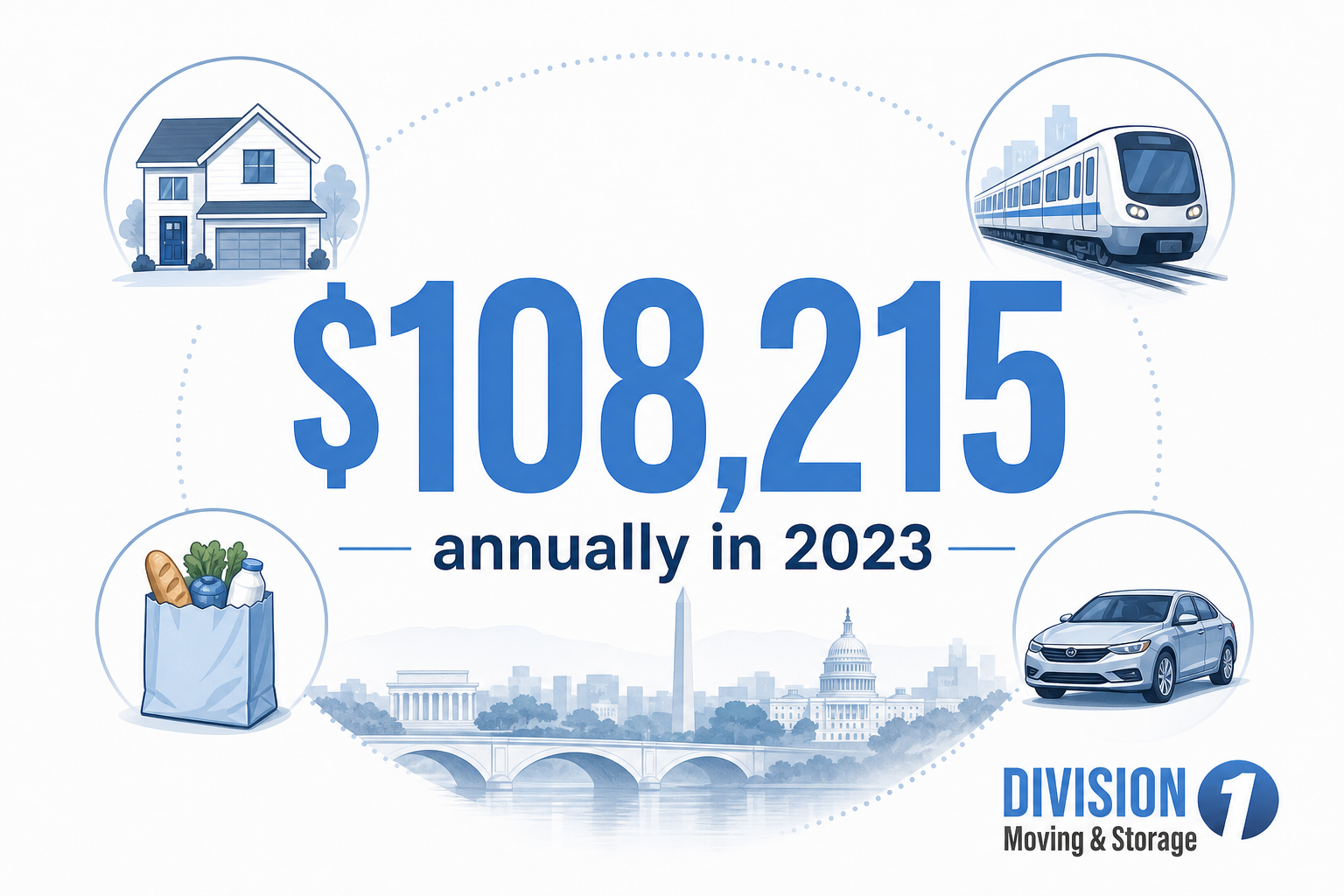
The broader Washington-Arlington-Alexandria area is a high-spending region. The average household spent $108,215 annually in 2023, 24, with housing, transportation, and food making up 60.5% of the average household budget. Transportation accounted for 15.9%, and food accounted for 11.9%.
Prices also continued rising in 2026. The Bureau of Labor Statistics reported that the area’s all-items Consumer Price Index rose 4.0% year over year through July 2026. Food rose 5.0%, housing rose 4.6%, and energy rose 22.9%.
MIT’s 2026 Living Wage Calculator gives a minimum-needs benchmark, not a comfort budget. A single adult without children needs about $30.26 per hour in Arlington, $31.25 in Fairfax County, and $29.40 in Prince William County. For two working adults with two children, the required hourly wage per adult rises to about $44.27 in Arlington, $36.22 in Fairfax County, and $33.07 in Prince William County.
Budget planning should start with the household, not the county name
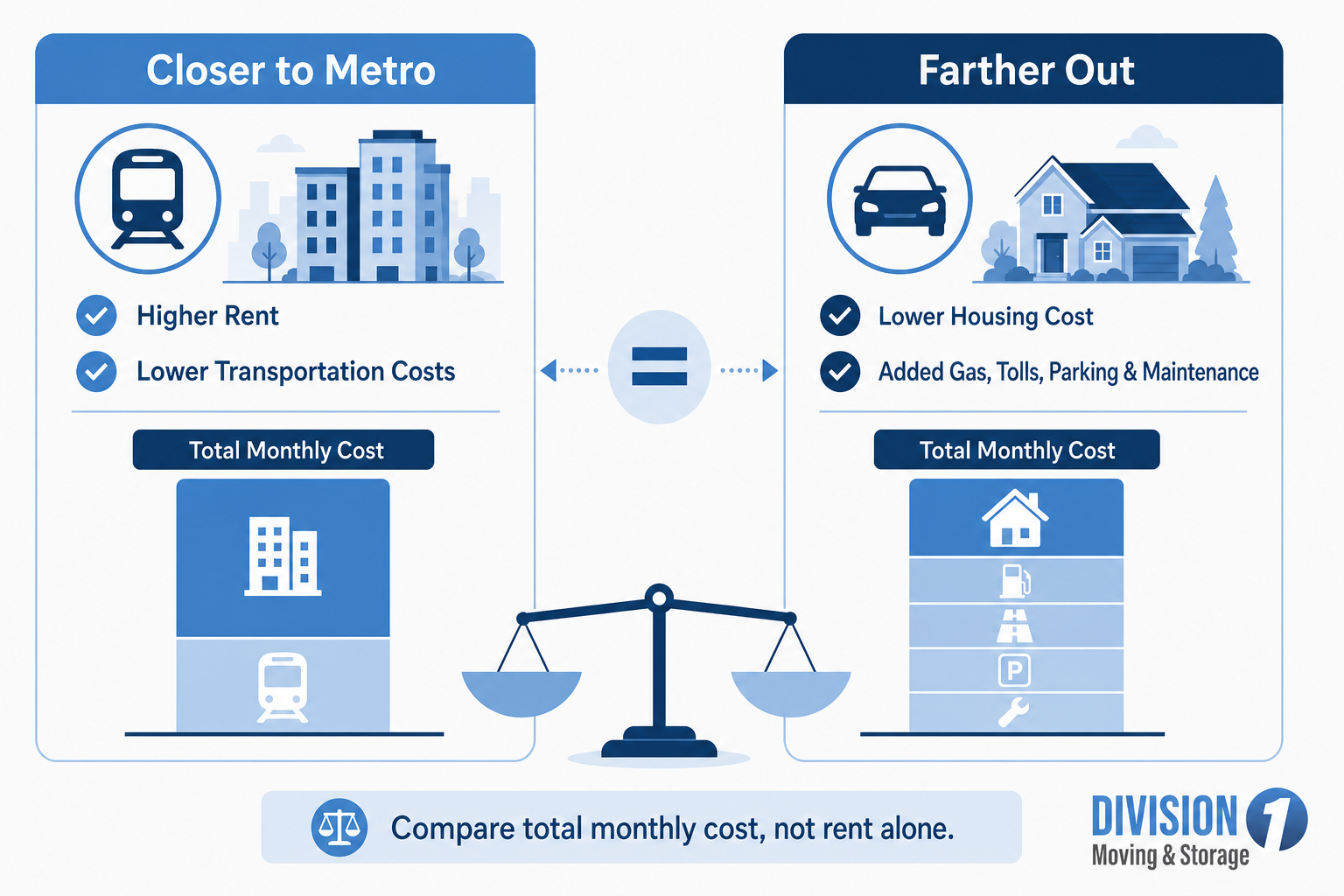
The same salary can feel different depending on rent, car ownership, childcare, and workplace location. A household near Metro may pay more in rent but less for parking, fuel, tolls, and maintenance. A larger home farther out may reduce housing cost per square foot but add transportation and scheduling costs.
Housing costs in Northern Virginia include rent, mortgage payments, taxes, and fees
Housing is usually the largest cost in a Northern Virginia budget. Renters should compare base rent, utilities, parking, pet fees, amenity fees, internet, renter’s insurance, and commuting from that address. Advertised rent alone rarely tells the full monthly story.
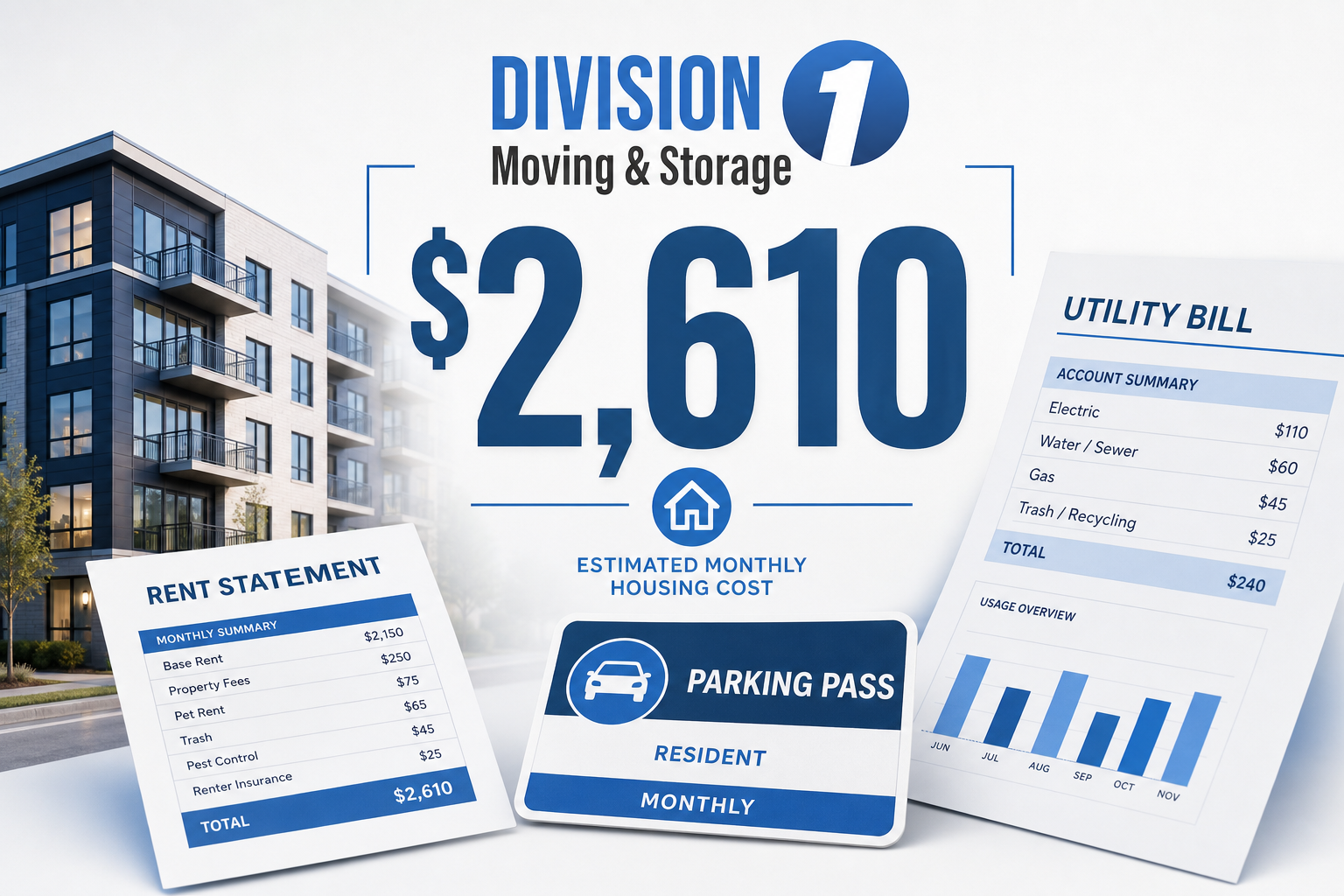
Apartment List reported October 2026 median rents of $2,457 for a one-bedroom and $2,970 for a two-bedroom in Arlington, with an overall median of $2,610. Alexandria’s October overall median was $2,193, down 1.9% year over year. Fairfax County’s July median was about $2,430, including $2,082 for a one-bedroom and $2,412 for a two-bedroom.
Available listings can differ from broad rent surveys. Zumper reported September 2026 average Arlington rents of about $2,440 for a one-bedroom, $3,395 for a two-bedroom, and $3,750 for a house. In Loudoun, average apartment rent was about $2,935, with one-bedroom apartments around $1,550 and two-bedroom apartments around $3,009.
Buying a home requires a full carrying-cost estimate
For buyers, the mortgage payment is only one part of the cost. NVAR reported a Northern Virginia median sold price of about $765,000 in August 2026, while another NVAR release listed $750,000 depending on reporting series and coverage. Loudoun County’s August median was about $771,250.
Mortgage rates make the monthly payment especially important. Freddie Mac reported a 30-year fixed mortgage rate of 7.28% on October 1, 2026. At that rate, principal and interest on a $600,000 loan is roughly $4,090 per month, while a $480,000 loan is roughly $3,270. Those estimates exclude property taxes, insurance, mortgage insurance, HOA dues, and maintenance.
Homeowners should also plan for repairs and replacement costs. A common reserve is 1% to 2% of the home’s value per year for maintenance. On a $750,000 home, that means roughly $7,500 to $15,000 per year, adjusted for age and condition.
Utilities, internet, groceries, and local taxes add meaningful monthly costs
Utilities vary by housing type, square footage, insulation, provider, season, and habits. Renters in apartments may have lower electricity and maintenance exposure than owners of larger detached homes. Homeowners should prepare for summer electricity peaks, winter gas usage, and locality-specific charges.
Dominion’s Virginia residential tariff includes a $7.58 monthly basic customer charge before usage. A 2026 analysis placed typical residential electricity costs around $149 to $165 per month, with larger homes seeing summer bills of $300 to $500 during heavy air-conditioning use.
Water and sewer charges depend on provider and locality. Fairfax City’s FY2026 wastewater schedule lists a $68.35 quarterly residential base charge for up to 5,000 gallons and $13.07 per 1,000 gallons above that amount. Fairfax Water’s regional schedule includes fixed charges, usage charges, and account fees, so the service address matters.
Internet and everyday household spending should be budgeted separately
Internet can reasonably be budgeted at about $30 to $100 per month depending on speed, provider, promotions, and mobile bundling. Verizon lists Fios 300 Mbps at $30 per month with Auto Pay, 500 Mbps at $65, 1 Gig at $80, and 2 Gig at $90, with prices and availability varying by address.
A practical renter utility budget might include $150 to $300 per month for electricity, gas, water, and internet. A detached homeowner should add seasonal cushion and any trash, stormwater, or community charges.
Food is another major line item. Washington-area households spent $7,005 annually on food at home and $5,905 on food away from home in 2023, 24. MIT’s 2026 estimates place annual food costs for a single adult at $5,608 in Arlington and $4,580 in Prince William County. For two working adults and two children, the estimates are about $16,413 in Arlington and $13,404 in Prince William.
Taxes affect monthly and annual budgets. Northern Virginia’s general sales tax is 6%, including the regional transportation component, while groceries and certain essential personal-hygiene products are taxed at a reduced 1% statewide rate. Dining out is costlier not only because of menu prices, tips, and delivery fees, but also because prepared food does not receive the reduced grocery treatment.
Transportation costs can erase savings from cheaper housing farther out
Transportation costs depend more on daily travel patterns than county boundaries. A household in Arlington or Alexandria near Metro may reduce vehicle ownership or paid parking. A household in Loudoun or Prince William may need one or two cars for work, school, errands, and activities.
MIT estimates annual transportation costs for a single adult at about $6,293 in Arlington, $9,174 in Fairfax County, and $9,215 in Prince William. That spread helps explain why lower rent or a lower mortgage farther from work does not always mean a lower total cost of living.
Metro can reduce driving costs, but fares still count. WMATA weekday rail fares range from $2.25 to $6.75 one way, while regular Metrobus service costs $2.25 per ride. A commuter taking 42 weekday rail trips per month could spend roughly $189 to $567 monthly on rail fares alone, before parking or bus connections.
Metro parking is separate. Reserved parking costs $45 or $65 per month plus the regular daily parking rate, and daily rates vary by station. Apartment parking, workplace parking, visitor parking, and street parking can also add costs in dense areas such as Old Town Alexandria, downtown Arlington, Tysons, and major employment districts.
Driving costs include fuel, tolls, maintenance, and parking
Driving is more than gasoline. It includes insurance, maintenance, depreciation, registration, parking, and tolls. As of mid-2026, reported Northern Virginia gasoline prices ranged from about $3.86 to $4.36 per gallon, while Virginia’s gasoline tax was about $0.326 per gallon after July 1, 2026.
A vehicle driven 1,000 miles per month at 25 miles per gallon would use about 40 gallons. At those prices, fuel alone would be roughly $155 to $175 per month before tolls, parking, and ownership costs.
Express lanes can change the math. Reported peak tolls on I-66 Express Lanes can reach about $10 to $40 each way depending on congestion and trip location. A daily toll of $20 each way over 20 workdays would equal about $800 per month. That can make a closer home, Metro access, carpooling, telework, or off-peak travel financially meaningful.
Childcare, schools, healthcare, and moving costs belong in the same relocation budget
Families should include childcare, school-related costs, healthcare, and relocation expenses before choosing a neighborhood. These costs can be large enough to change which location feels affordable, even when rent or mortgage numbers look manageable.
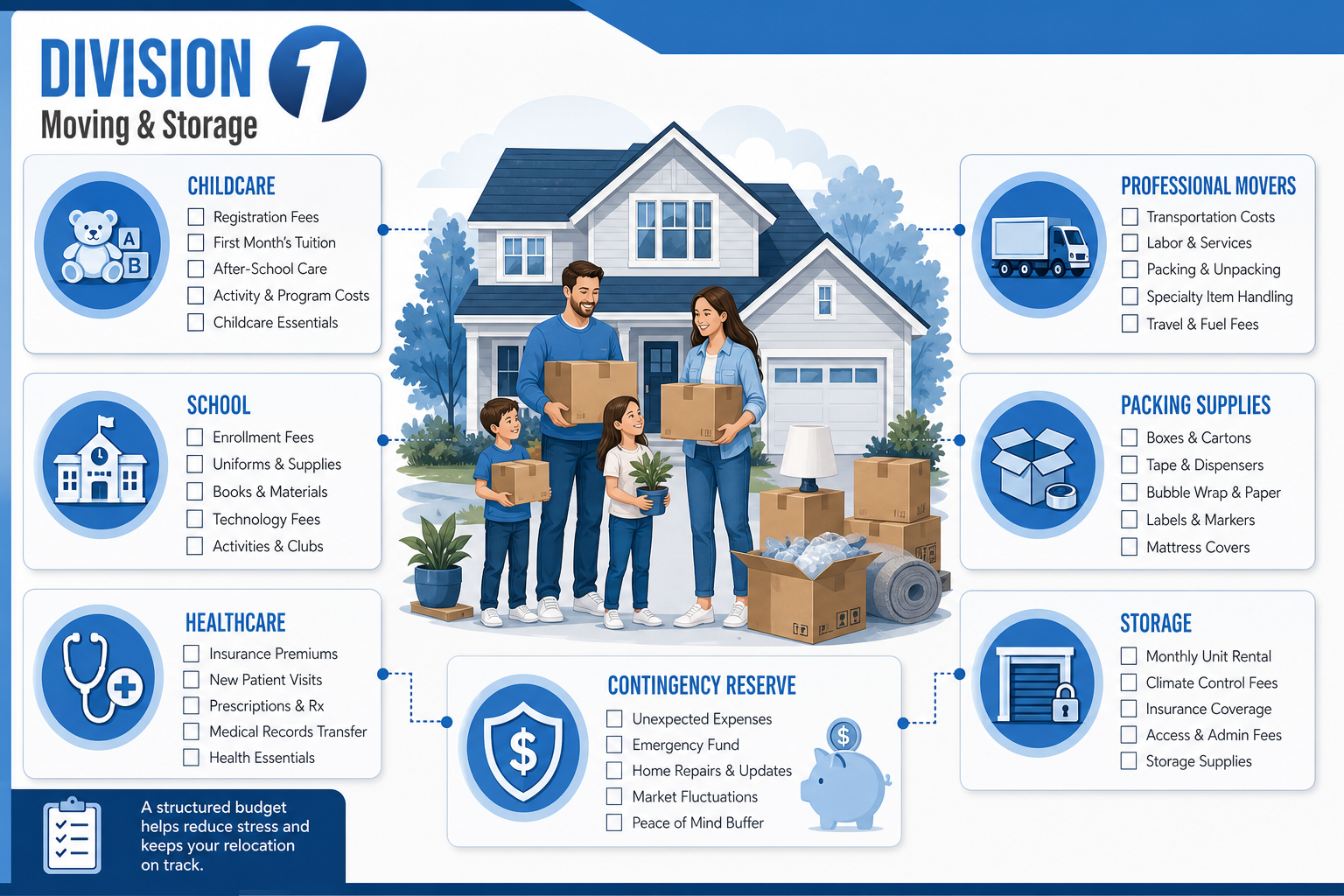
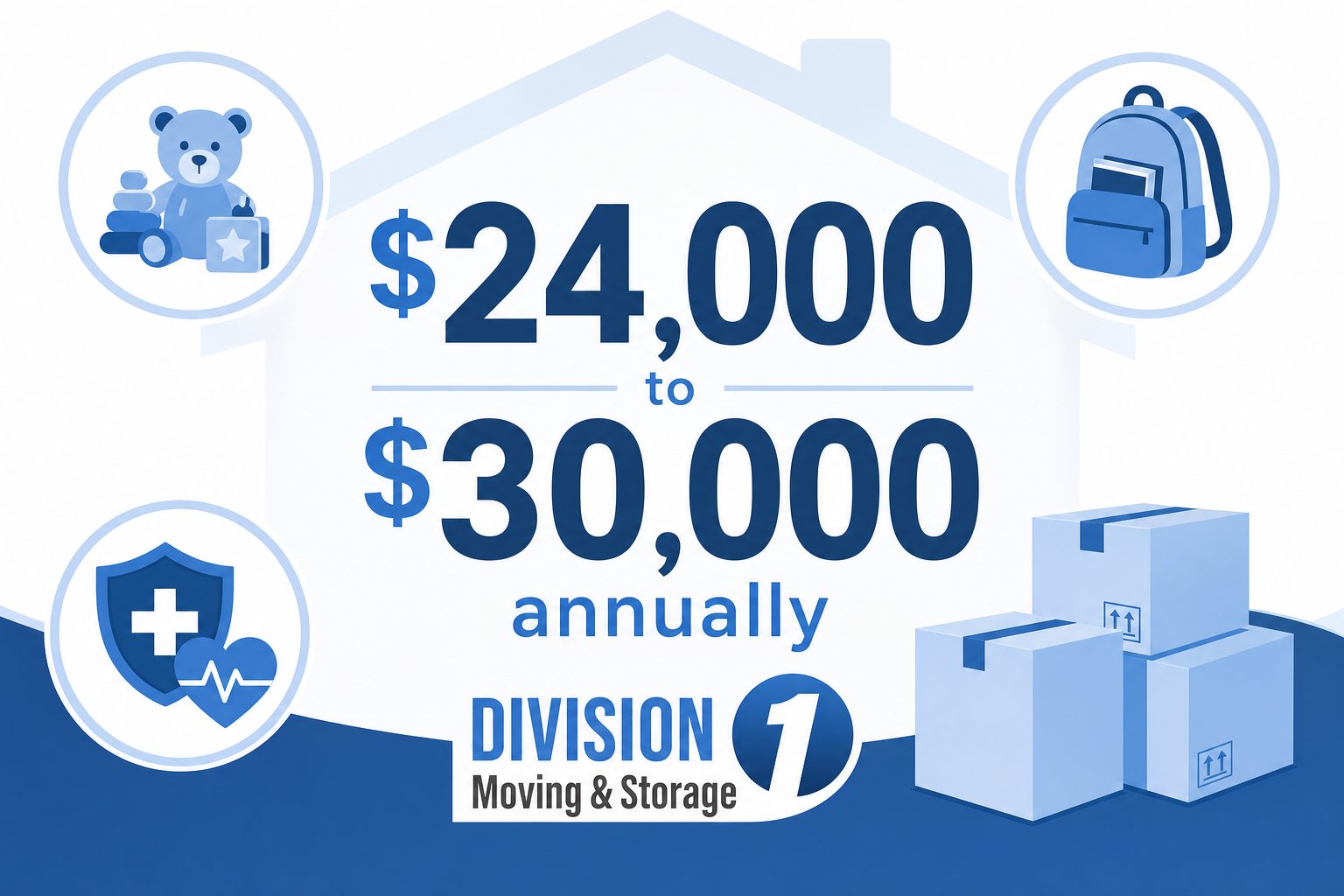
Childcare can rival housing for families with young children. A 2026 childcare market analysis estimated credentialed center-based infant care in the Washington suburbs at about $24,000 to $30,000 annually, or roughly $2,000 to $2,500 per month. Career nannies in Arlington, McLean, Great Falls, and Old Town Alexandria were reported at about $25 to $40 per hour before payroll taxes, benefits, and agency costs.
Public schools are tuition-free for school-age children who reside within the relevant school division. The specific address matters because school assignment, transportation, program access, and attendance boundaries are local. Virginia’s School Quality Profiles provide current performance and accreditation information, and the state reported that 94% of Virginia schools met all accreditation requirements in the current academic year.
Private school can add tens of thousands of dollars annually. For 2026, 27, Private School Review reported average tuition of about $17,616 in Fairfax City and $21,413 in Loudoun County. Families should also account for uniforms, technology, transportation, meals, activity fees, deposits, and extended-day care.
Healthcare varies by employer coverage, family size, deductibles, prescriptions, and out-of-network use. MIT’s 2026 model estimates annual medical costs for a single adult at about $3,460 in Arlington and Prince William, while a two-adult, two-child household’s estimate is about $10,220.
A realistic professional moving budget should include more than the truck
Professional moving costs should be planned as a separate relocation line item. Published Northern Virginia planning ranges place a small local move at about $350 to $750, a two- or three-bedroom local move at about $750 to $1,600, and a regional or short-distance move at about $900 to $2,500 or more. Interstate or long-distance moves commonly begin around $2,500 and can exceed $8,500.
This is where a written estimate matters. Our team at Division 1 Moving and Storage can help Northern Virginia households think through labor, packing, storage, access, and timing so the moving budget reflects the actual home and move conditions.
A practical relocation budget should include every cost that can affect move day, not only the hourly rate. The lowest hourly rate may not be the lowest final price if the crew is too small, travel time is excluded, or access conditions create extra labor. Before booking, gather the details that determine the real total:
Moving labor and expected crew size.
Truck charges, travel time, drive time, fuel surcharges, and minimum hours.
Stairs, elevators, long carries, parking limitations, and shuttle service for restricted streets.
Packing materials, specialty boxes, paper, tape, mattress bags, wardrobe boxes, and disposal.
Professional packing for fragile items, kitchens, artwork, electronics, or full-service packing.
Short-term or long-term storage, including pickup, delivery, inventory, access, climate control, and handling charges.
Valuation coverage, specialty-item handling, cleaning, utility activation, deposits, and a 10% to 15% contingency reserve.
Smart Northern Virginia budgeting compares total monthly cost, not just rent
The best way to evaluate Northern Virginia living costs is to compare total monthly cost by location. A less expensive home farther from work may become more expensive after tolls, gas, parking, and maintenance. A higher-rent apartment near Metro may be worthwhile if it reduces car ownership or paid parking.
Renters should add base rent, utilities, parking, renter’s insurance, pet fees, amenity fees, internet, transit or tolls, and likely rent increases. Homeowners should model principal and interest, property taxes, homeowners insurance, HOA or condominium fees, utilities, maintenance, capital reserves, moving, furnishings, appliances, and emergency repairs.
Cost control is usually about tradeoffs, not one perfect number. Before choosing a home, compare Alexandria, Arlington, Fairfax, Loudoun, and Prince William by the full household budget. Give special attention to commute routes, childcare logistics, utility exposure, and whether the address creates new parking, toll, or school-related costs.
These steps can help households lower costs while preserving convenience. They are most useful before signing a lease, making an offer, or booking a move:
Compare neighborhoods by total monthly cost, not rent or mortgage alone.
Choose Metro access when it helps reduce car ownership, parking, or tolls.
Use commuter lots, carpools, employer transit benefits, telework, and off-peak travel before relying on daily express-lane tolls.
Confirm whether water, sewer, trash, parking, and amenity charges are included in rent.
Verify the exact school boundary before signing a lease or making an offer.
Compare childcare options, including center care, licensed home daycare, nanny shares, employer benefits, dependent-care accounts, and flexible work schedules.
Plan meals and reduce delivery or restaurant frequency, especially because groceries receive a reduced tax treatment while prepared food does not.
Get at least three moving estimates, declutter before quoting, pack nonfragile items yourself, and move midweek or midmonth when possible.
If you are planning a move in Alexandria or anywhere in Northern Virginia, Division 1 Moving and Storage can help you build a realistic moving plan around your home size, schedule, packing needs, and storage requirements. Get a Quote through our contact page, or call us today at (571) 970-3189.