


Choosing among the best neighborhoods in Northern Virginia often comes down to one practical question: how will your daily routine work? The region offers dense, transit-oriented areas near Washington, DC, established suburban communities with more space, and outer corridors built around highways, commuter rail, and major employment centers.
As an Alexandria-based moving company serving Northern Virginia, we help homeowners and renters think through relocation logistics, from building access and parking to storage, packing, and timing around commute routes. If you have questions while planning a move, reach out to our team through our contact page.
How Northern Virginia neighborhoods differ by commute, transit, and housing style
Northern Virginia is not one single housing market or commute pattern. Alexandria, Arlington, Fairfax County, Falls Church, Loudoun County, and Prince William County each connect to the Washington, DC region differently. Major job concentrations include Arlington, Alexandria, Tysons, Reston, Merrifield, Fairfax Center, Springfield, and the Dulles corridor.
For many households, the biggest decision is whether to prioritize transit access or square footage. Arlington, Alexandria, Falls Church, and parts of Fairfax County are stronger for Metro access, walkability, and shorter trips to DC or close-in job centers. Reston, Vienna, Burke, Springfield, Centreville, Chantilly, and western Loudoun generally offer more space and easier highway access.
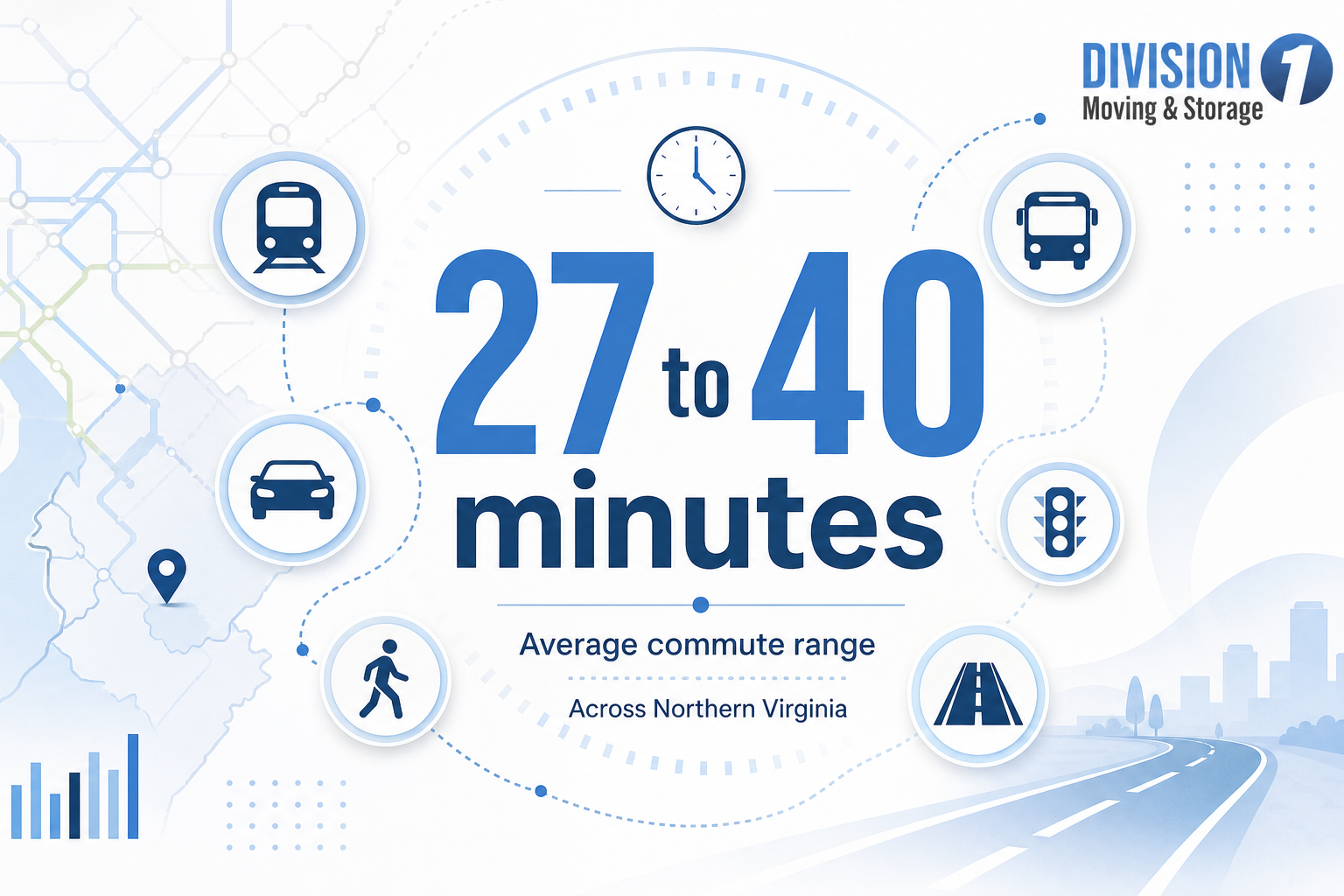
Commute times vary widely. Northern Virginia jurisdictions generally have average commute times ranging from 27 to 40 minutes, and the share of commuters driving alone differs by jurisdiction. That makes location-specific planning important.
Metrorail, Metrobus, Fairfax Connector, Arlington Transit, Alexandria’s DASH system, Virginia Railway Express, major highways, and regional trails all shape how a neighborhood works. Start by matching your search to your job center, travel mode, school needs, and tolerance for driving.
Transit-oriented inner suburbs work best for low-car routines
Inner suburbs such as Arlington, Old Town Alexandria, Del Ray, East Falls Church, and parts of Falls Church are best for residents who want to reduce car dependence. These areas tend to place apartments, townhomes, restaurants, offices, grocery options, parks, and transit close together.
Outer suburbs work best when space and highway access matter more
Outer areas such as Reston, Herndon, Chantilly, Centreville, Ashburn, Burke, and Springfield can be practical for remote workers, growing households, and people commuting to suburban job centers. The tradeoff is that many daily trips are more car-dependent, especially outside rail station areas.
Arlington and Alexandria are strong choices for Metro access and DC commutes
For residents who want the shortest and most flexible routes into Washington, DC, Arlington and Alexandria stand out. They offer multiple Metro lines, dense neighborhood services, and strong access to federal, technology, defense, and commercial job centers on both sides of the Potomac.
The Rosslyn-Ballston corridor is one of Northern Virginia’s strongest areas for car-free or low-car living. Rosslyn, Courthouse, Clarendon, Virginia Square, and Ballston are served by the Orange and Silver lines, with Rosslyn also receiving Blue Line service.
Rosslyn is especially convenient for DC employment because it sits directly across the Potomac from Georgetown and central DC. Ballston, Clarendon, Courthouse, and Virginia Square add a more residential feel while keeping Metro, apartments, offices, restaurants, parks, and neighborhood services close together.
Alexandria has Blue and Yellow Line access at Braddock Road, Eisenhower Avenue, King St-Old Town, Potomac Yard, and Van Dorn Street. King St-Old Town also connects with Amtrak, VRE, DASH, Metrobus, and the King Street Trolley, giving residents several options when schedules or destinations change.
Old Town Alexandria and Del Ray fit people who value historic streets, walkability, restaurants, waterfront access, and local transit connections. Carlyle and Eisenhower are useful for newer apartments and nearby offices. Potomac Yard connects well to National Landing, Amazon headquarters, Arlington, and DC.
Moves into denser neighborhoods often require planning around elevator reservations, loading zones, parking rules, and building access. Division 1 Moving and Storage regularly handles local moves in Alexandria and Northern Virginia, where those details can shape moving day.
Falls Church, Vienna, Dunn Loring, and Fairfax balance family needs with commute options
Many households want a middle ground between urban convenience and traditional suburban living. Falls Church, Vienna, Dunn Loring, Oakton, Fairfax, and parts of Fairfax County can combine established neighborhoods, parks, larger homes, and access to major roads or Metro corridors.
Fairfax County Public Schools is a major factor for many families. The district serves more than 177,000 students in approximately 200 schools and centers, and the school division reports that seven of Virginia’s top ten high schools are in FCPS based on its cited U.S. News ranking. Check school assignments for the exact address, since nearby homes can feed into different schools.
Vienna is served by the Orange Line’s Vienna/Fairfax-GMU station and has access to I-66, Route 29, Route 123, and the broader Fairfax County road network. It can fit households that want suburban space while keeping a rail option available, though many residential areas remain more car-dependent than Arlington’s urban villages.
Dunn Loring and Merrifield offer access to the Orange Line corridor and the Mosaic District area. These locations can work well for people commuting toward Arlington, DC, Fairfax Center, or Tysons, depending on the exact starting point and schedule.
Falls Church City and East Falls Church appeal to residents who want a smaller-community feel near Arlington, Tysons, and DC. East Falls Church has Orange and Silver Line access and sits near I-66, making it a useful compromise for households with different commute directions.
Fairfax and Oakton are generally better suited to residents who expect to drive more often or who work in nearby employment centers. They may also suit households prioritizing more residential space over direct walkability to rail.
Address-level research matters more than broad neighborhood reputation
Two homes in the same general area can have different school assignments, road access, bus options, and travel times to Metro. Before signing a lease or buying a home, compare the address to work locations, school boundaries, and the nearest realistic transit option.
Reston, Tysons, Herndon, and Loudoun suit remote and hybrid workers who need space
Remote and hybrid work changes the neighborhood equation. A household that commutes two days a week may accept a longer trip in exchange for more space, newer housing, or nearby amenities. Reston, Tysons, Herndon, Chantilly, Centreville, Ashburn, and eastern Loudoun can all be relevant depending on where occasional commutes lead.
Reston is one of the strongest choices for people who want suburban space without giving up Metro access. The Silver Line serves Reston Town Center and Wiehle-Reston East, while the Dulles Toll Road connects the area to Tysons, the Beltway, and Dulles International Airport.
Reston Town Center adds offices, restaurants, retail, apartments, public spaces, and nearby trails. That mix can help remote workers who want places to work outside the home, meet colleagues, or run errands without turning every task into a long drive.
Herndon, Chantilly, Centreville, and western Fairfax County generally offer larger homes and more suburban amenities than Arlington or Old Town Alexandria. They can be practical for people working in the Dulles corridor, Reston, Fairfax Center, Chantilly, or airport-related employment. Regular commutes to central DC, Arlington, or Alexandria are usually longer and more traffic-sensitive.
Ashburn and eastern Loudoun provide more space and Silver Line access to Reston, Tysons, Arlington, and DC. The tradeoff is distance. Residents who commute frequently to downtown Washington, Arlington, or Alexandria should compare both rail time and highway time.
Tysons is increasingly viable for residents who want apartments, offices, restaurants, retail, and Metro access in one place. Fairfax County’s plan envisions Tysons as a walkable urban center with up to 100,000 residents and 200,000 jobs by 2050, with much future growth near its four Metro stations.
Hybrid workers should compare commute frequency against home priorities
A longer commute may be reasonable if it happens occasionally and the home better supports daily life. If the commute happens three or more times per week, living closer to Metro, an express lane corridor, or the job center can matter more than extra square footage.
I-66, I-95, I-395, and Route 7 shape many Northern Virginia moving decisions
Metro access matters, but highways still shape many Northern Virginia neighborhoods. For households that drive to work, split commutes between job centers, or move farther from the inner suburbs, the right corridor can be more important than the closest rail station.
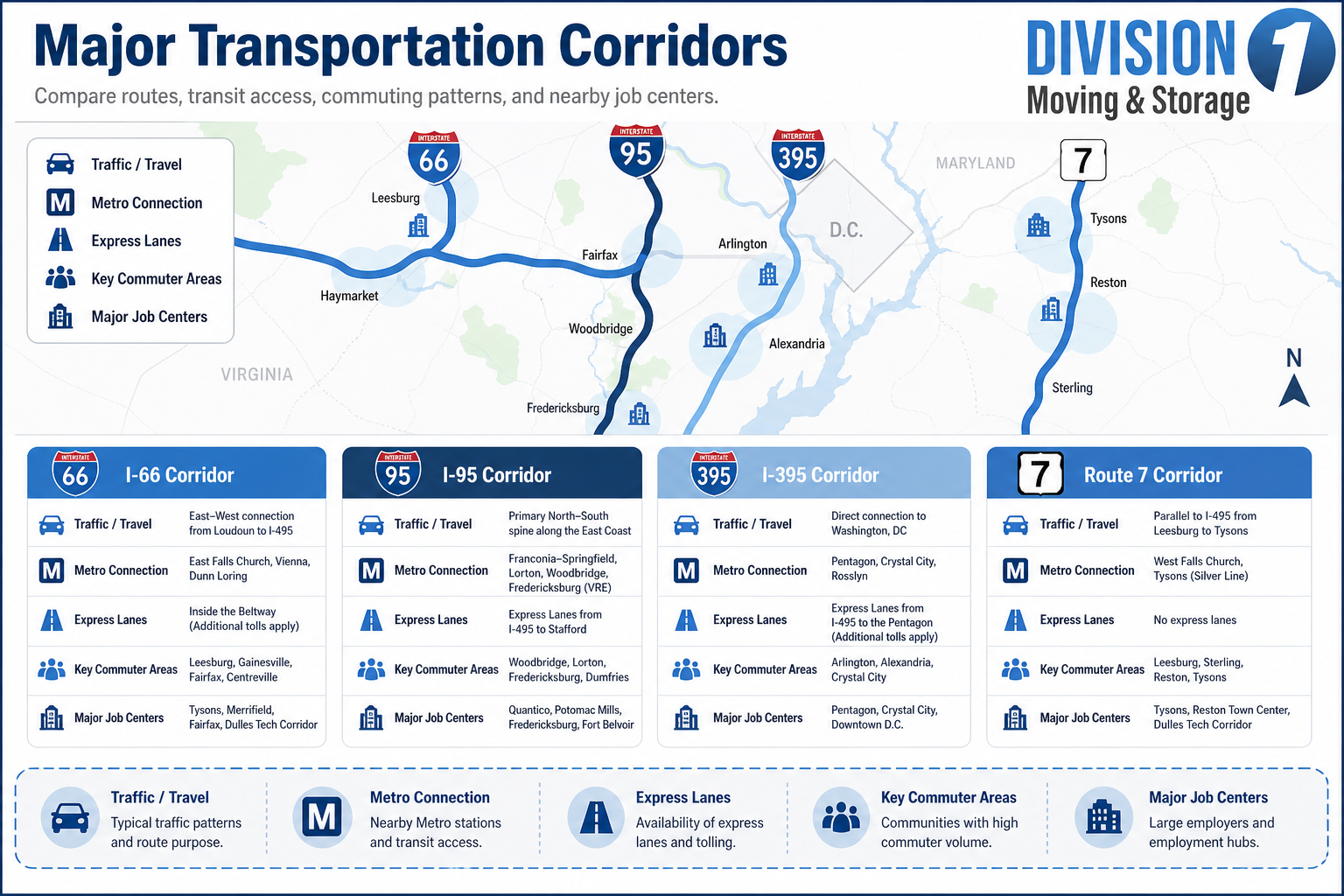
The I-66 corridor is useful for commuters traveling between Arlington, Fairfax County, Gainesville, Centreville, Manassas, and the western suburbs. Neighborhoods along or near the corridor include Rosslyn, Ballston, East Falls Church, Vienna, Oakton, Fairfax, Centreville, Gainesville, and parts of Manassas.
Inside the Beltway, Ballston and East Falls Church offer a strong combination of highway and Metro access. Farther west, Centreville, Fairfax, Gainesville, and Manassas generally provide more space, but residents rely more heavily on cars or commuter rail.
The I-95 and I-395 corridors matter for Alexandria, Springfield, Fort Belvoir, Woodbridge, Stafford, the Pentagon, and southern federal employment centers. These corridors include express lanes where HOV-3 traffic can travel free with an E-ZPass Flex in HOV mode, while other drivers may pay variable tolls.
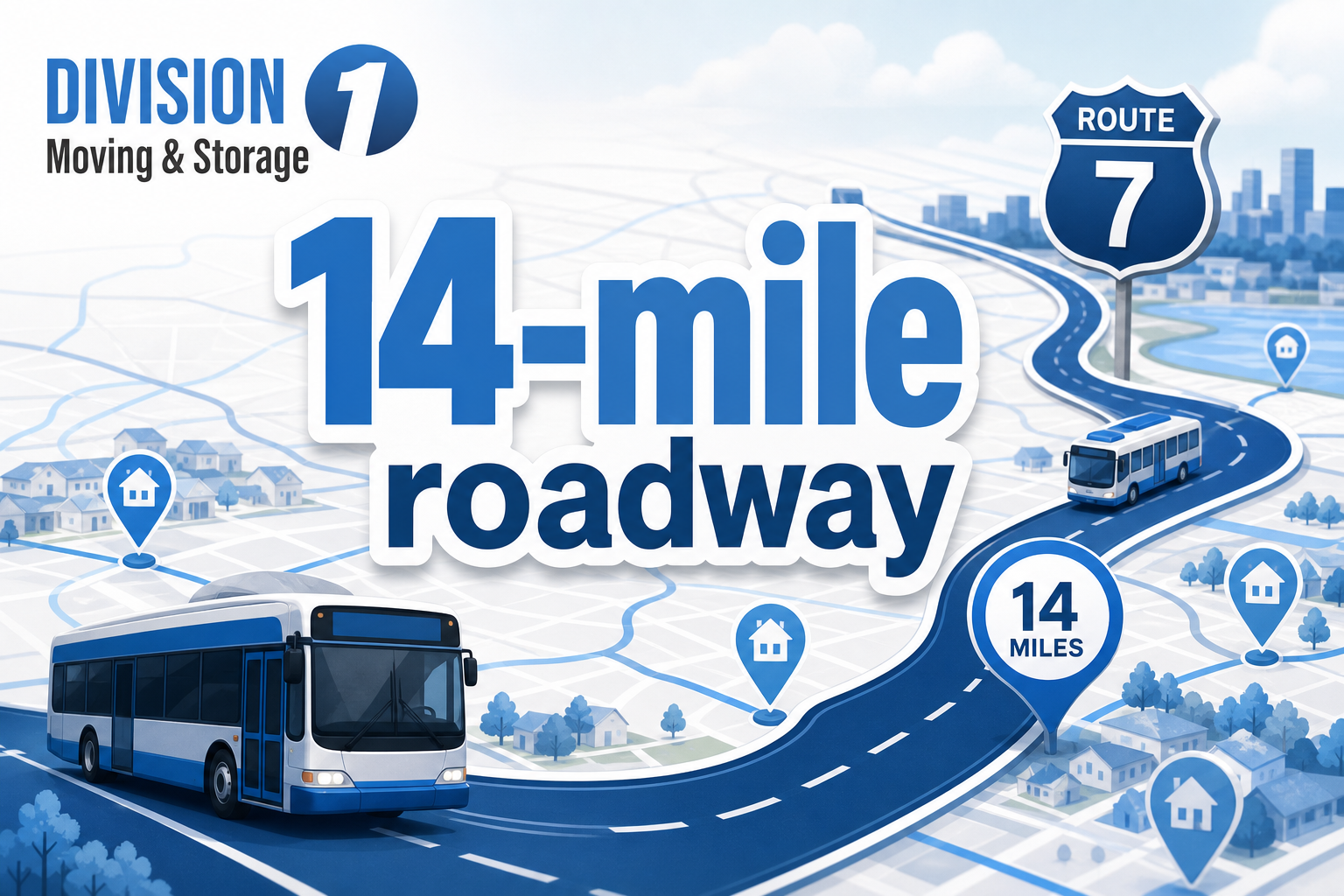
Route 7 links Tysons with Falls Church, Seven Corners, Bailey’s Crossroads, and the Mark Center in Alexandria. The Northern Virginia Transportation Commission describes the corridor as a 14-mile roadway crossing Fairfax County, Falls Church, Arlington County, and Alexandria, with planned bus rapid transit intended to connect Spring Hill Metro in Tysons to the Mark Center and Southern Towers area.
For movers who need Route 7 access, McLean, Tysons, Falls Church, Seven Corners, Bailey’s Crossroads, and the West End of Alexandria are especially relevant. Treat the planned bus rapid transit as a future improvement, not an operating service for a near-term housing decision.
Match the corridor to the job center before choosing the suburb
A neighborhood can look close on a map while still creating a difficult commute. Compare the route at the time you will actually travel, then weigh whether Metro, VRE, express lanes, or local bus connections give you reliable alternatives.
How to choose the best Northern Virginia neighborhood for your move
The best neighborhood is the one that fits your actual pattern of work, school, errands, and home life. Northern Virginia’s employment geography supports many strategies. Washington, DC, Arlington County, and Alexandria are leading destinations for regional workers, while Arlington and Alexandria are also significant origins and destinations.
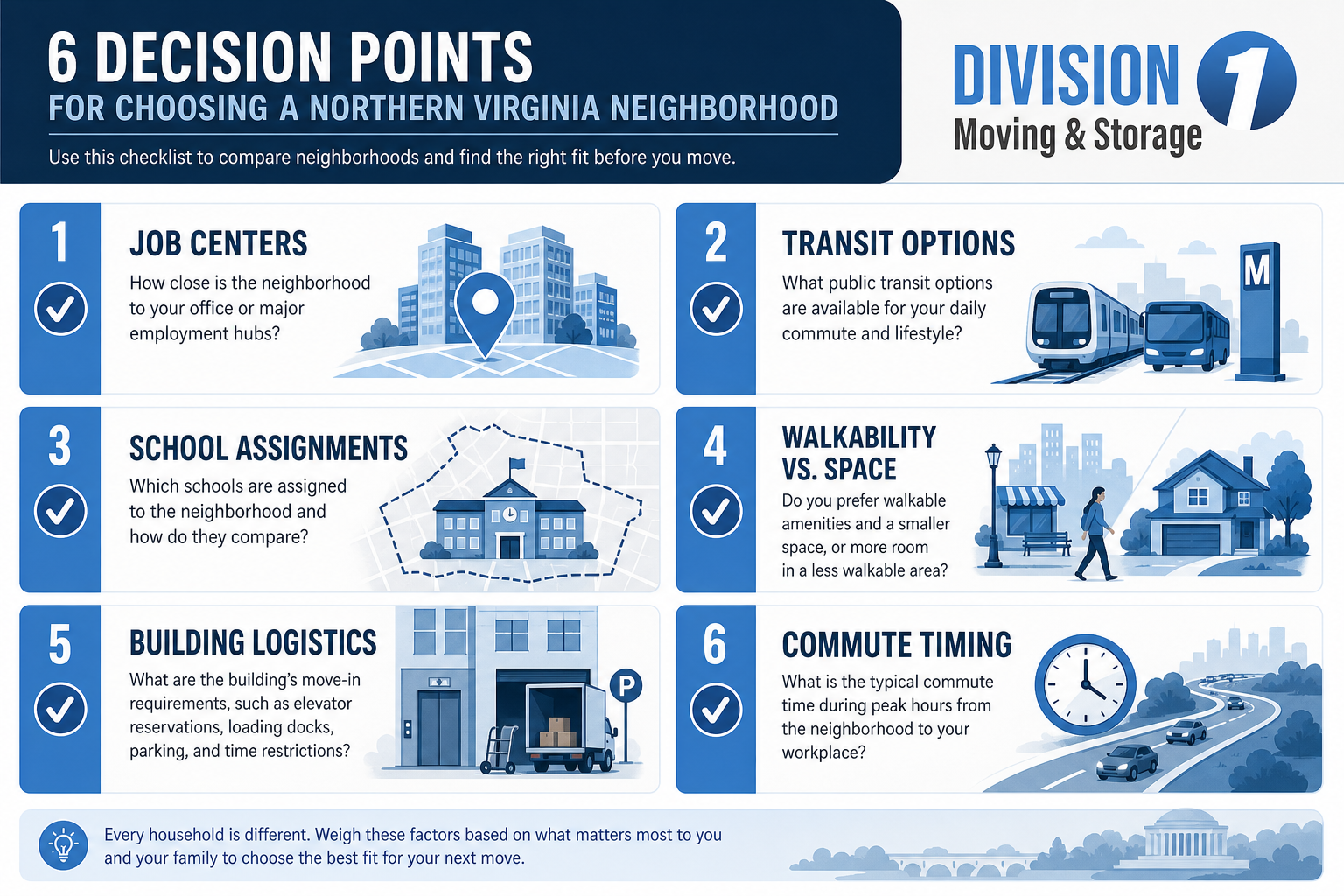
A good moving decision starts by narrowing the region into practical categories. Inner Metro areas work well for DC and Arlington commuters. Mid-ring areas such as Falls Church, Vienna, Dunn Loring, and Fairfax can balance schools, space, and access. Outer suburbs can make sense for remote workers, Dulles corridor jobs, and households needing larger homes.
Before committing to a lease or purchase, compare each option using a consistent framework. The goal is not to find a perfect neighborhood. It is to avoid surprises that affect daily life after the boxes are unpacked.
Identify every regular job center in the household, including hybrid office locations.
Check the nearest Metro, VRE, bus, express lane, and major highway options.
Verify school assignments for the exact address, not just the general area.
Decide whether you prefer walkability, space, highway access, or rail access.
Consider building logistics such as elevators, loading docks, parking rules, and storage needs.
Plan the move around commute timing, especially in dense or high-traffic corridors.
Northern Virginia rewards careful planning. A home in Old Town Alexandria, Ballston, Reston, Vienna, or Springfield can all be the right choice, but only if the location supports the way your household moves through the region.
If you are planning a local move, a long-distance relocation, packing help, storage, junk removal, or move-out cleaning in Alexandria or Northern Virginia, Division 1 Moving and Storage can help you get organized from start to finish. Get a Quote through our contact page, or call us today at (571) 970-3189.